From Leica to Nikon, and back again
A few optics companies have had a disproportionate amount of influence on my journey as a photographer. Pentax, for starters, is where I started. The ME, and later and more importantly the MX, along with the their M 50mm f/1.7 were instrumental in getting me seriously into photography during the COVID lockdowns of 2020. Later on, Leica ushered in a level of confidence with film that changed the way I make photographs. This started with the R4S, an SLR like the Pentax MX, and later, and most importantly the M3. Again a 50mm, this time the Summitar 5cm f/2, was paramount to this experience.
Recently I've shifted back to SLRs from the rangefinder. I have leaned heavily on Nikon cameras and lenses in the last year.
The F3 has become a perpetual companion. In the last year it has traveled with me to just about everywhere I've gone, with a spare FM2N as a mechanical backup. It's the only camera that has successfully taken me away from the M3 for longer than a fleeting moment. But it suffers from a similar issue as the M3: no easy options for on-camera flash. I have an adapter that allows me to use flash, but it isn't as easy as having a dedicated hot shoe.
This is partly why I got an FM2N. Well, that and it's a fully mechanical camera (something I'm a sucker for). But I did not have a Leica M with a hot shoe and so was limited in my shooting as I've incorporated flash more and more into my personal photography.
So, I finally caved and decided to get myself a Leica M with a hot shoe. But I didn't want the M6. It's bloated price is wholly offensive to me. The M4-P is another option, but it's price is likewise bloated, although not so much as the M6.
The M4-2 was then the option that was most attractive to me. The only truly functional feature that I was giving up was the extra framelines provided by the M4-P, 28mm and 75mm. This wasn't something I was upset about. While I enjoy 28mm, I don't prefer it to 35mm or the wider 24mm or 21mm. And I never shoot 75mm; I don't even own a lens in this focal length. I also prefer an uncluttered viewfinder. So I wasn't actually losing out on anything I needed but gaining the two things I was looking for in a new M: a hot shoe for flash and 35mm framelines.
Something the Nikon F mount system gave me was an appreciation for the 35mm field of view. There'd been 35mm lenses I enjoyed before, namely the Pentax 35mm f/3.5 and, to a greater extent, the Leica R 35mm f/2.8. But the Nikkor (both AI-S and AF-D versions) 35mm f/2 was a revelation for me.
My preferred focal lengths have changed over time. I started as a 50mm guy. Then widened to 28mm. And then came back to 50mm before settling on 40mm as "my focal length." But in meaningfully coming over to Nikon, I found no native Nikon F mount 40mm lenses, and so gravitated to the 35mm f/2. So reliant have I been on the 35mm focal length for my personal photography that it has reprogrammed my brain. I now "see" in 35mm. It's also changed my professional work, as I have moved away from the Z Nikkor 40mm f/2 and have adopted the Z Nikkor 35mm f/1.8S as my lens for camera 1 (where camera 2 now has either the 50mm f/1.8S or 85mm f/1.8S mounted).
So while I needed a hot shoe, I also needed 35mm frame lines. The M4-2 was then the perfect match for me. But it also meant I needed a 35mm lens. I tested out the M4-2 with my Summicron 40mm and a roll of good ol' reliable Kodak UltraMax to make sure the body had no issues. It didn't. Score! So I did some research and got myself the Voigtlander Nokton Classic 35mm f/1.4 SC II. This combination proved, after one roll, to be a winner for me.
Viewfinders and Framelines, Voigtlander and Tone-Time
My kit was ready to go by the evening of Friday, September 11th. I shot a handful of frames with the Nokton with my Nikon Zf at home to see how it behaved, but as soon as I got a feel for it I mounted it on the M4-2, loaded it some Tri-X, and slapped one of my Godox iM30s on it. The next day was our anniversary. 17 years married and 23 together. Steph had asked me about a year earlier if I'd mind that she book a client on that day. "Of course not, I'll go with you and we can spend the day together!" And what better way to spend the day than hanging out with a new camera and lens? Sure it's work, but wedding work is fun.
I took my camera with me with the intention of making pictures of Steph and our day at this wedding.
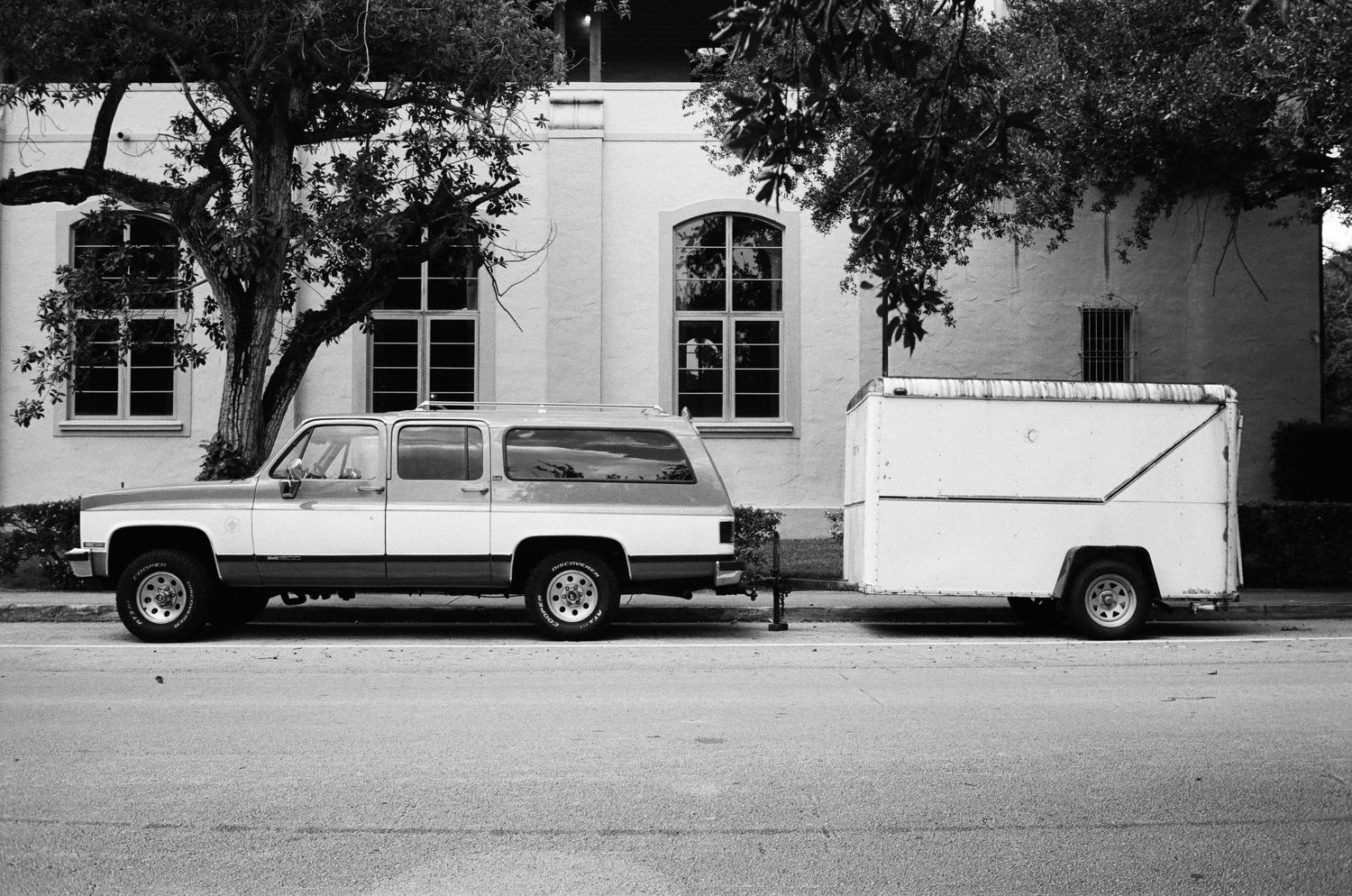
The first thing I saw when we arrived at Church of the Little Flower was this beautiful old truck and trailer, which is evidently parked in perpetuity outside of Comber Hall, the gorgeous reception venue on the church grounds. The vintage but well preserved state of this old GMC Crew Cab truck is exactly the kind of subjects I look for when I shoot for myself. I picked a spot in the street and was unsurprised when I discovered I had exactly the framing I wanted. Hooray for 35mm field of view! These framelines rock!
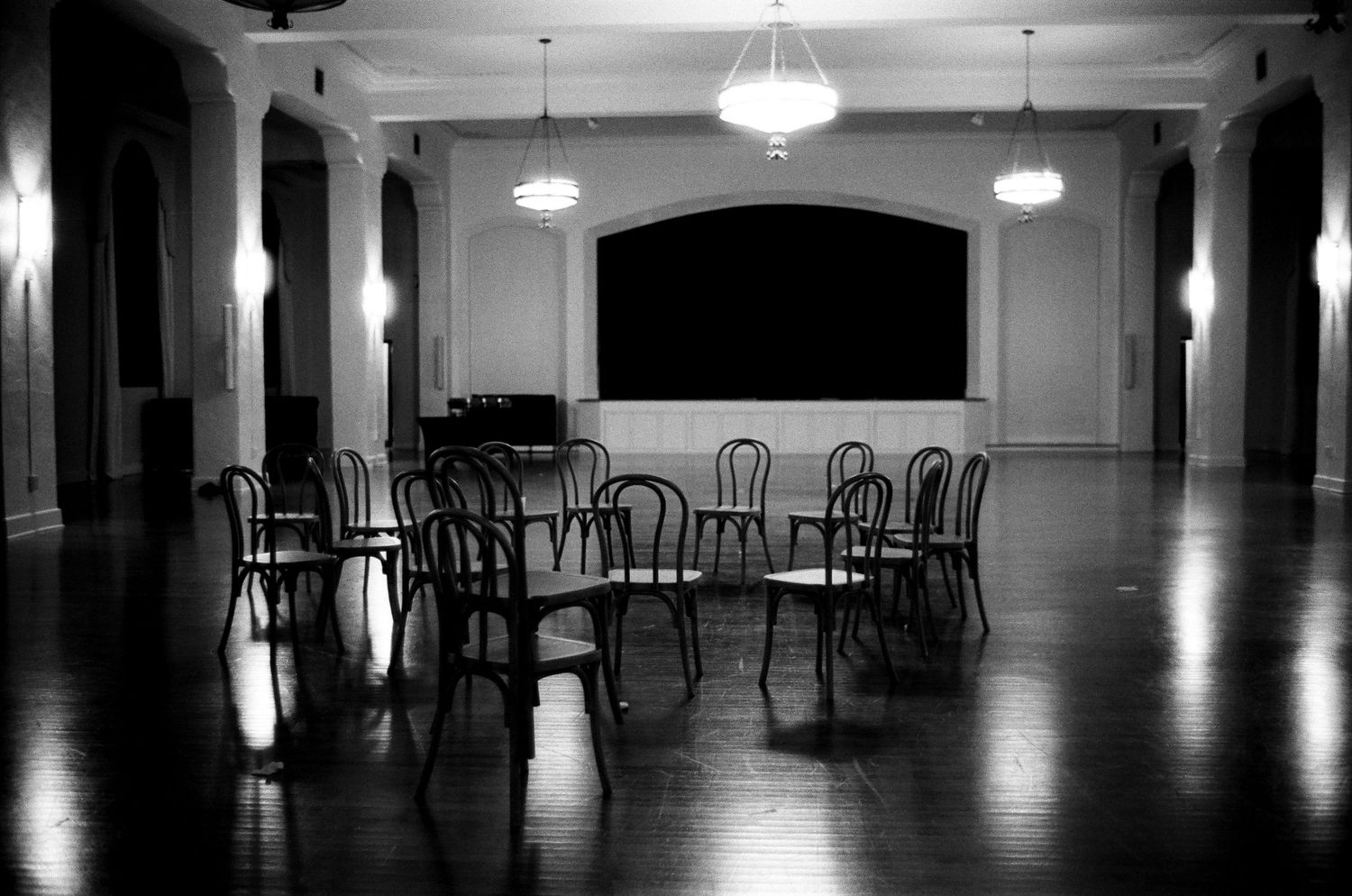
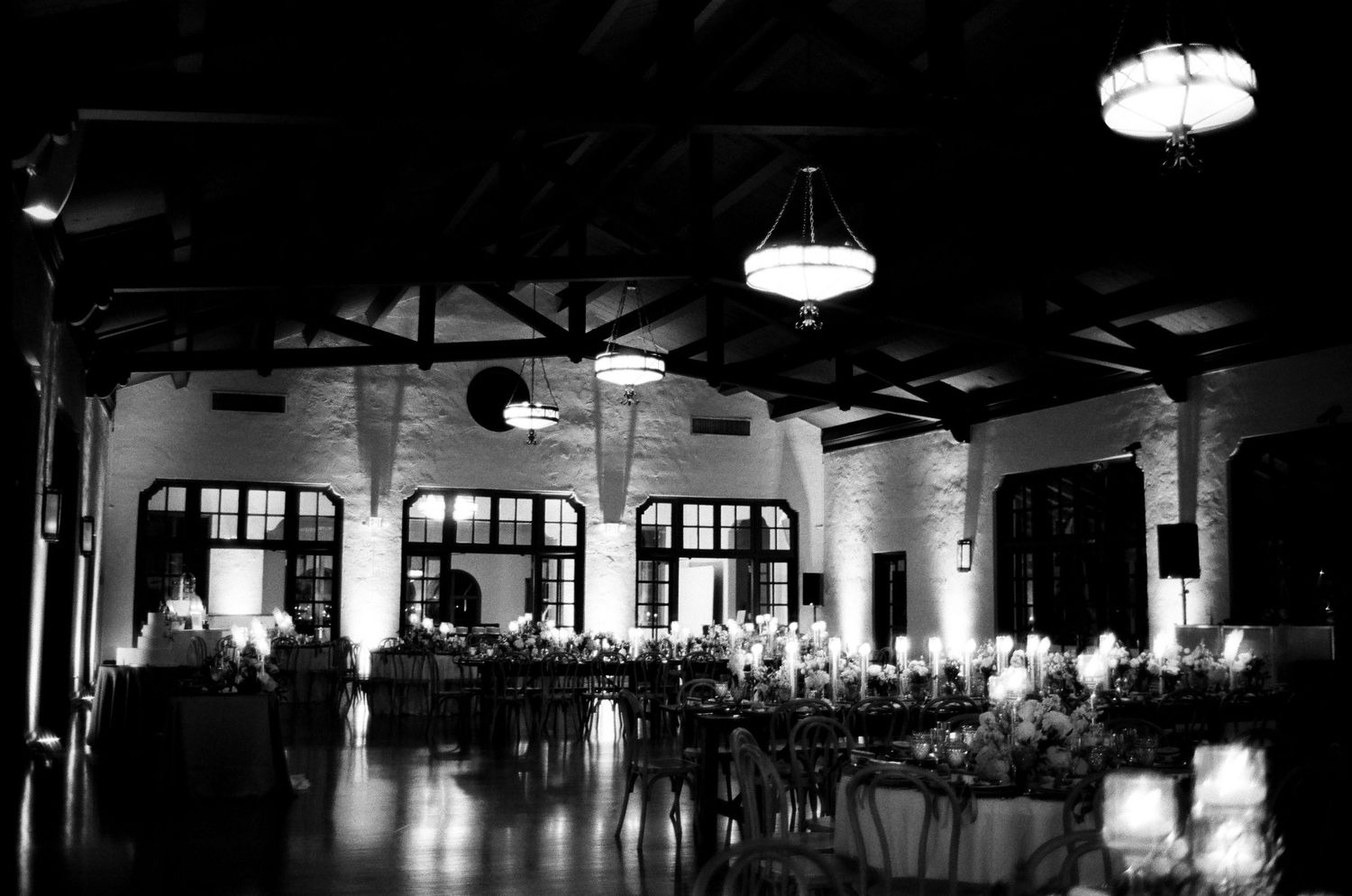
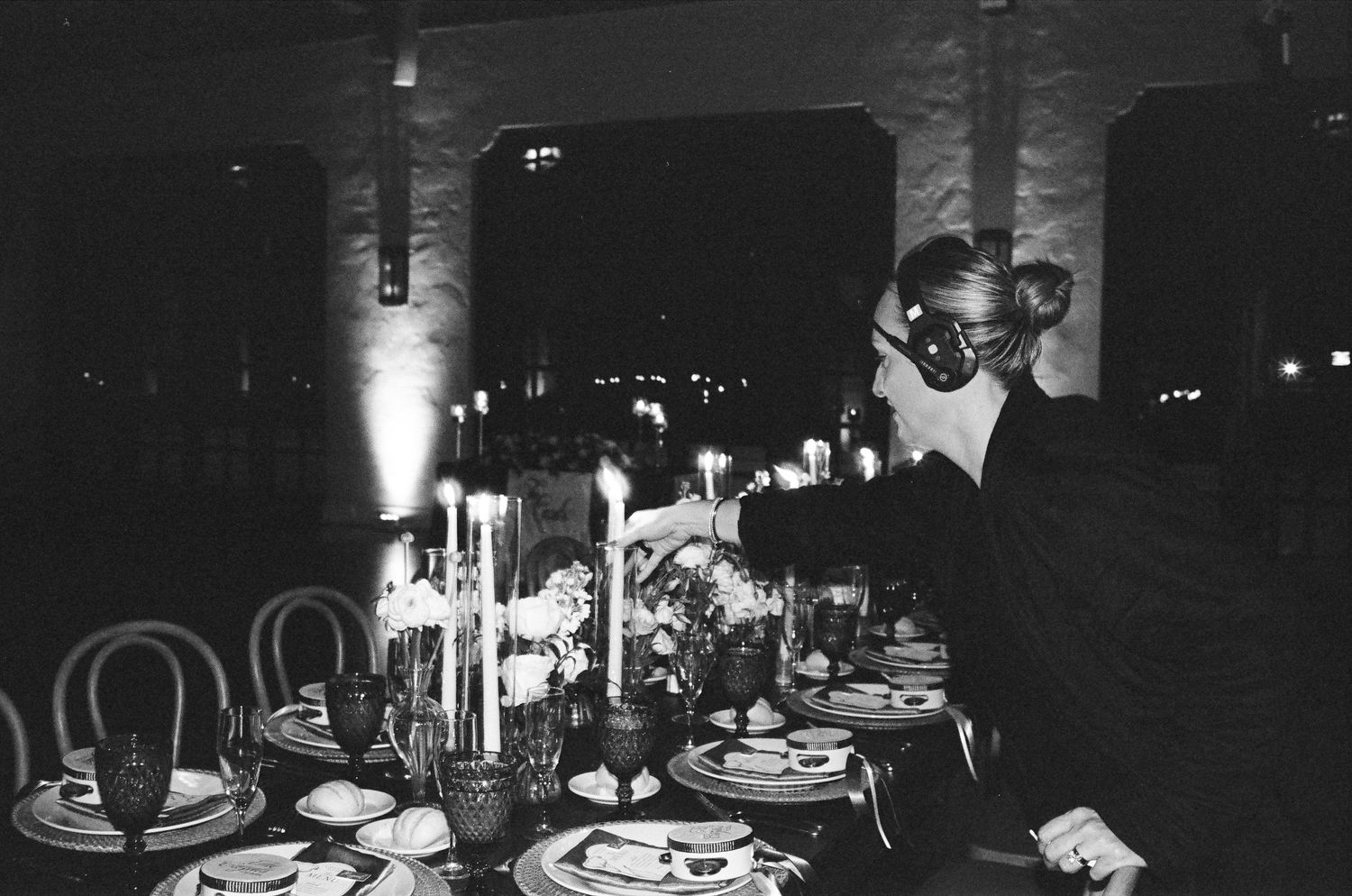
We moved into Comber Hall, where Steph and I would spend the majority of our day and these tables were already set up. Unfinished, yes, but set up. I didn't want to step on the wedding photographer's toes and start shooting where I had no business shooting. But I got an Overlook Hotel vibe from this sparse room that made me both excited and terrified all at once.
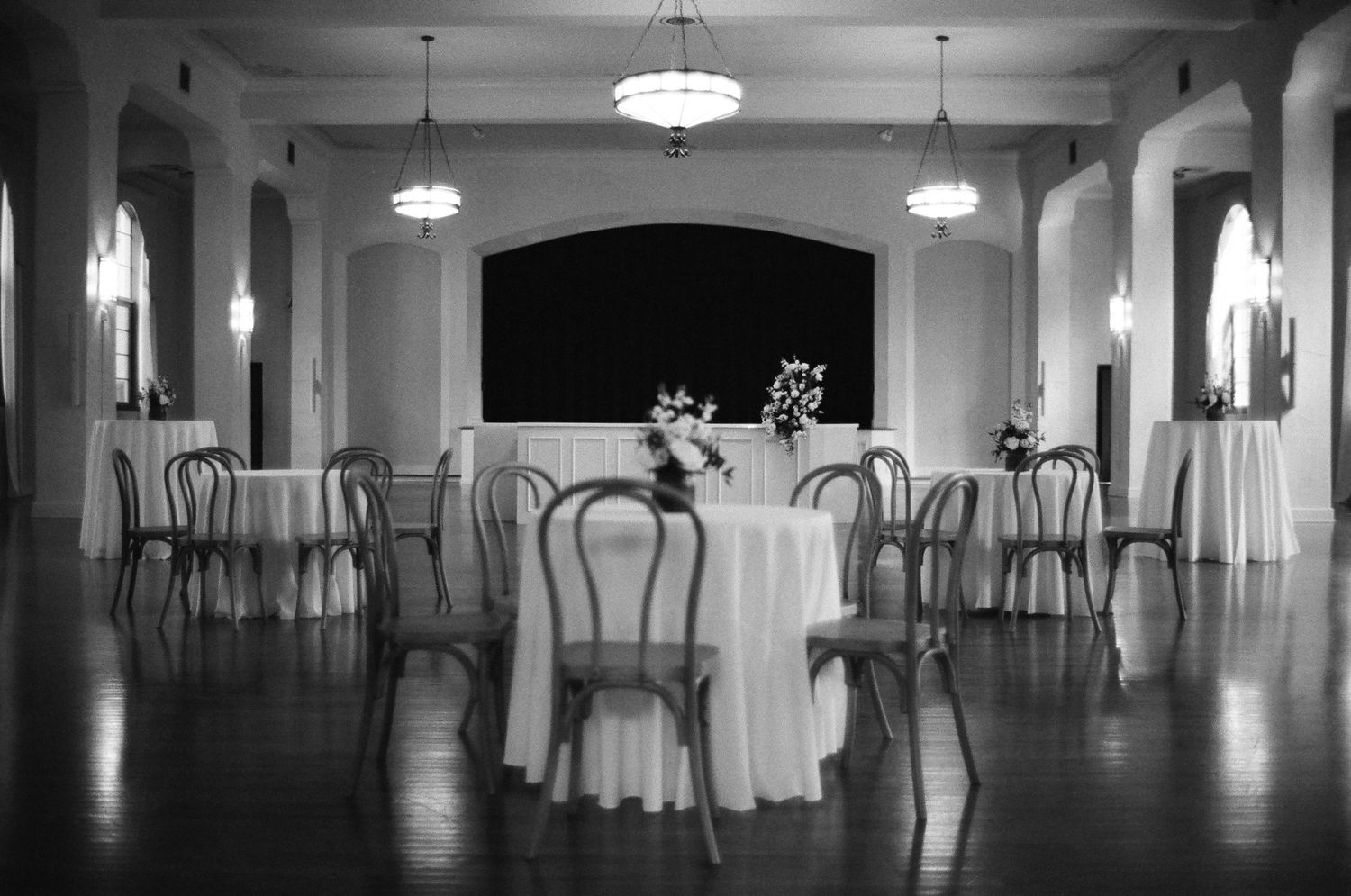
Throughout the early afternoon I both helped set up and documented this time. Steph had a team of her best assistant planners with her. So, I was mostly there for vibes. Vibes were indeed found in abundance. And right in front of me I found 35mm compositions everywhere. Being able to look in the viewfinder and see a nearly unobstructed view of the angle of view before me was incredible. The Nikon F3, which has become my most used film camera, has an incredibly bright viewfinder that I can see in its entirety even with my glasses, something that is not quite possible with my other favorite cameras like the FM2N and M3 thanks to their magnification. But this M4-2 also shares a view finder magnification similar to the F3, a 0.72x magnification that makes seeing the framelines, even the 35mm ones, easy for me.
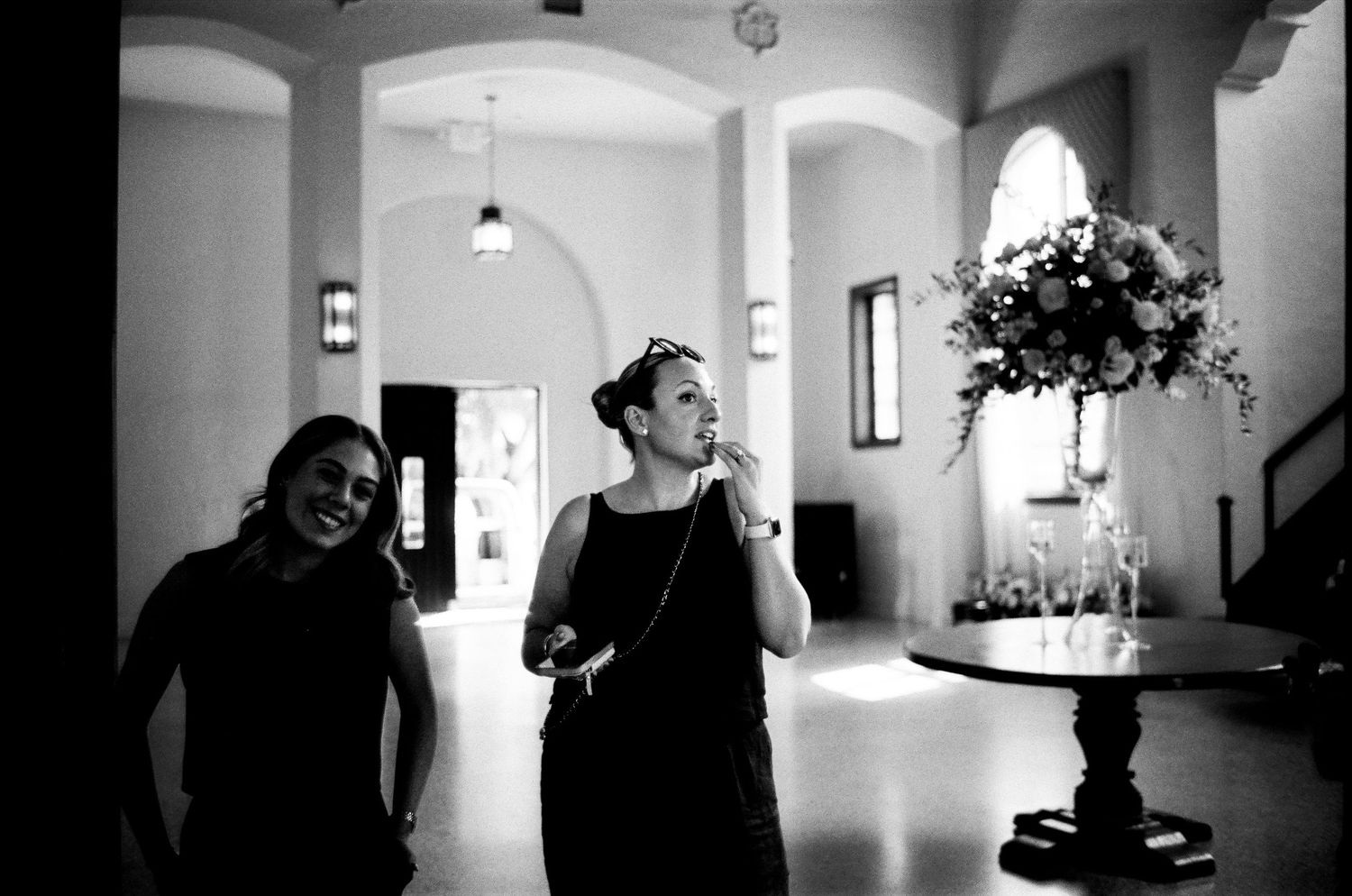
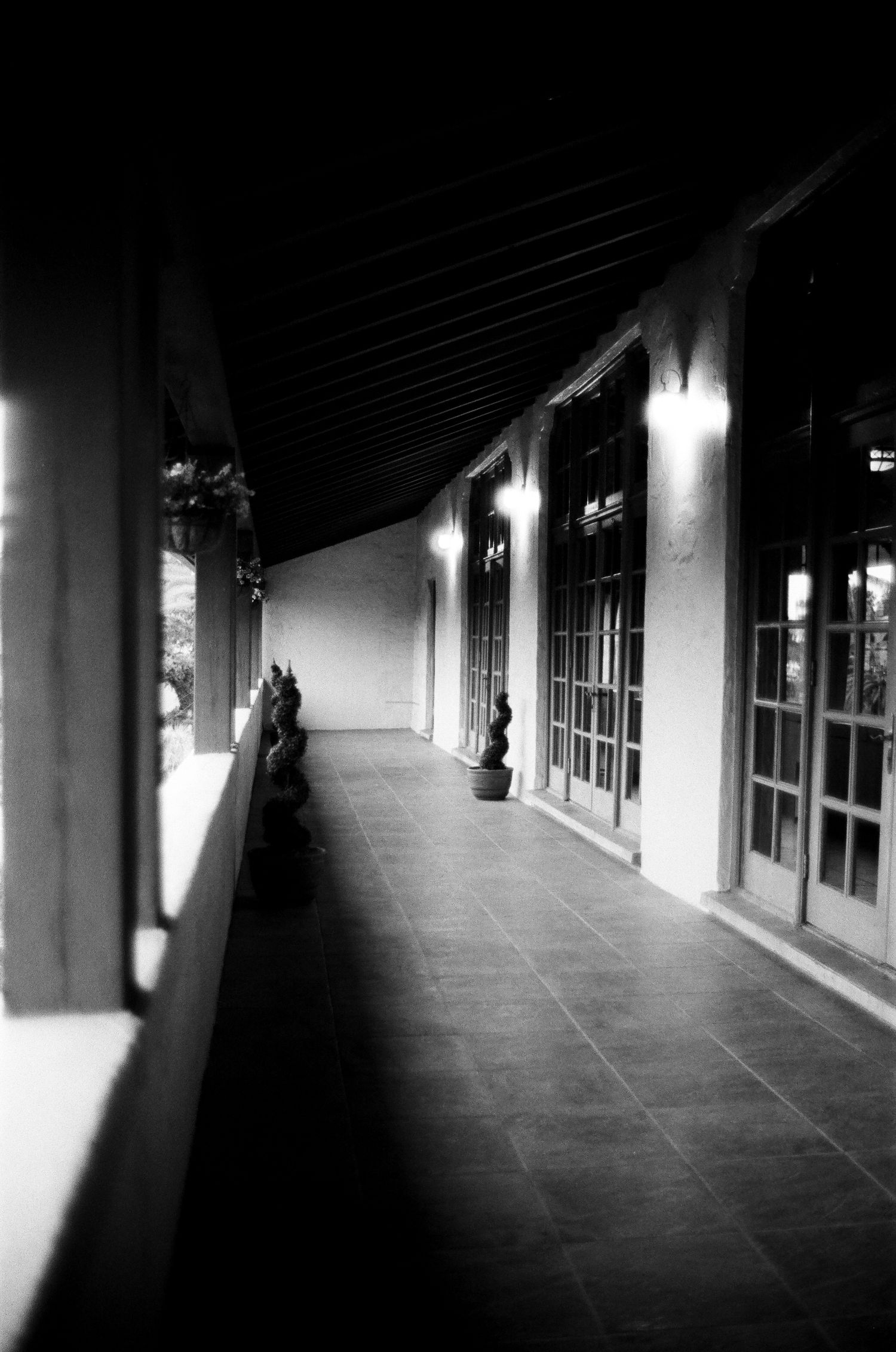
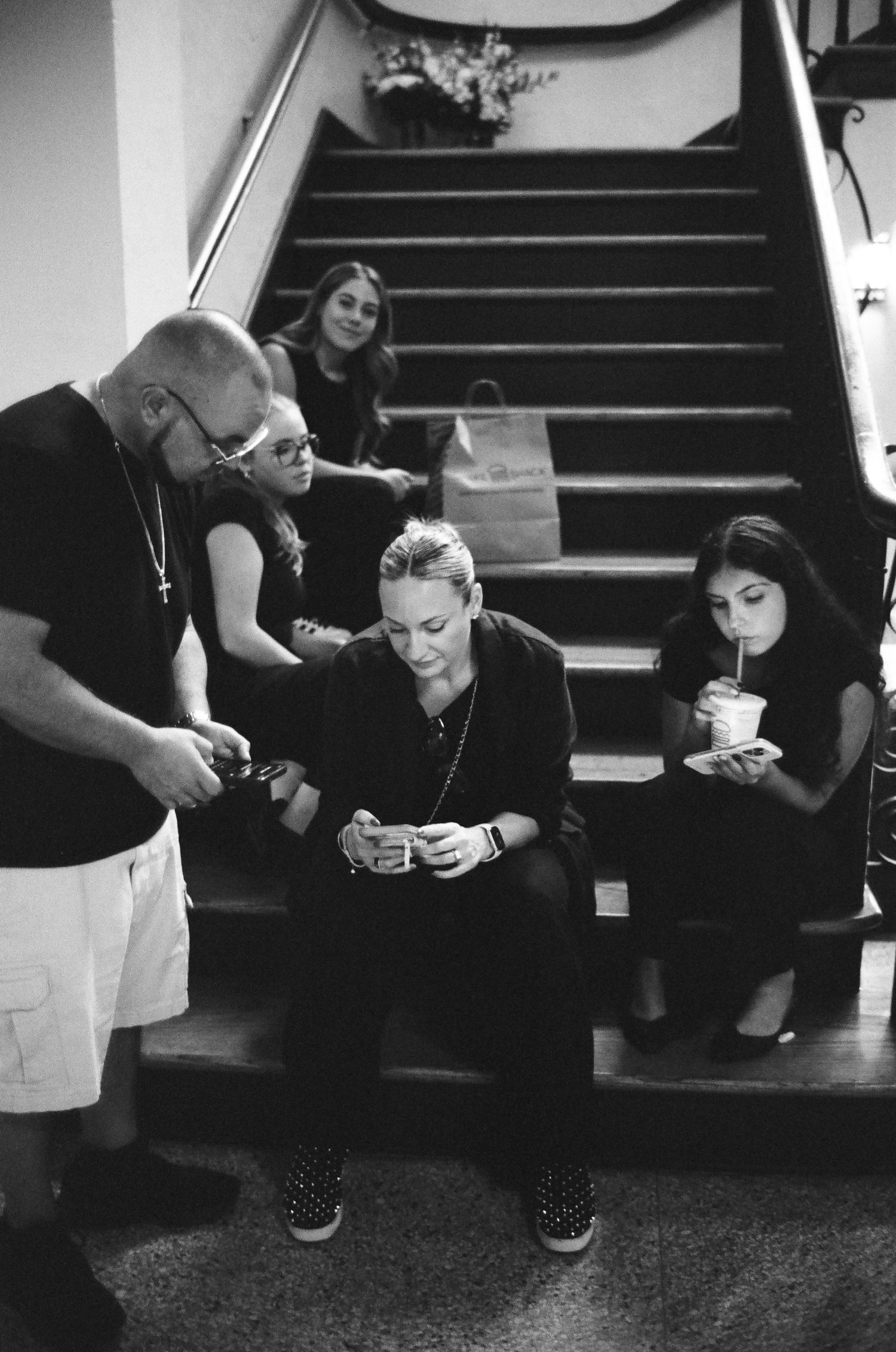
This has a very real and important pro, to what many would consider a con versus the M3's massive 0.91x magnified viewfinder: it means that I can compose precisely without wiggling my eye around to see where my composition ends within my framelines. With the F3 and F4 this became the biggest reasons why I began relying on them for professional work (and the F3 even more so for personal photos too). With the M4-2, I could enjoy the same speed and ease of composing as I did with those professional Nikon bodies, but with the rangefinder focusing that I love so much. In truth, rangefinder focusing is so much easier for me with my poor eyesight. It is so much easier for me to see when my subject is in focus with a rangefinder patch than with SLR focusing. The split image rangefinder spot found on most SLRs is easy enough to use, but I nail focus way more often with a true rangefinder patch. So there must be something to that. For professional work, I still need the speed and reliability that Nikon pro film bodies give me, so that's not changing any time soon unless a client specifically asks for Leica film cameras and lenses (why would they, though?). But for my own personal photos this means I have more options than I did two weeks ago.
Hot Shoe, Hot Damn
Possibly the most important reason that led me to the M4-2 was its inclusion of a hot shoe. A year ago I shot a wedding at the Biltmore for Kayla, founder of Gypsy Lemon. At this wedding I had to use flash extensively. I was hired by her to shoot film exclusively, so I did a lot of practicing and felt comfortable enough with it when I finally shot the wedding, an Indian wedding that called for multiple days of coverage. When the pictures all turned out I decided it was time to stop being afraid of flash on film and started using it more and more in my analog photos.
This is a major part of why the M3 has been used less and less over the last year. In fact the last time I used the M3 seriously was in Japan nearly a year ago. Since then I've switched to a Nikon-heavy rotation of camera bodies and lenses. This caused me to sell off nearly my entire Leica R kit, all but the R4S (my first Leica) and two lenses, the 35mm f/2.8 and 28-70mm zoom. But my love for Leica's M bodies and lenses has never waned. The M3 simply stopped be as useful to me as it once was.
What did this mean for me? Well, there's a reason that Nikon became the optics maker of choice for professionals from the late 1960's and on. Nikon simply made it easier to adapt to any sort of photography. And true enough for current times, I have not regretted letting go of most of my Leica equipment (especially the digital gear) and switching over to Nikon F and Z mounts in the last year. Being able to slap a small flash on my FM2N at night while on vacation has given me an opportunity to keep shooting UltraMax and Tri-X where I used to have to swap rolls and and push some CineStill 800T a stop or two.
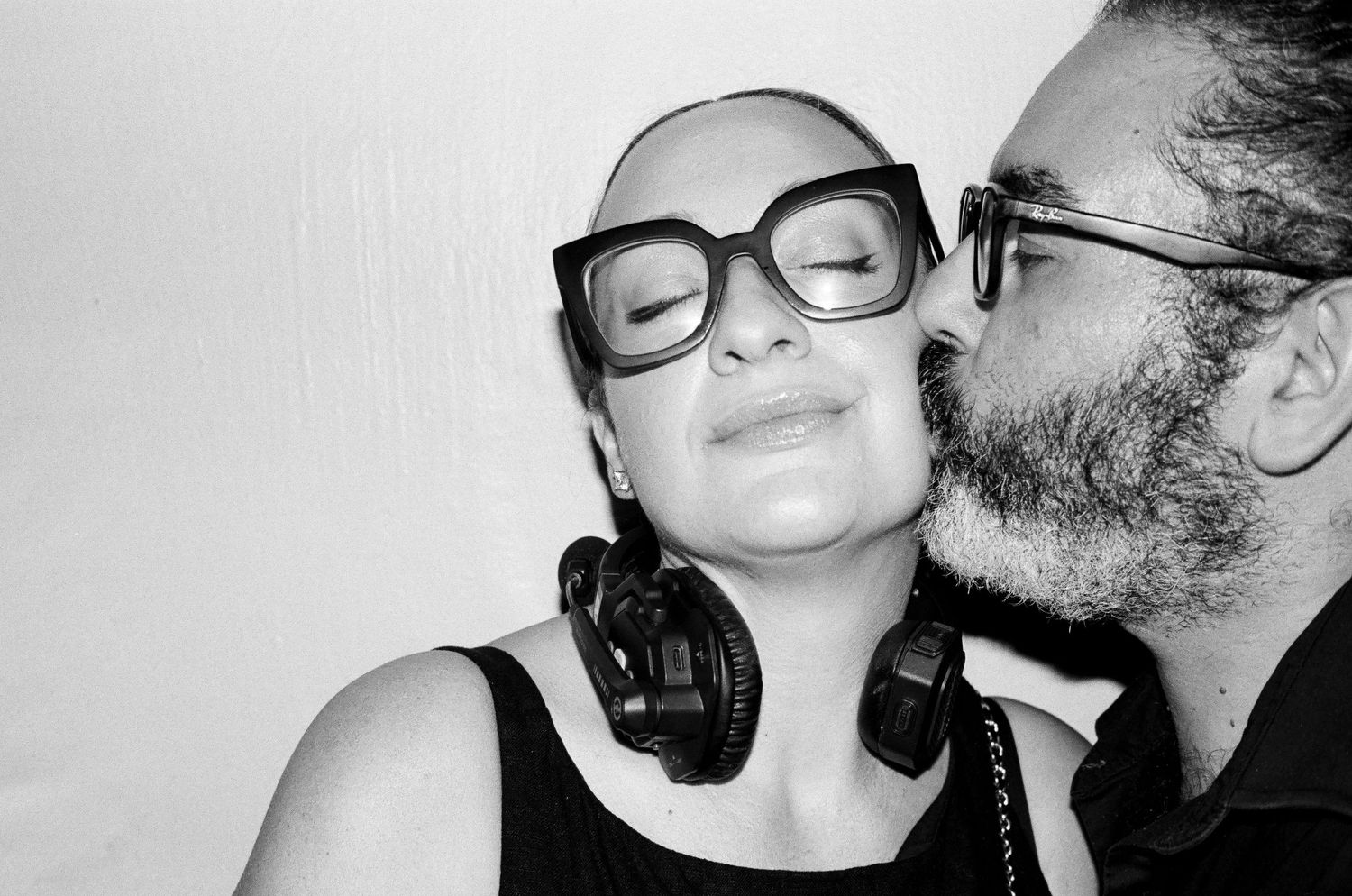
Having a hot shoe to mount a flash on this M4-2 was incredible on our anniversary. I'm a fan of the old school, direct flash, paparazzi look. I always have been. It's probably because I grew up shooting disposable Kodak cameras and reading my grandmother's trashy celebrity rags where these kinds of photos are found in abundance.
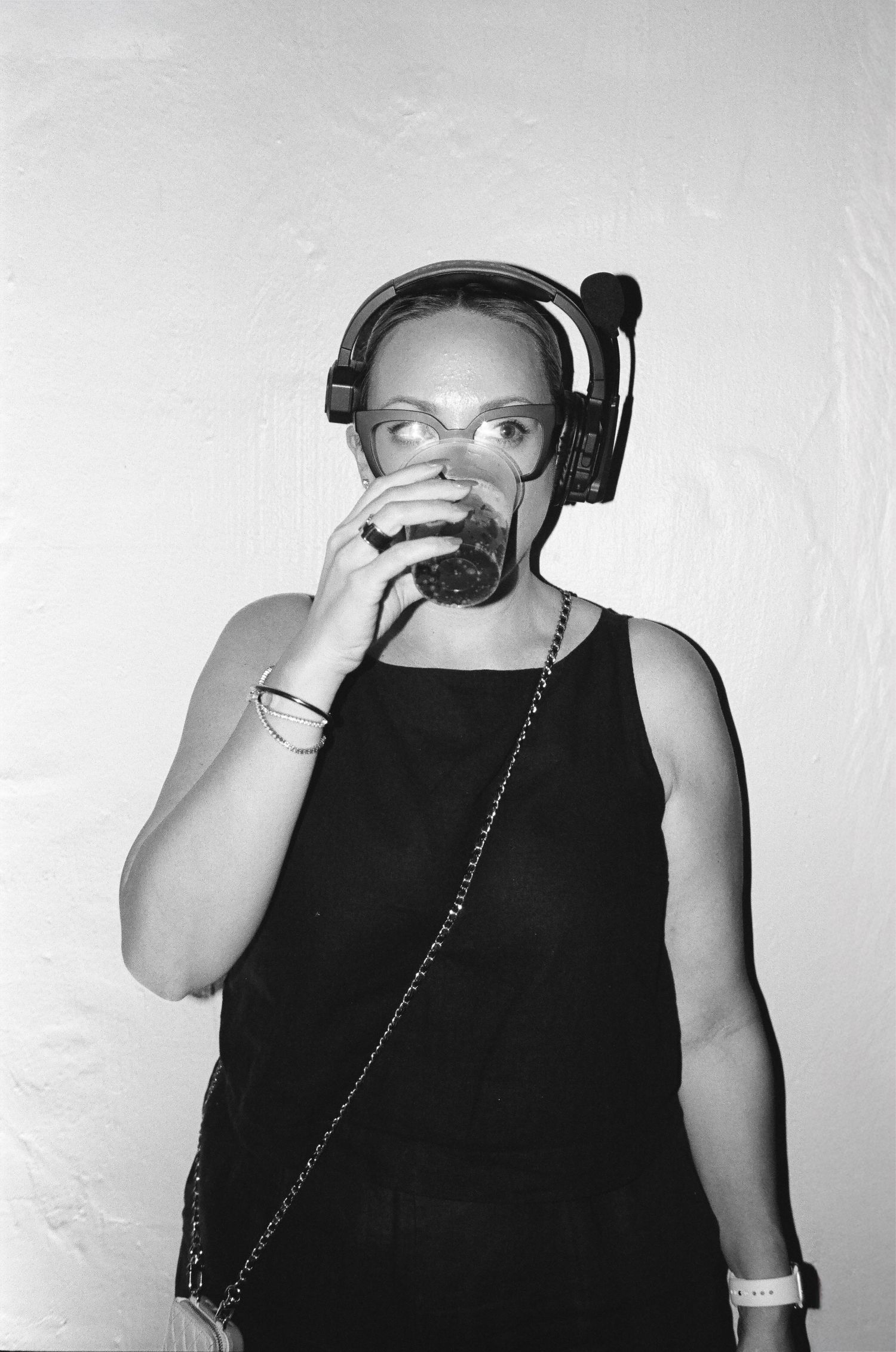
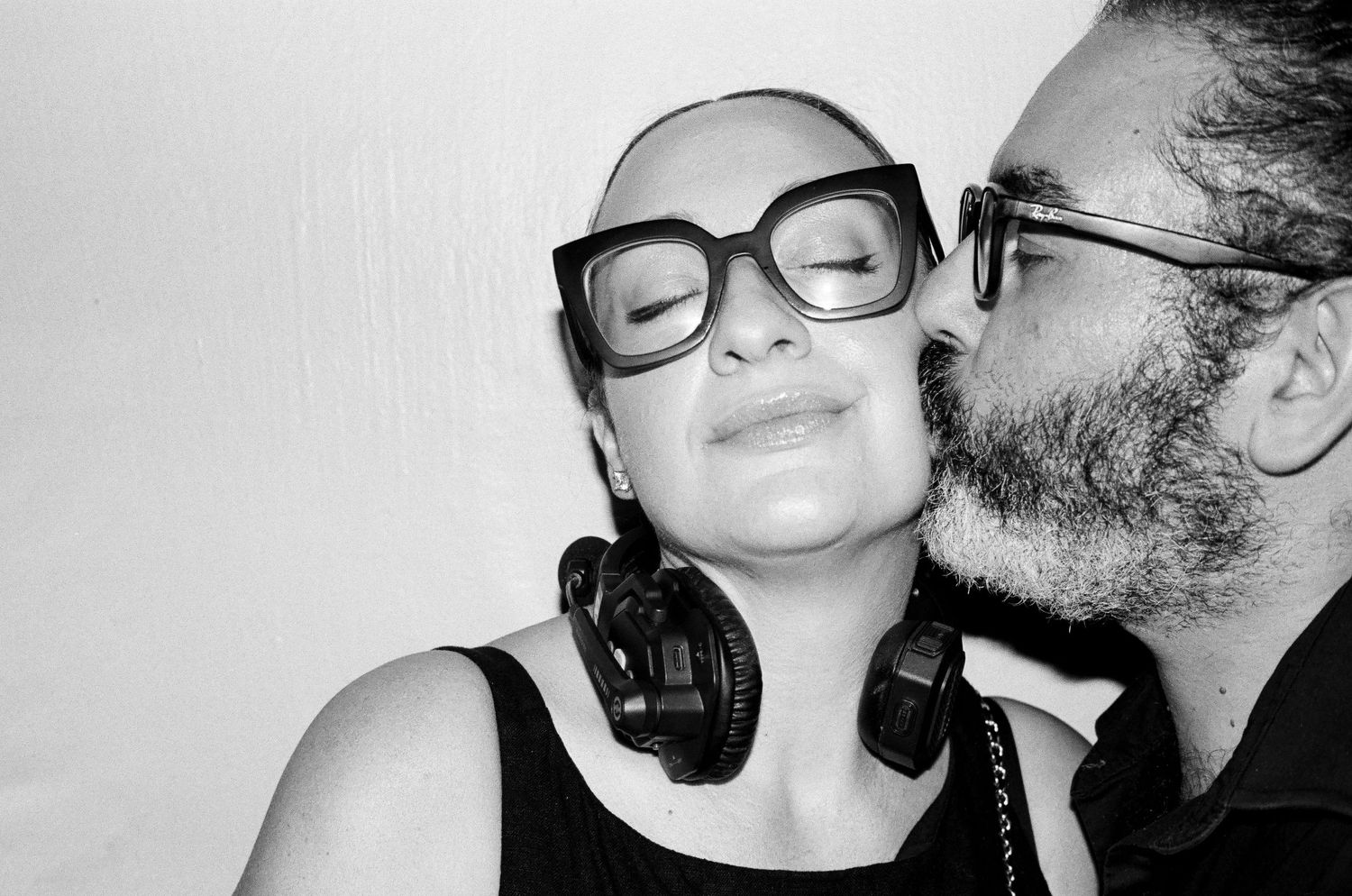
There's a real functional benefit to the hot shoe for me. It allows me to keep shooting late into the night without fear that every one of my photos will be a blurry mess. But just as beneficial is the ability to use flash stylistically. As I've already stated, I've become a big fan of combining flash on film with wide angle lenses for artistic reasons. I usually do this with color film. However, for the last two months I've really been feeling B&W. I think it has to do with how much color film I shot in the summer. I do that every summer, and quite often once we are done with summer vacations I'll go back to Kodak Tri-X for a while. It helps to reprogram my brain and start seeing differently. Whatever the reason, be it the lens, the camera, the flash, or the film, I was very happy with the editorial style shots I got of Steph.
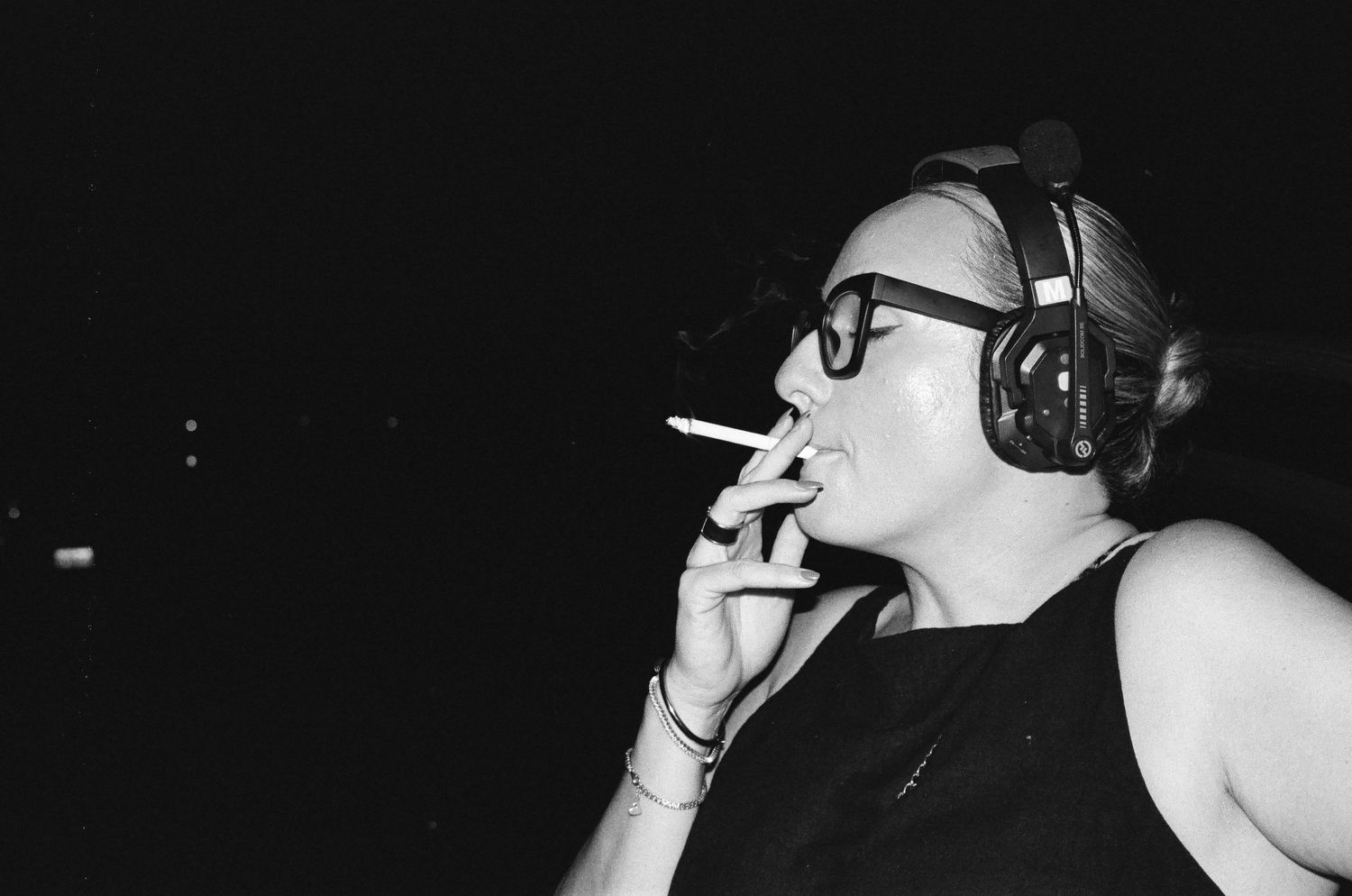
I've written about it before here, but making portraits of Steph is my favorite thing to do. She is my muse. Much of how I practice the art of photography goes back directly to how I've learned and grown as a photographer by working with her as a model and subject in front of the lens. I'm sure this is in large part because of how we feel about each other. But we also work well together. Whether I am photographing a wedding she has planned, or I'm assisting her at one of her weddings, or adulting in life, we work well together. And that extends to our relationship as muse and artist.
This shot, made with the iM30 flash at 1/8th power, the Nokton Classic at f/8, and the M4-2's shutter speed at the flash sync of 1/50, is by far my favorite of the night. I racked the focus to its minimum distance of 0.7 meters, held the camera out at arm's length and fired away. Impossible without flash. Crisp and clean because of it too.
Wasn't there a lens to discuss?
I haven't forgotten about that oh so incredible little Nokton Classic. This is my second Voigtlander lens. A while back I picked up the Color Skopar 21mm f/4. It came in incredibly handy in Japan, allowing me to capture some shots that otherwise would have been impossible without it. I used it for dance floor party shots for a while too, before switching over to the AI-S Nikkor 24mm f/2.8 a few months back. I really like that 21mm lens, so I was expecting to like this Nokton Classic. But I wasn't expecting to fall in love with it immediately.
When I tested the M4-2 with that first roll of Kodak UltraMax, it had been with my Summicron 40mm since the Voigtlander had not yet arrived and I wanted to use a lens I was familiar with to ensure that any issues, should they arise with the test roll, would leave me with the ability to rule out the lens as the culprit. But I wanted to make this kit work on our anniversary the way I intended to use it moving forward.
The Nokton Classic 35mm f/1.4 SC II (a mouthful that I won't be repeating, instead just writing Nokton Classic) is a lens based on Leica's original 1960's Summilux 35mm f/1.4 lens, flaws and all. It is those very flaws that drew me to it, though. Wide open the lens glows heavily, smearing highlights in the outer parts of the frame. This is a look that some love and others hate. I fall firmly in the love camp. It's one of the things that keeps me coming back to my 50's era Summitar 5cm f/2. I neither want nor need clinical sharpness or optical perfection. I like the sort of character lenses like this bring. Especially when shooting black and white film where mood and tone are piled on in heaping globs.
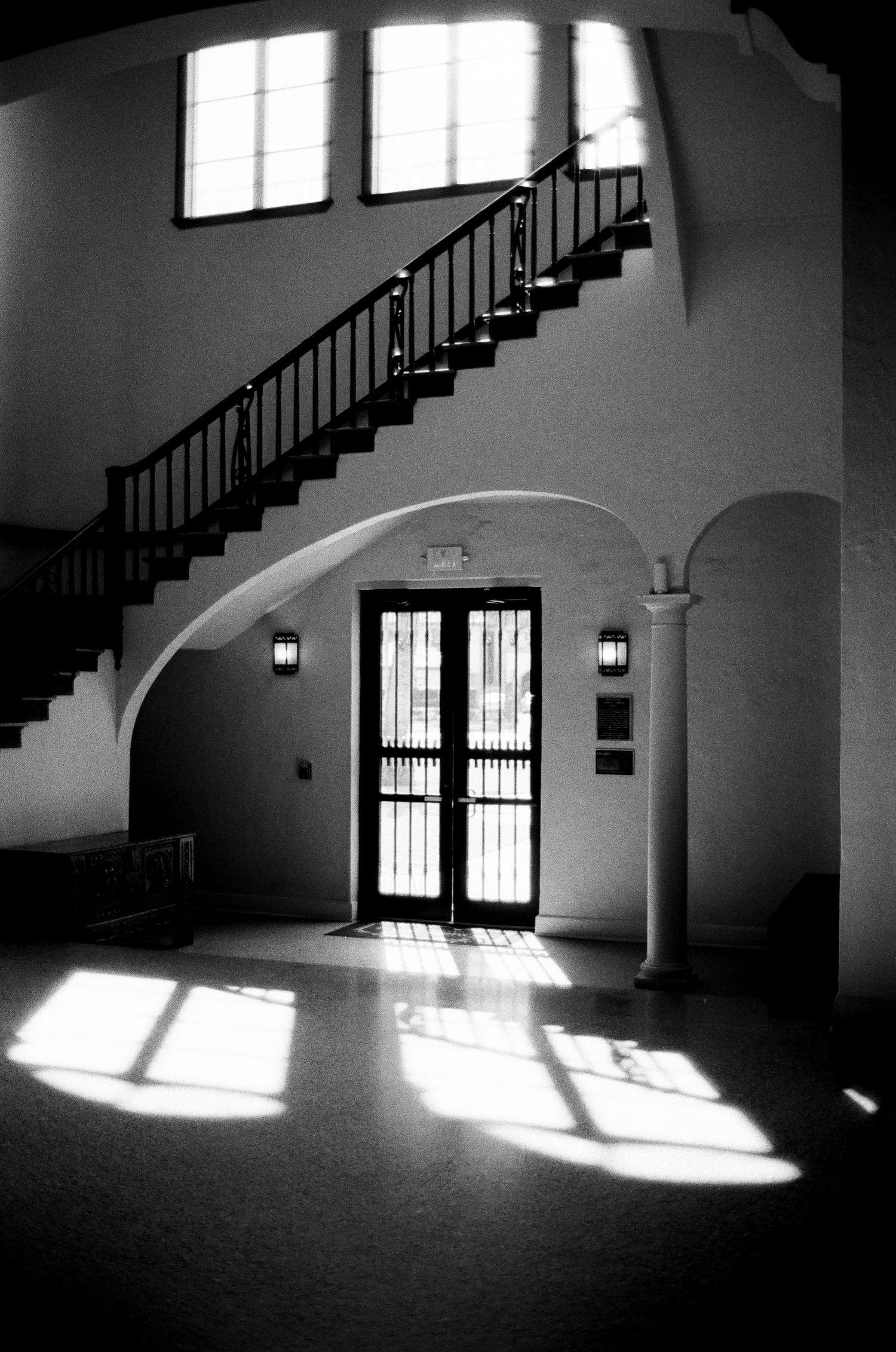
I am not usually a "shoot everything wide open" guy. I like to stop down a bit and have some depth of field and let the lens hit it's sweet spot. But wide open is usually where a lens' character comes out. The Nokton Classic has tons of it!
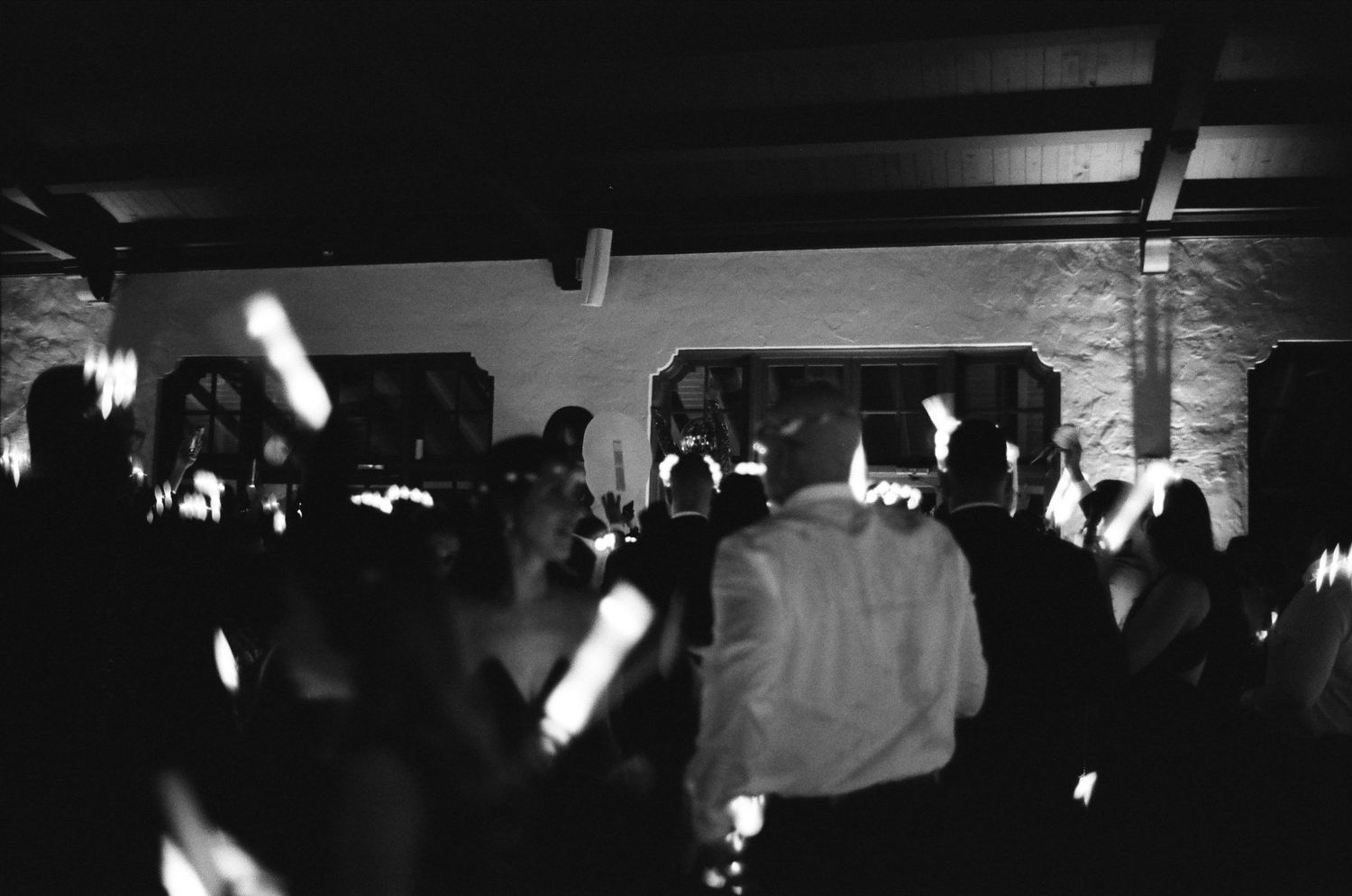
That insanely wide aperture and its rendering don't only lend and air of classic vibe to the photos it draws, but it also allows me to shoot well past the amount of light with which I would normally feel comfortable with while using 400 speed film. Combining this with the Leica M's ability to shoot at ridiculously slow shutter speeds without camera shake and this is an exceedingly strong low light combination. Of course, the hot shoe lets me use flash, but flash is not always appropriate, as with these shots. While one roll certainly isn't enough to draw definitive conclusions about the lens, I can say that this is definitely a lens I'm happy I bought and am excited to keep shooting with it, as I currently have another roll of Tri-X loaded and am about halfway through shooting.
Final Focus
In a time when I am favoring SLR shooting, when I have put one roll through my M3 in the last year, I have decided to get a rangefinder that in many ways is inferior to the M3 I am already not shooting much. Online I've read so much about how the M4-2 is an inferior M. It's Canadian, it uses steel gears, it's steel top and bottom plate isn't as nice...blah, blah, blah.
The thing is that all this comes from Leica fanboys upon whose opinions I place no value. That isn't exclusive to Leica fanboys. It's any group of fanboys. They can't be objective. By all accounts steel is more durable than brass. The assembly process, while not done by hand like the M3, being done in an assembly line style means that every part fits perfectly or it is thrown out and a new part that does match perfectly is used. How does that make it inferior?
"Well, there's the viewfinder," you might say. It doesn't have the high magnification that the M3 has, but why should I care? It's actually easier for me to see the whole frame with the M4-2. And that's with wider lenses! Couple this with the flash use and it's even more perfect than the M3 for my personal needs.
"But surely the feel isn't as nice as the M3?" I'm sure is what you're asking. And after handling both, and using them side by side, I can confidently say that I don't really notice much difference. The rangefinder patch is larger, yes, but it's not measurably easier to focus than the M4-2's patch, which is identical to the M2 and every other M that followed. The advance lever is nicer to use on the M3, but I enjoy the two piece hinged one on the M4-2. It's different, not better.
And, not to be overlooked, the rewind crank is so much easier to use than the rewind knob found on the M3. While I am a fan of the removable take-up spool of the M3, the fast loading system of the M4-2 really is faster and easier. There's also the reassurance that your film is in fact advancing with the turn of the rewind crank with every stroke of the advance lever.
I'm not saying I'm getting rid of my beloved M3. I don't think that will ever happen. But I am saying that my Nikon F3 now has a camera that might sit with it on my shelf, always loaded with film and ready to go. They'll likely both have fast 35mm lenses mounted on them. But if I need or simply want flash exposures, I'll likely be reaching for this M4-2...at least for the foreseeable future.
All images © 2020-2026 David Ulloa Studio. All rights reserved.