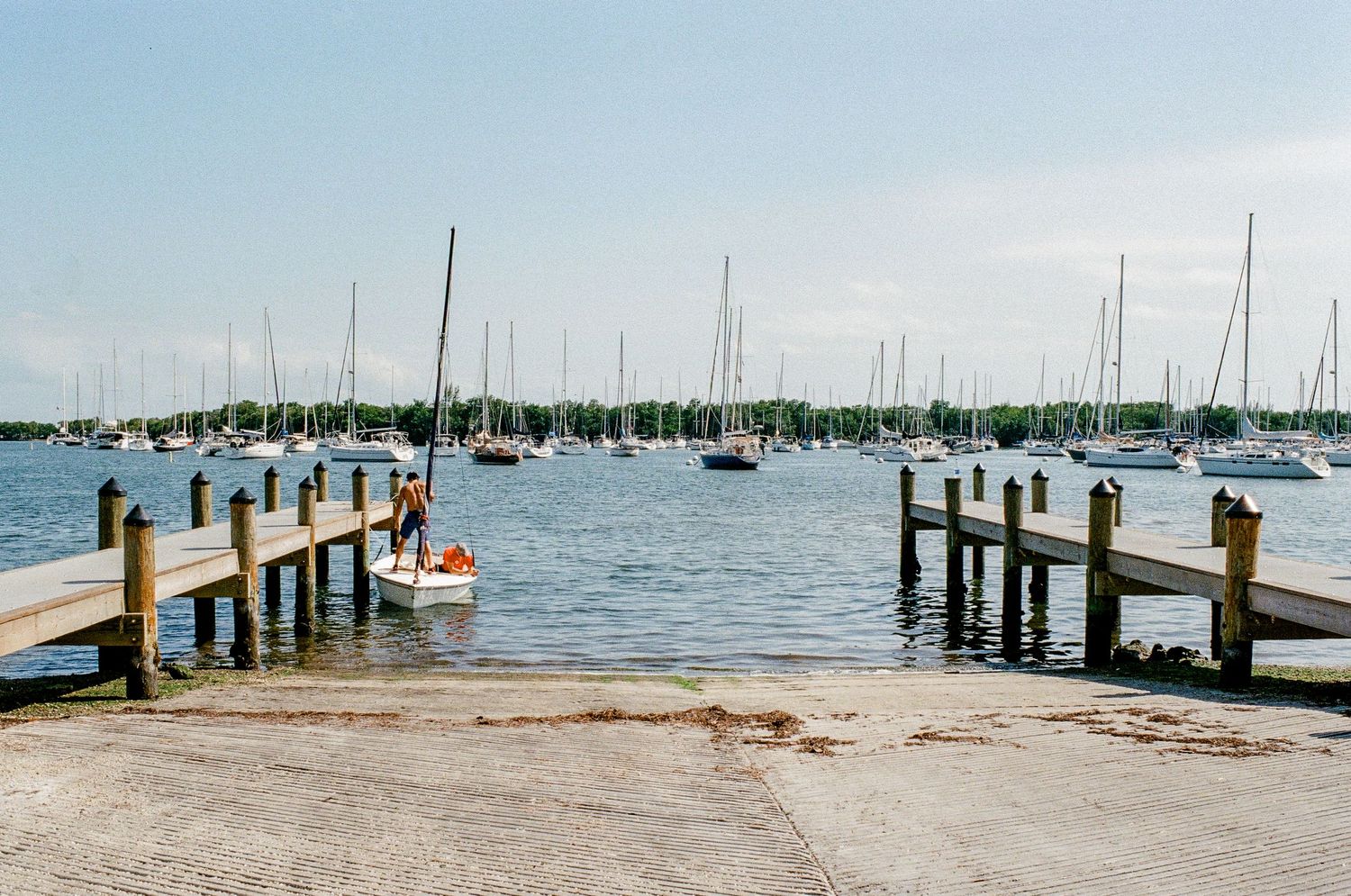
Landing on Sigma
I bought my Leica SL for one reason and one reason only, to adapt vintage lenses - namely Leica R lenses - to a full frame mirrorless camera. I had a Fujifilm XT-2 that I loved, but with its crop sensor, I was missing out on all the beautiful, gooey edges of some of my favorite lenses like the Leica Summicron-R 50 and Helios 44-2. So, I sold my XT-2 and bought an SL. But it wasn't until last summer that it even occurred to me that I should have a native L mount lens. I was going to England and wanted a lens to shoot with that provided weather sealing in the event of a classic London rain. I wanted something fairly standard that would allow me to make photos in just about any situation. I knew I was going to get a Sigma, as everything I was seeing and reading indicated I would enjoy the Contemporary series form factor, and I'm a big fan of the Sigma made Leica Vario Elmar-R 28-70mm. 35 or 50? I decided to shoot the gap and got the 45mm, despite it being slower than the previous two by a whole stop.
Realization in a sea of naysayers
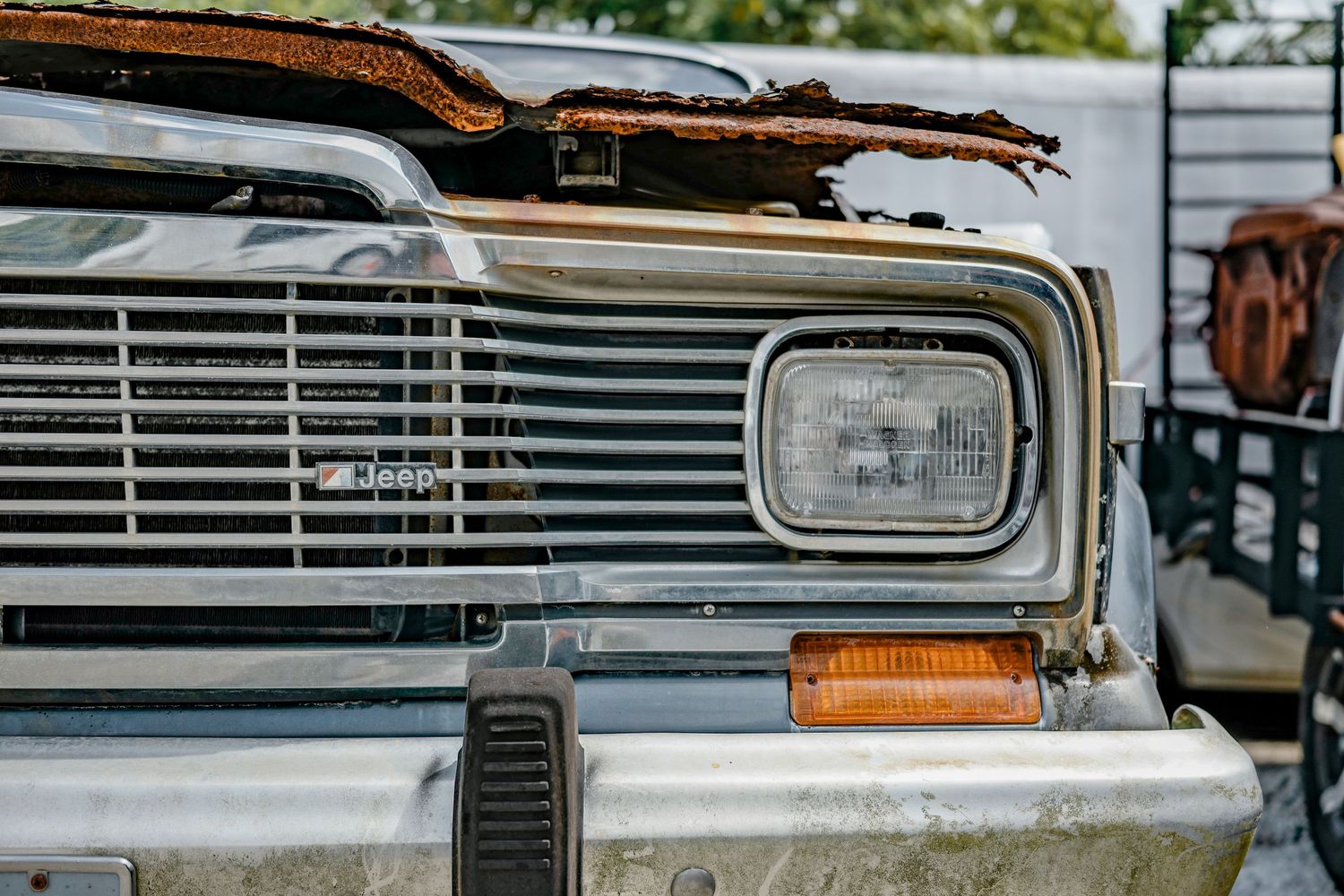
This photo was made shortly after I received the lens. I brought it with me to work and anticipated a bit of time late in the afternoon to make some photos. While driving to a work happy hour, I stumbled upon this beat-up, old Jeep Grand Wagoneer. Something about it screamed "TAKE MY PICTURE!" It was so bright and sunny that I couldn't see much. So, I just made sure I had a balanced exposure and fired off a few photos.
Once I got home, I checked the photos and found that I liked them all. In fact, I really liked the way the Sigma 45 drew all the rust lines all over the hood of this Jeep. Everything that was in focus was sharp without being too sharp and the focus falloff was very nice. Could it be that the internet had been largely wrong? Why would so many dislike this lens? I had to do more shooting with it to find out.
The following week, we said goodbye to our seniors on campus. They would graduate in a week and a school tradition was for them to throw a big tailgate cookout on our campus on their last day. So, I brought the Sigma with me. It was so early in the morning that I didn't want to work for any photos. I just wanted to point and shoot. So, I set it to autofocus, set my exposure, and ventured through the tailgate.
I don't make a habit of chimping while I shoot, but I snuck a few peeks at the photos as I walked around and was finding that I was liking it more and more as the morning drew on. There was something here. And with its small size, it meant that my camera didn't seem very imposing as I approached anyone. Granted, I had taught many of these young men, but no one shied away.

Sharpness
One of the negative comments I read over and over about this lens was concerning sharpness, or lack thereof. But many of the images I saw online looked great. I have found this lens to be sharp, even very sharp, but not overly sharp. I wonder if many of these comments are coming from Sony E Mount shooters who are more accustomed to a clinical sharpness that is, frankly, a quality I dislike.
I have found that the sharpness and colors of the Sigma 45 are very similar to my Summicron-R 50. In fact, I have confused them before. Thankfully, metadata makes it impossible for this to happen for long as I can always check the info. But this one of the Frankie's Pizza sign - a Westchester icon - I thought had been made with the Summicron-R 50. It is plenty sharp. In fact, I'd say it is just sharp enough to notice that it is sharp without being distractingly sharp.

Of course, sharpness isn't something that should be uniform across all subjects. Photographing a sign and photographing a person require different levels of sharpness. And this is where the lens really shines for me.
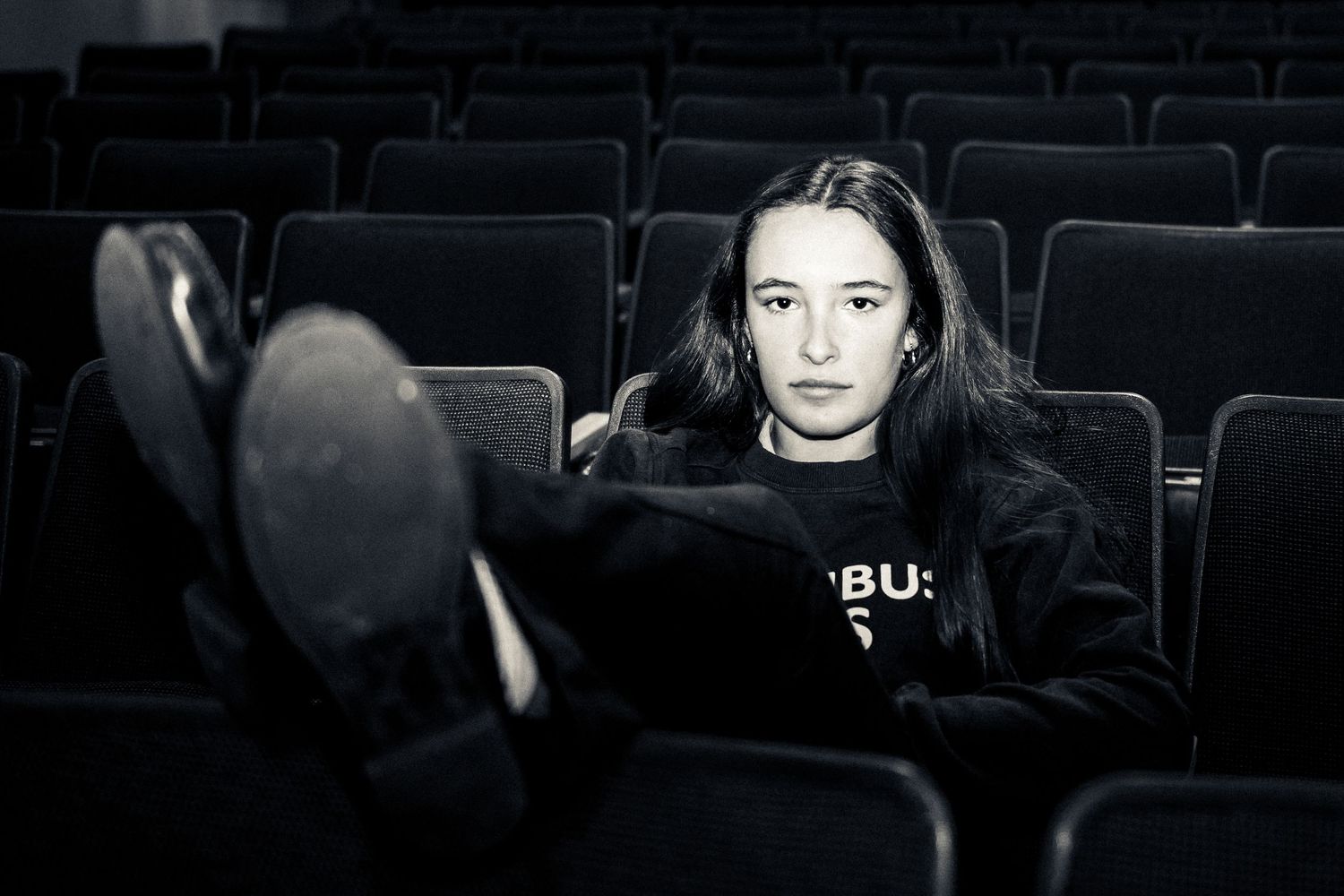
This portrait of one of our film club students is a great example of what I am referring to. This image, made with a Godox TT520II flash mounted on my SL, shows how that lack of clinical sharpness actually makes a flattering portrait. The center of the lens is sharp and the edges softer, as evidence by the row of chairs that is in line with her face. But this is, again, something that for people photos is very desirable. It helps draw attention to the subject towards the center of the frame. Even with a classic rule of thirds composition like this, the sharpness is, for me anyway, perfect.
Bokeh
This is the one area that was consistently praised online. And it is easy to see why. Wow, is it gorgeous. 45mm is a pretty great focal length, providing a very standard field of view that, depending on your distance to your subject, can have lots of sharpness across the frame or focus falloff for days.
The Sigma 45 is a Sonnar design, which is associated largely with Zeiss lenses as they first put this into production with their legendary Sonnar 50mm f1.5. So, the sharpness and bokeh are very reminiscent of these classic film era lenses. I have to imagine that this is why some complain about the sharpness while loving the bokeh. But as I really do live in film world, this is perfect for me. A native L Mount lens with a film-like rendering? Sign me up!

As evidenced by these two photos, the bokeh is beautiful. Creamy, without smudging. Smooth, with zero nervousness. In fact, this is some of my favorite bokeh on any lens I own. It all allows for the eye to immediately be drawn to your subject, which is what focus falloff is supposed to do, after all. Meanwhile, for the photog that wants to bokeh-gaze, well, bask in Sigma's out of focus glory!
Where backgrounds are uncluttered and lots of space is found between it and the subject, the bokeh becomes an impressionist's dream. And where backgrounds are filled with visual interest, like this photograph of Link at Arcade Odyssey in Miami, the bokeh becomes a way of drawing attention to the in-focus area. The specular highlights in that portrait all help draw the eye to Link's face while creating visual interest. Really this is the lens' strongest point and a big reason why I reach for it as often as I do.

Portrait Monster
This is a great general purpose lens. I feel the need to state that before proceeding. Because I'm about to gush over how I use this lens almost exclusively as a portrait maker.
Thanks to the sharpness and bokeh this lens is, quite simply, one of my favorite portrait lenses. It is a portrait monster. And, because it is on the wide end it allows for context to be included with the subject. These are my favorite sort of portraits because they allow me to become emotionally tied with the photograph. Time and place are just as important aspects of a photograph as the subject being photographed. This may not be true of something like a headshot, but for the kinds of portraits that I often make, including a bit of the environment and providing context makes for a better and more pleasing portrait.

Many would opt for something both longer and faster for a portrait. 85mm f1.4 seems to be a crowd favorite focal length and speed. Wide open, with the amount of background compression inherent in a telephoto lens, there is no way to contextualize the portrait.
Context, as I stated, is important for me. My style of shooting is motivated by creating a memory around a portrait. Because people don't exist in a vacuum, where and when this person is existing is paramount to the emotionality of a portrait.
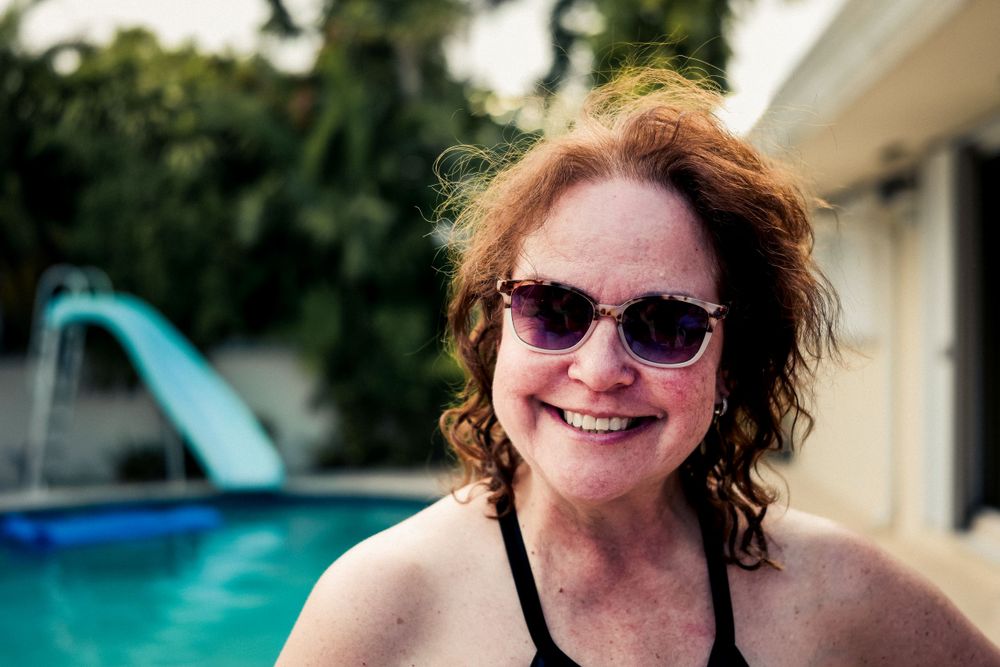
The portrait of Wesley was made on Father's Day. we played near a patch of flowers at my parents' house. The portrait of my grandmother, Oma, was made on the first day she entered her pool and had a drink, two years after my grandfather passed. I can connect with these so much more because of the nature of the 45mm lens for portraiture.

A Different Kind of Portrait
While not the conventional sort, full body portraits are amazing with the Sigma 45 as well. And the further away the subject is from the background, the better the separation. A shot like this is possible with a longer lens, but you'd have to be much farther away from the action. Likewise, a wider lens, like a 28 or 35mm might be a good option, but then the bokeh is not as strong unless you are using a super fast lens. Then, nailing focus becomes almost a pain.
The 45mm focal length and f2.8 aperture, then, becomes a thing of beauty for full body portraits. Subjects are sharp, backgrounds are full of bokeh, and even more context is provided for the photograph.

But that's not to say that it can't be used for tighter portraiture. In fact, it works really great as a close-up portrait lens too. Just because it isn't my preferred way of making portraits doesn't mean it can't be used that way!
This portrait of Steph was made at Wes' second birthday party. There is just enough context in the background to please my environmental portraiture habit, but the framing is much tighter now. Up close, the sharpness of this lens becomes more apparent. But it never approaches the unflattering sharpness found in many modern lenses.
45mm is also a very flattering focal length. Faces don't distort the way they often do with wider lenses due to barrel distortion. And once you get into the longer focal lengths, pincushion distortion can cause faces to seem thinner than they are as well. Right around 50mm is where the sweet spot really is.
And because of the autofocus and small size, this is a lens you can pretty much always have with you and utilize your camera as a point and shoot. Being in the moment and making a great portrait without ever sucking someone out of the moment is a great way to operate. At least it is for me.
The weather sealing is also a big plus as well! While the weather sealing is solely at the mount, that is more than enough for me. This was, after all, the reason why I bought the lens. I wanted a way to keep making photos in environments and conditions that were less than ideal. Hanging out in a pool? No problem! Chilling at the beach? Not to worry! Not when you can just slap the Sigma 45mm f2.8 Contemporary on your camera.

Final Focus
Does the Sigma 45mm have the clinical sharpness and snappy autofocus of a Sony G Master? No, it doesn't. And if that is the complaint, then I don't understand it. I don't want that. I want a lens that will draw light the way I like it, like my old film lenses. I've got a nice collection of film era Leica and Pentax lenses, and the photos I make with this Sigma, once given my film edit on Lightroom, makes shooting digital feel almost like shooting film...almost.
It also fits in with these old film era lenses aesthetically as well. The design and handling of the lens is more Leica-like than Leica's own L Mount offerings. Knurled aperture and focus rings, all metal construction, small and easy to handle. In fact, I think Sigma's Contemporary line is right at home on my shelf among the Leica R and Pentax K lenses it lives next to. Whether using autofocus or focusing manually - despite being focus-by-wire - it is a joy to use.

The construction matches the image quality, which is stellar. This portrait of Steph on Saint Augustine is a great example of just how great this lens is. Everything about this portrait is just perfect. And who's going to argue with LFI, who awarded it a Mastershot a few weeks back (you can find it on the LFI Gallery titled "Whatever Happened to Lazy Sundays?"). I actually had forgotten that this portrait was made with the Sigma, having thought it to be my Summicron-R 50 until I took a peek at the metadata.
It all boils down to a lens that is, quite frankly, perfect for me. I can pack it in my bag and use it at a shoot - I did just that a few days ago when I was doing a portrait shoot for a client - or make quick family snaps - like you can see with this photo of my kids with my mom while out to dinner.
If you are still reading this and haven't bought one yet, what are you waiting for?

More Sigma 45mm f2.8 Contemporary Photos


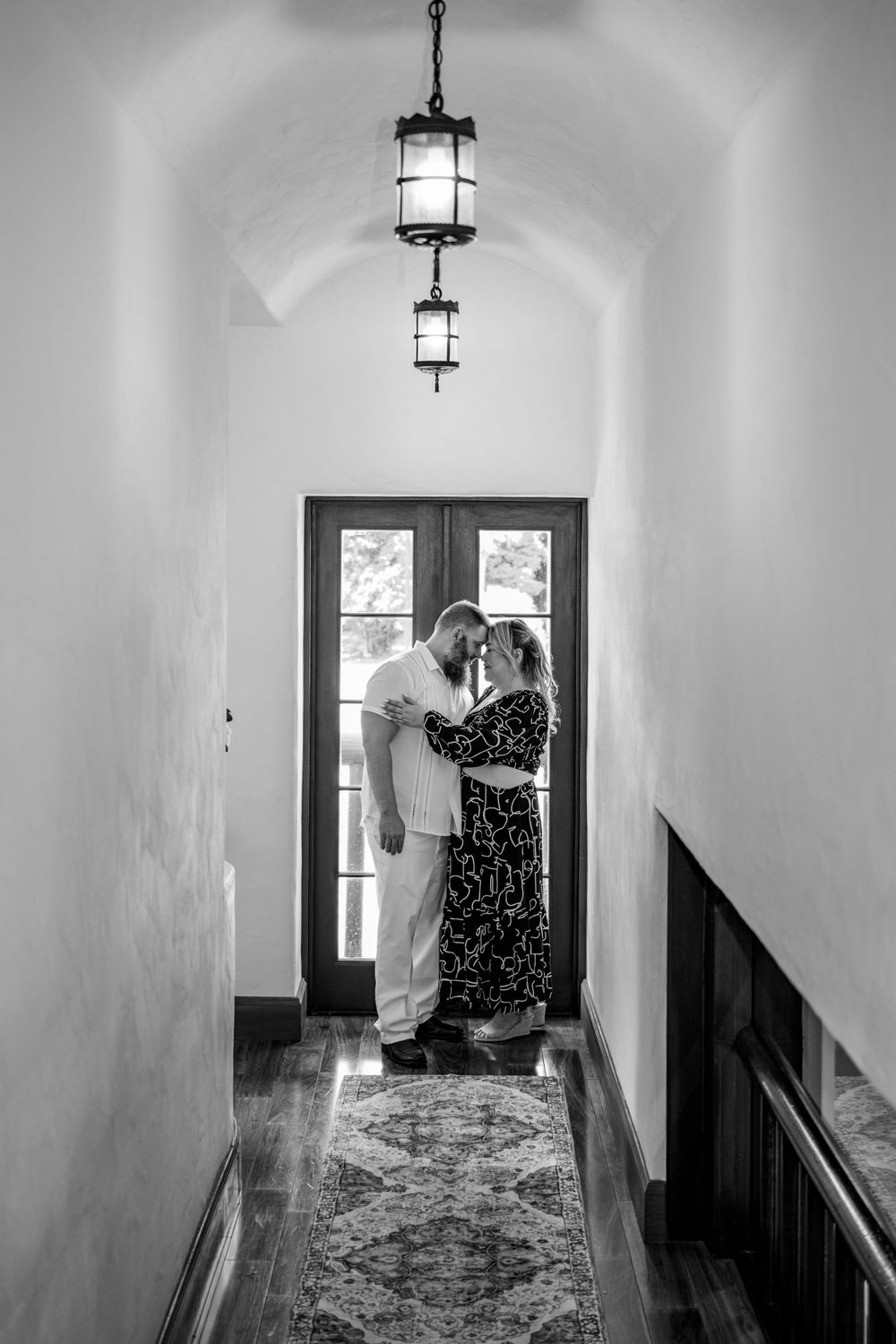
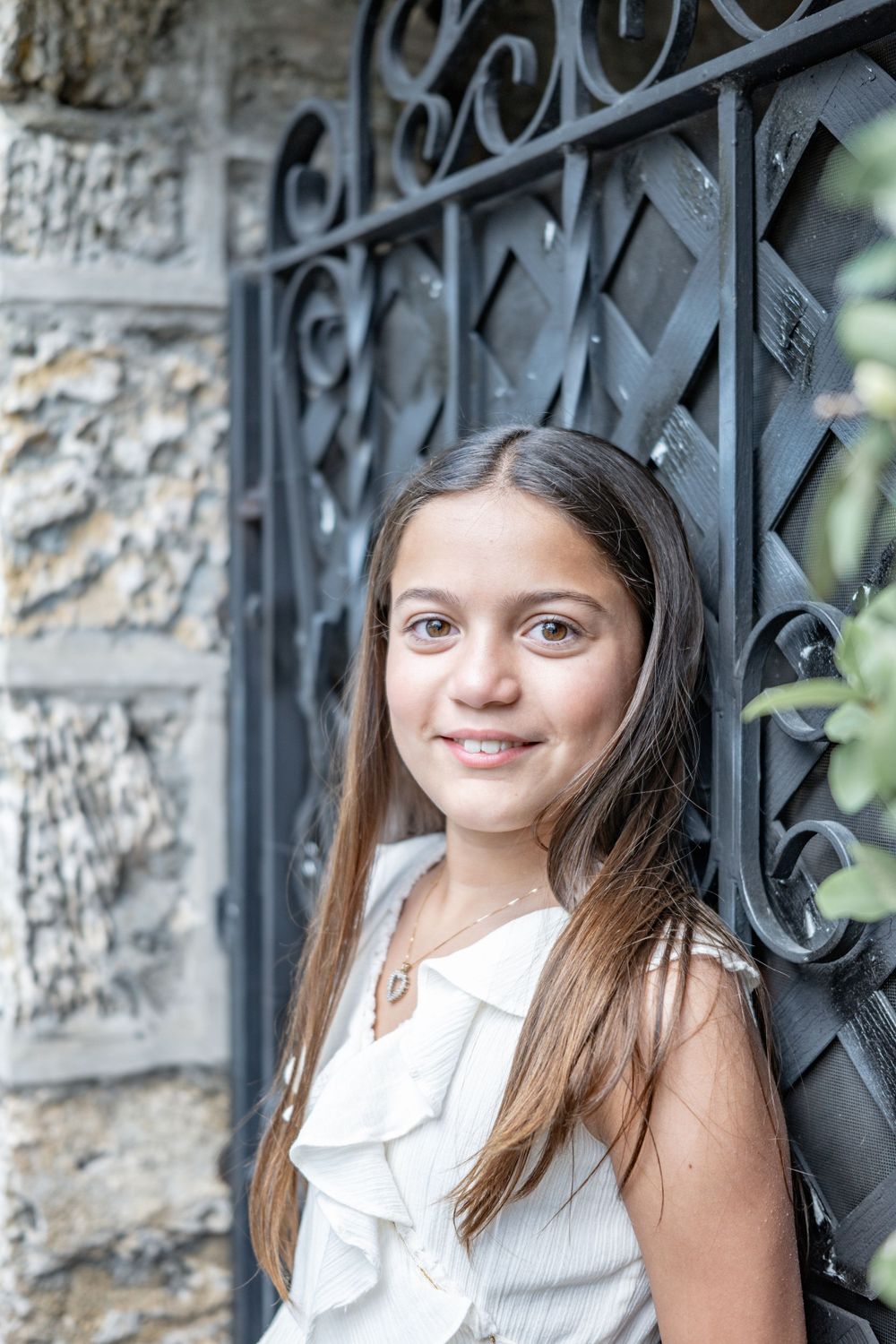



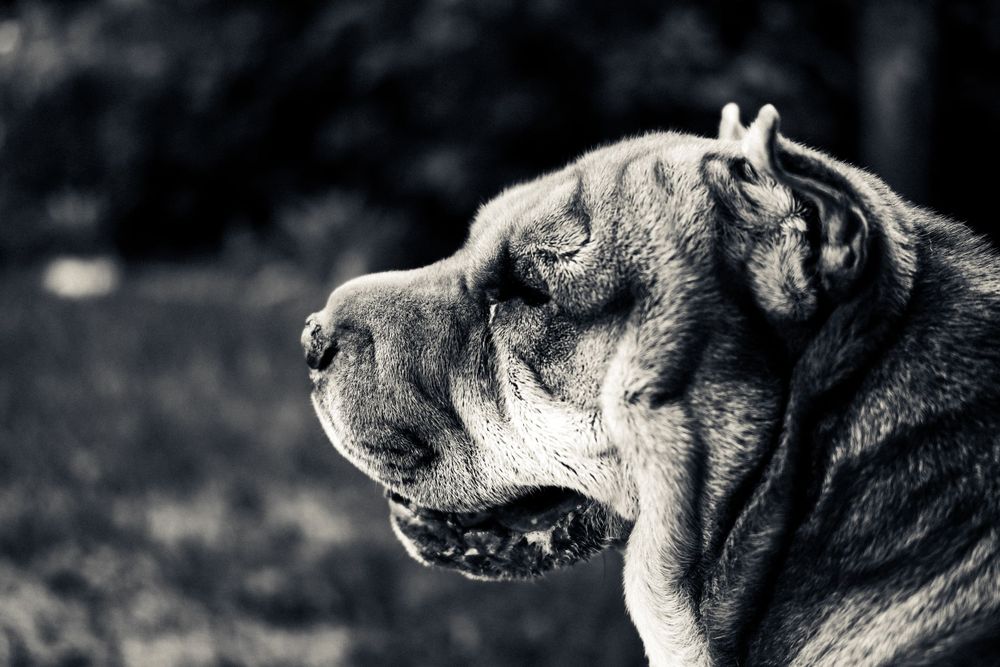



All images © 2020-2025 David Ulloa Studio. All rights reserved.