Submitting to LFI
As many good stories do these days, this one begins by scrolling Reddit. About three years ago I got really into using Reddit as a resource for photography. I discovered a lot of great groups - some not so great ones too - but the one that I found most helpful in seeing better than average quality photographs and receiving better than average critique on my own photos was r/leicaphotos. This subreddit is dedicated specifically to photography done with either Leica cameras or lenses, and any combination of the two. It was there that I first saw someone post about LFI Mastershot. The photograph he posted was stunning, and accompanying it was a letter from LFI proclaiming it a Mastershot and that it could now be found in their gallery.
My interest was piqued and I quickly asked how this individual had submitted for this. He responded by saying that anyone could submit directly to LFI via their website and I made short business of signing up and beginning the process of submitting photos. Time went by and I submitted photographs with infrequence. But then it happened that I was leaving on vacation in the morning and awoke to find an email in my inbox from LFI proclaiming one of my photos as a Leica Mastershot
My First Mastershot
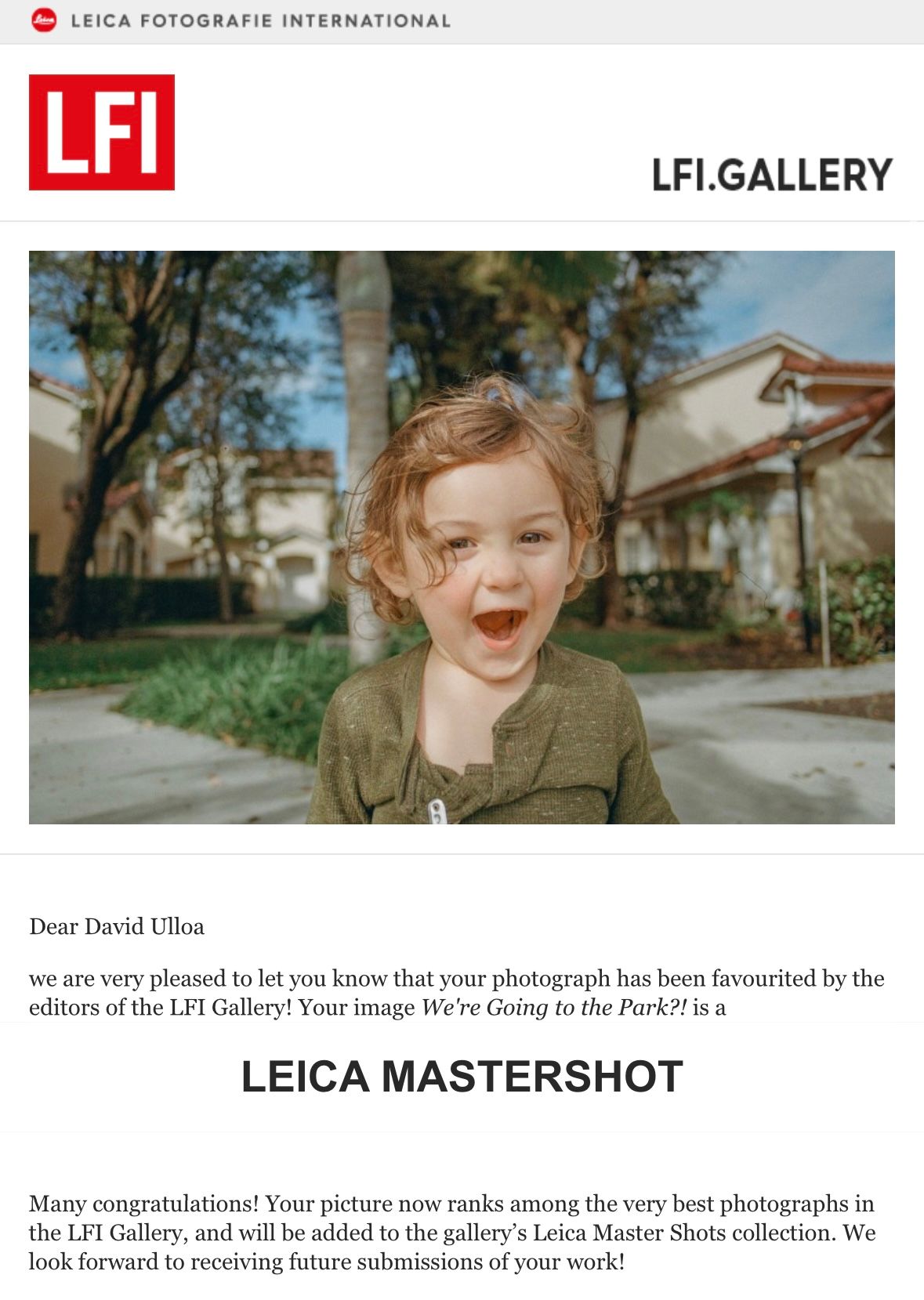
My first selection for Mastershot was a portrait I titled We're Going to the Park?! To this day it remains, and may possibly be for all time, what I consider to be the best portrait I've ever made. And how it happened is kind of absurd.
While I usually prefer longer lenses for portraits, usually 90mm, this happened spontaneously. Wes ran across the courtyard as we were leaving for a walk around a neighborhood lake and I had only a moment to adjust the focus on my lens as he bolted at me at top speed, his little legs carrying him as quickly as they could. Essentially zone focusing with the lens aperture wide open - where it had been set previously - I slammed down on the shutter release when I estimated I had him in focus, pretty close to the minimum focus distance. How I managed to get him, not just in focus, but so crisply in focus, using zone focusing at f2.8 is still a mystery to me.
That smile is so genuine, because he is running at me at top speed. Thankfully my shutter speed was preset from the day before, when we had taken a walk around the same time. It all lined up just perfectly. This photograph is also big reason why I fell in love with FujiColor 200. The color recreation is very near true-to-life, but with just a hint of a push towards pastel. This photo, and the subsequent portrait of Link, my older son, made immediately afterward (both of these are framed in our home) made me reexamine my color grading in my digital photo editing.
I don't think I could recreate this photos even if I tried ten times. In fact, I shouldn't have been able to do it then. I had just recently gotten back into shooting film after a long hiatus. I had just bought my Leica R4s and was in love with the Elmarit 28mm lens I had bought just a few weeks prior. To be fair, its an easy lens to fall in love with, but I had not used it for very long and I had very little experience with the R4s.
What I do know, is that I'm grateful I had the camera in my hands and was ready to rock and roll. If I'd had it in a bag, or slung around my neck, I would not have been able to make this portrait. That much I do know.
Mastershot(s)
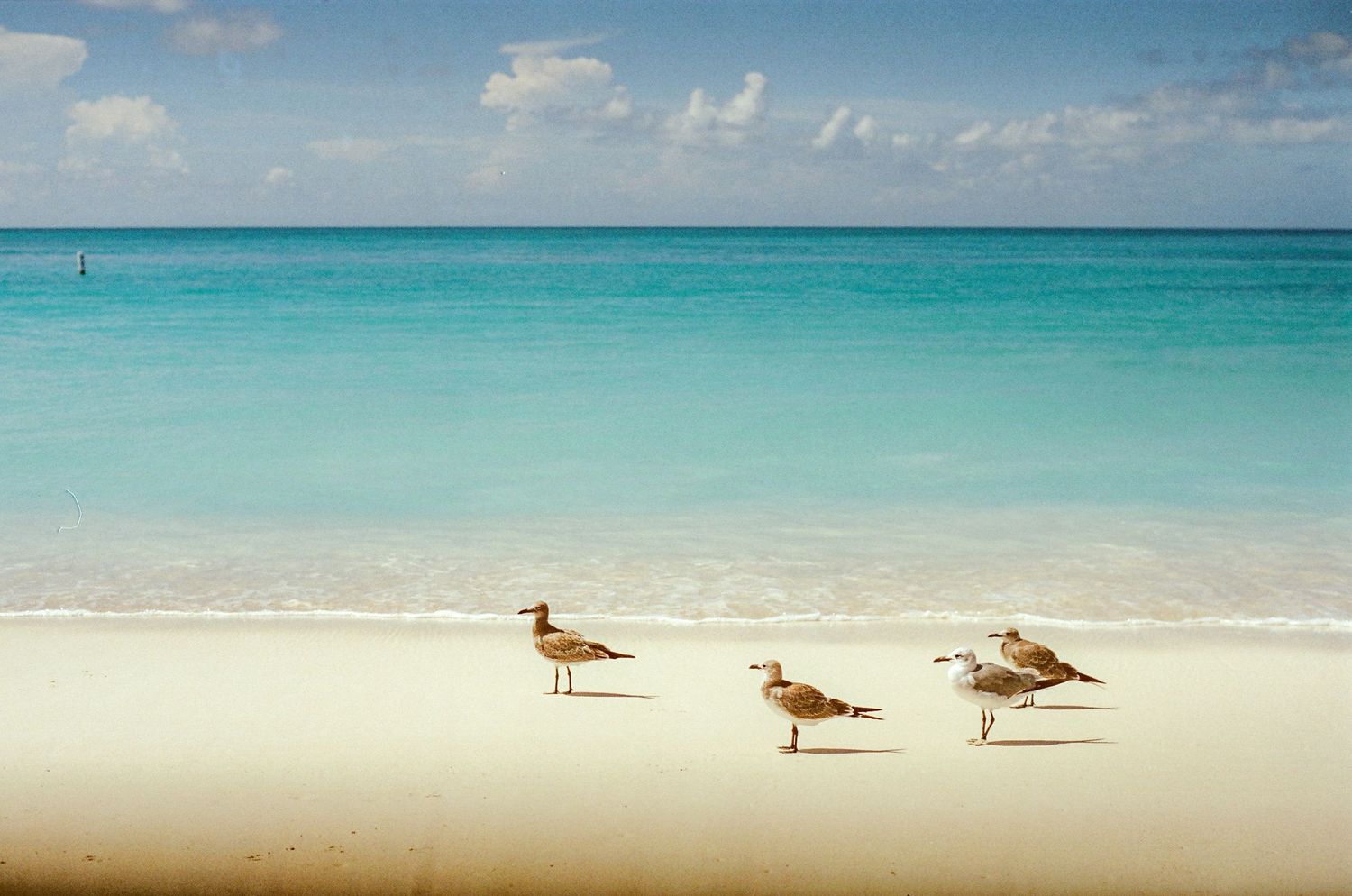
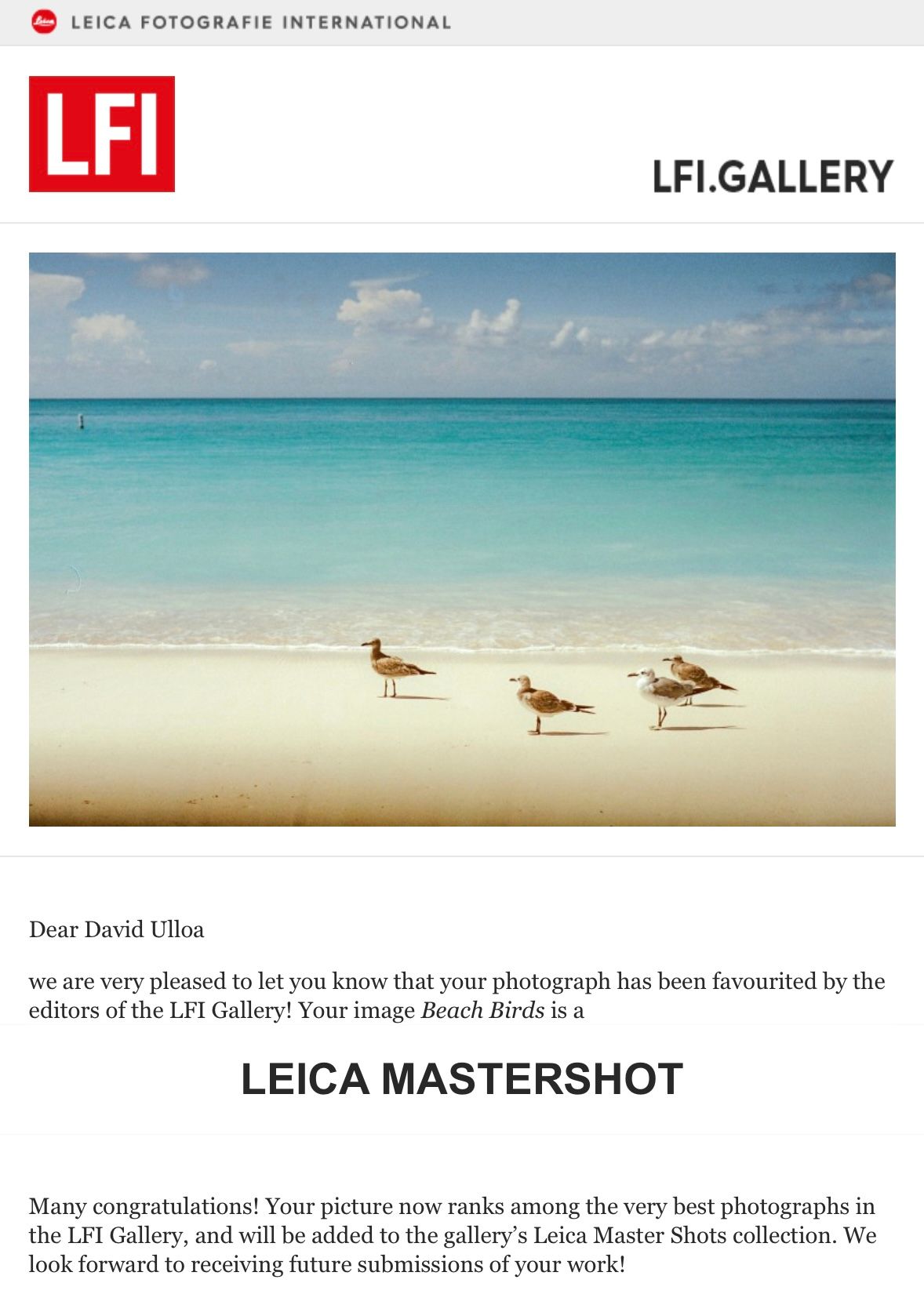
My second photograph selected for LFI's Leica Mastershot Gallery was somewhat surprising for me. I mean, obviously if I submitted it for Mastershots I believed in the strength of the photo, but I was surprised that it was chosen over one other that I felt was a stronger photograph. That other photograph featured a complex layering of foreground, middle ground, and background, with a timeless look that really worked for me. I still think I prefer that one to this Mastershot. But this also provided an opportunity for me to learn from this. Why was this frame, which I titled Beach Birds, awarded a Leica Mastershot?
To answer that question I think I have to go back to how I made the photograph. It was made on the final day of a Virgin Voyages cruise that Steph and I took for our 15th wedding anniversary. We had been drinking and partying poolside for hours and felt like we needed a bit of a break. Steph went back to our cabana and promptly dozed off. I still had about half a roll of CineStill 50D in my camera, so I took off towards the beach. Unbeknownst to me, my beloved R4s had developed a shutter issue - the shutter was not functioning properly at 1/1000, its maximum speed - but I was still able to get some usable photos.
My goal was to capture the serenity of the beach, which was at odds with the chaotic partying at the poolside near the resort. I think that keeping that serenity in mind influenced how I composed the photographs I made with this roll. They were mostly minimalist in composition and color, leaving behind the complexity and layering that I try to bring to street-style photos.
Beach Birds, however, is the most minimalist of the lot. Including only four birds grouped together in the lower right of the frame and an out of focus buoy in the upper left, there isn't much to the photograph. But the gradient of color from sand to various blues in the Caribbean waters and sky makes this a pleasingly simple, and indeed serene photograph.
Maybe this is what that more complex street style photo was missing. This is purposeful and intentional with its messaging. And I what's more, I think it is hard to miss for the viewer to miss that message.
So what does it mean?
I think the fact that these Mastershots were both made with film cameras is a significant one. As much as I prefer the "film look" over the digital one, I don't think that is why. I think it has to do with intentionality and purposefulness. While I am certainly not a "spray and pray" sort of photographer, I am more liberal with the shutter release button on my digital cameras. I believe that I end up thinking about my photograph much more when I'm making it with a film camera. Even when I have many rolls of film with me, in my head I know that I have a finite number of exposures and therefore consider why I am making this photograph before releasing the shutter. The slower pace of film is something that I believe plays a part in this. And subsequently, I am shooting more film these days than ever before.
I also think that my messaging is very important too. What is the story I'm trying to capture and how am I presenting it? What is the emotion I am trying to convey and how effectively does the composition accomplish that? This is also aided by the slower, more intentional and purpose-driven process that comes from shooting film. But it is also a process that must be adopted or the spray and pray philosophy creeps back in. And with the messaging comes another point: "seeing" in the focal length you're shooting. When I use a certain focal length, I try to see compositions in that framing before I bring the viewfinder up to my eye. So when I find a composition that works in the focal length - say 28mm or 50mm - I am ready to go and know exactly what to do, wasting no time with taking a step forwards or backwards or finding the composition with my eye in the finder.
The last point is an important one for photography in general, I think. Being ready. In both situations, my camera was already in my hand and ready to go. If I'd had it in a bag on either occasion, I would have missed the shot. While this still happens, and yes it does suck, it is happening less and less these days as I simply have the camera in hand and can fire off the shot when I need to.
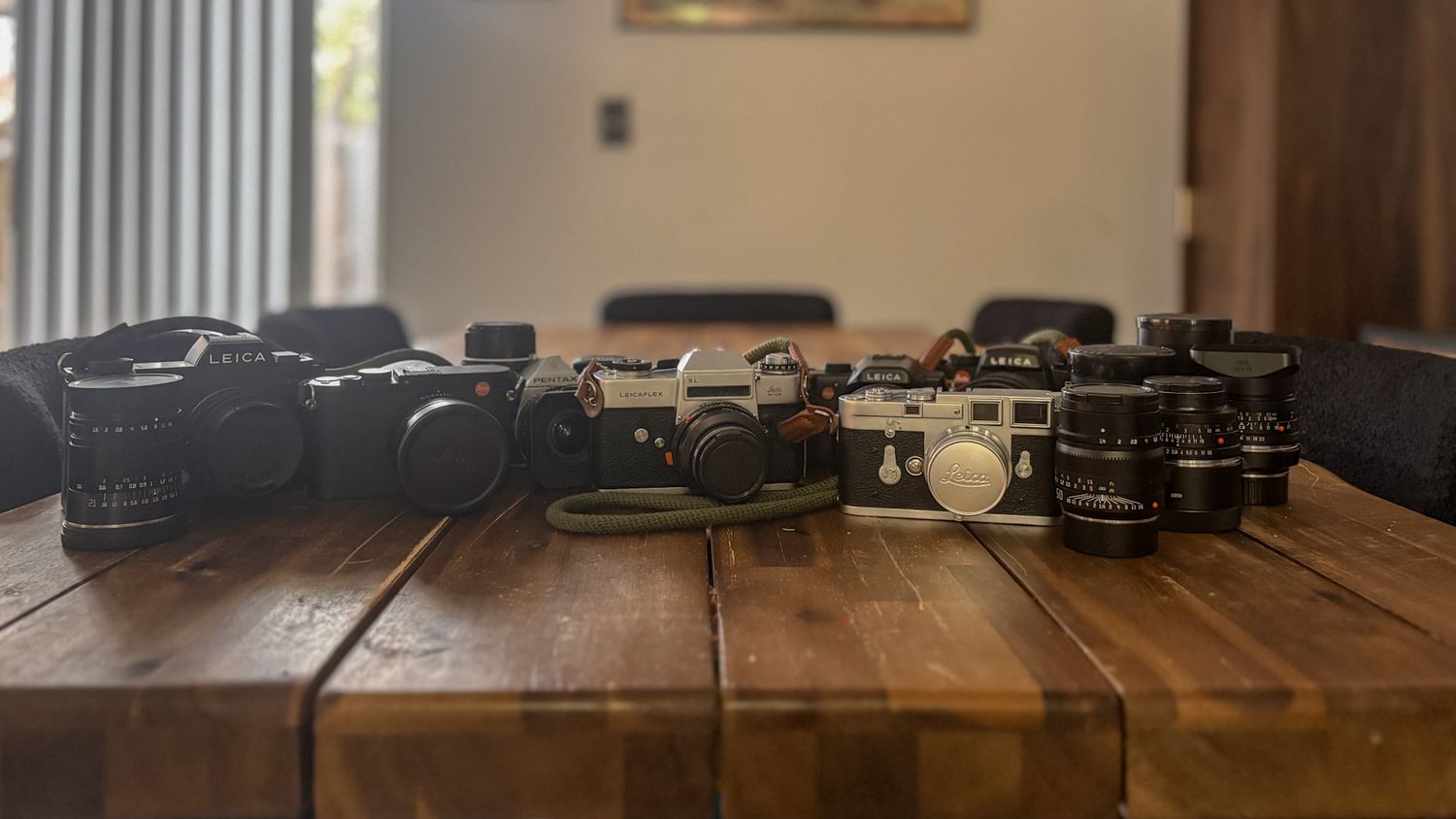
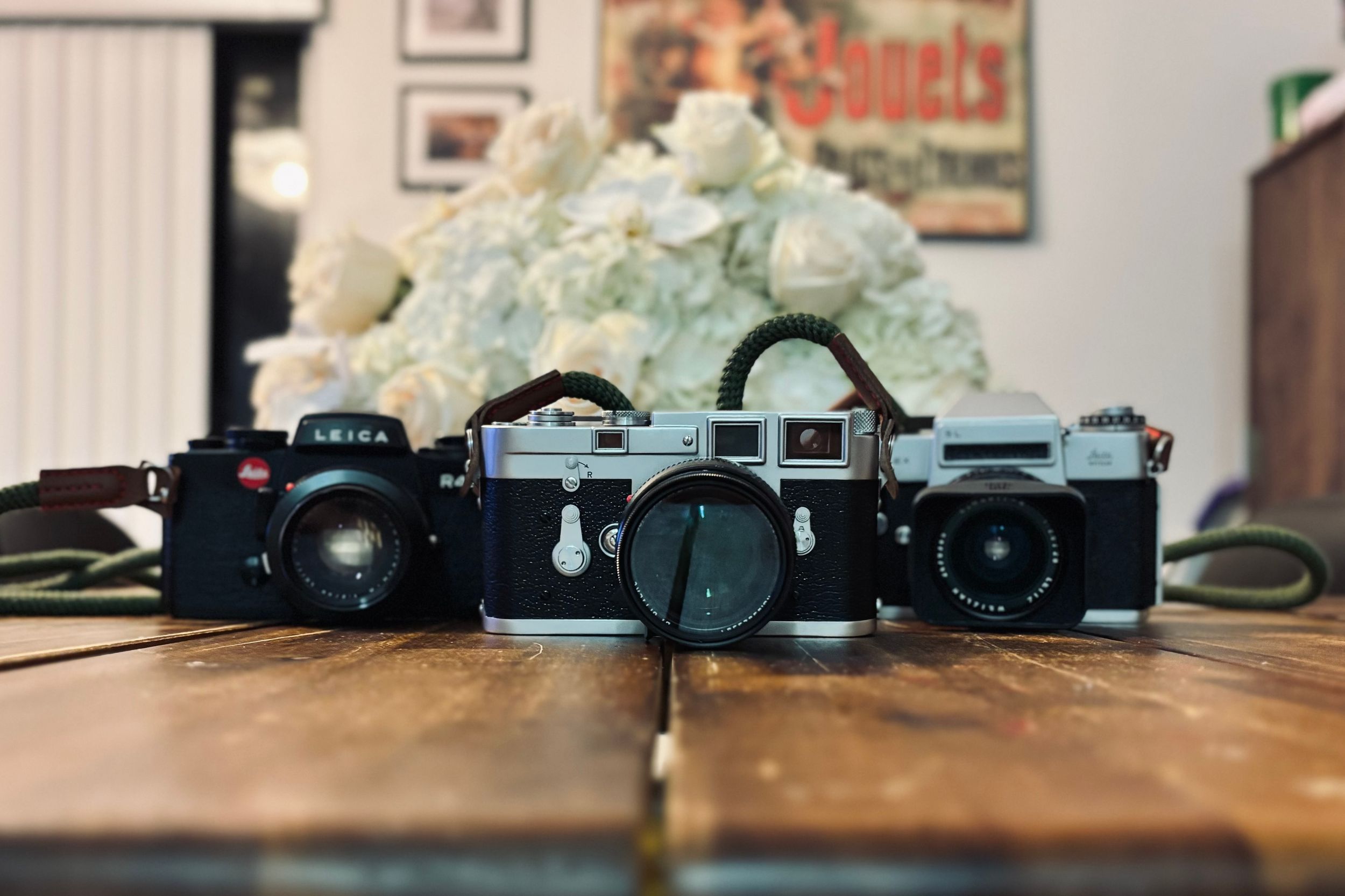
I have added more film cameras to my collection since these were made. Maybe it's GAS, or maybe its me trying to really get into the rhythm of shooting film with intent, but these Mastershot awards, as silly as it might seem, reinvigorates me and pushes me to better my photography. Until there's a third Mastershot, I'll keep trying to top the first and second.
All images © 2020-2024 David Ulloa Studio. All rights reserved.