Back in Black...and White
I love photography, but it isn't my bread and butter. Yes, I make photos for clients - events and shoots and such - so I'd say I do photography semi-professionally. And certainly, I use photography to document my family's adventures. But my point is that I don't do photography for a living. I'm a teacher by trade. And while my specialty is composition and literature, my passion for photography found me moderating my school's film club with another artist turned teacher, my good friend Ralph Diaz-Wagner. Together, we help teach our students the art of photography and filmmaking and once a year travel to New York City for the All American High School Film Festival.
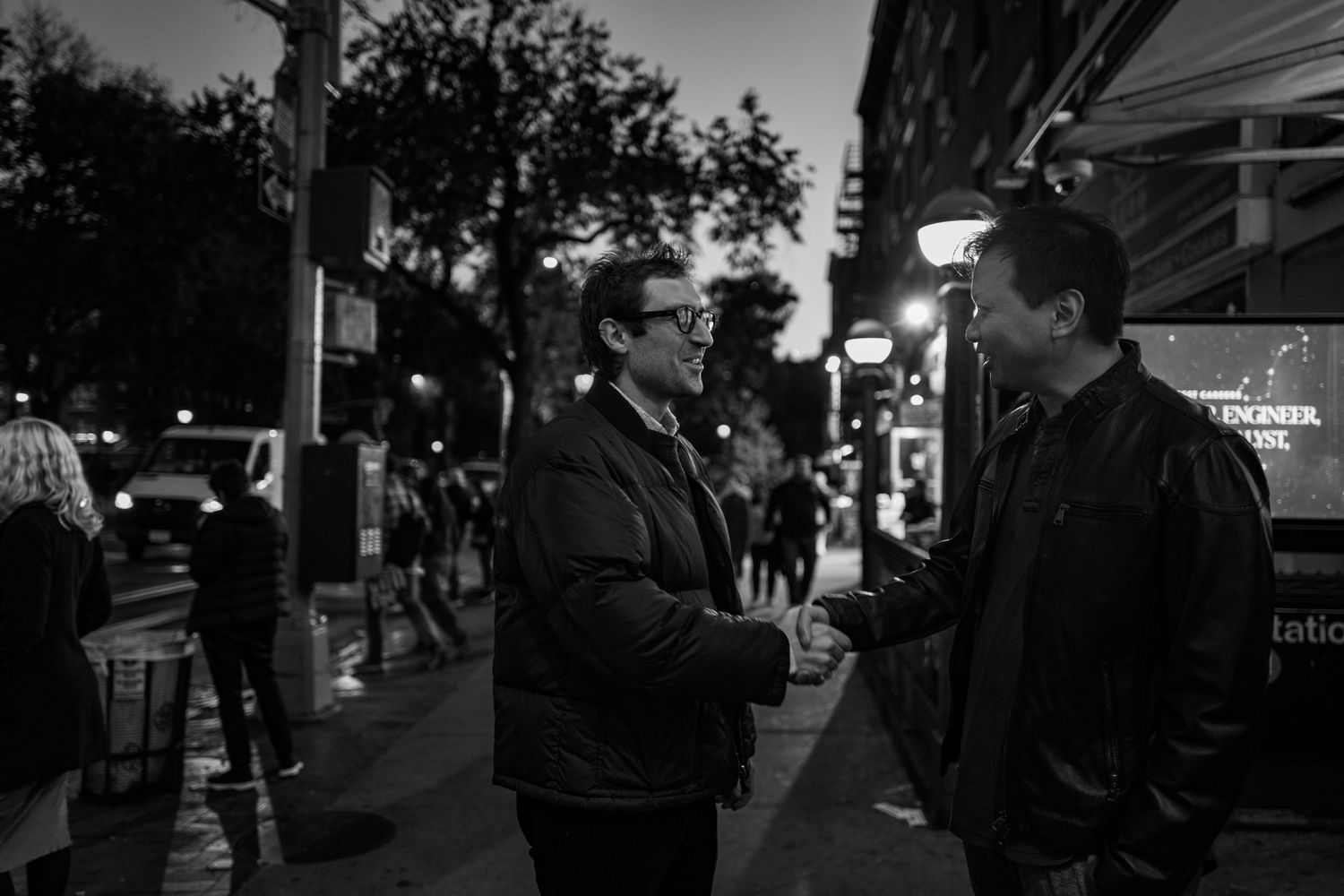
Last year I made the trip to NYC with only my Leica Q. I made lots of great photographs - and I should probably write a blog about that trip as well - but this year I wanted to prioritize film. So while I took my Q, I really only brought it out of my bag on the first day and made very few photos with it. Like this one of two friends meeting up outside of the IFC Center theater in West Village. I am always happy with the photographs I make with this camera.
I love the Q. It is not just an amazing camera, but an amazing camera for me specifically. I love the ultra-fast Summilux 28mm f1.7 lens that the camera proudly boasts, and I love how perfect it feels in my hands. And while I had long ago decided my eyesight would never allow me to gel with a rangefinder, I decided a few weeks ago that I would try a Leica M3. Needless to say, I immediately took to the camera and decided that this is how I wanted to make photos in New York this year.
Kodak Tri-X 400, Greatest of All Time?
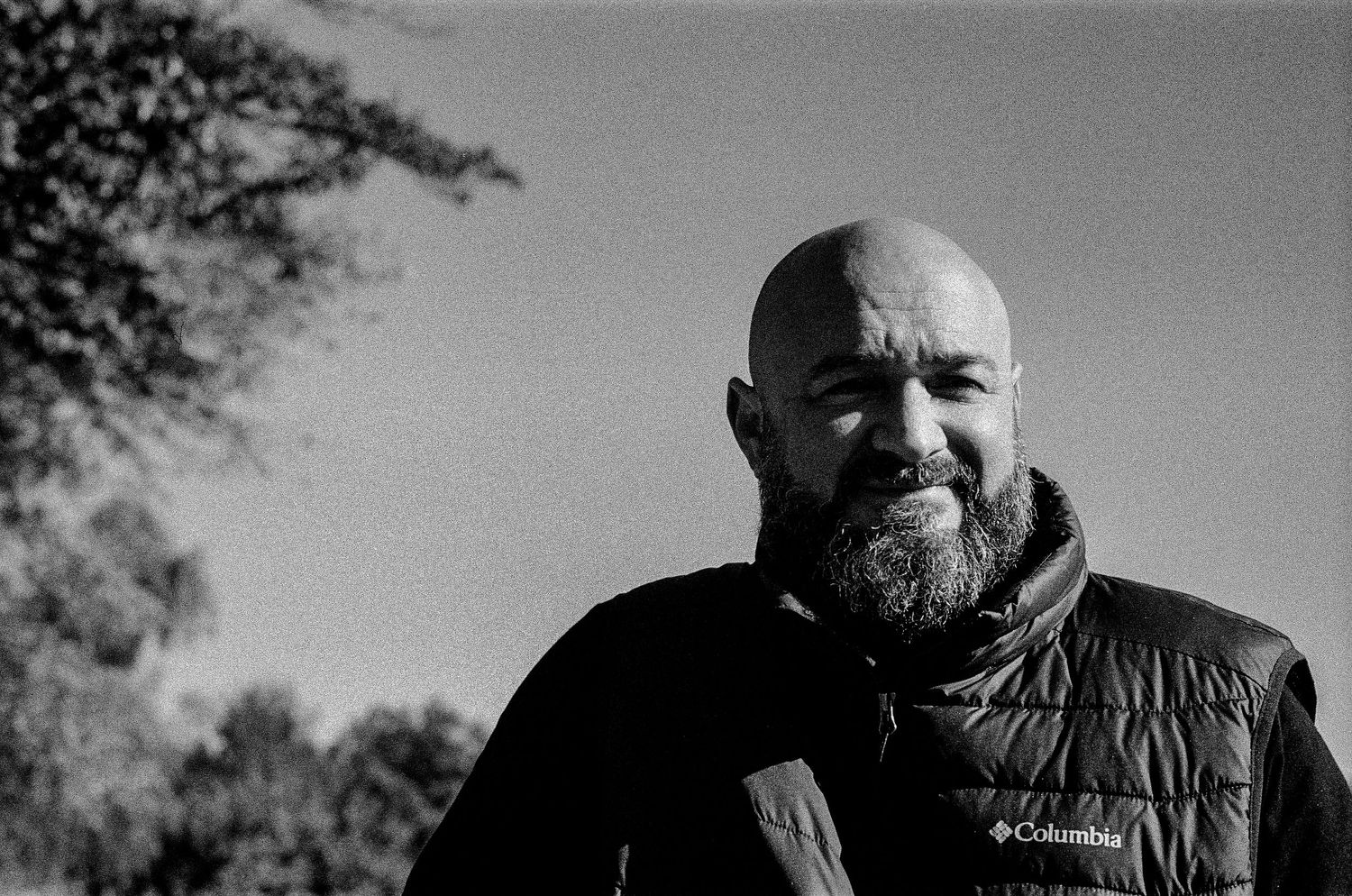
I took two film cameras with me, my new M3 mounted with the TTArtistan 50mm f1.4 and my trusty Leicaflex SL mounted with the Elmarit 28mm f2.8. This first roll of Tri-X was put through the M3. The very first exposure on this roll is a portrait of my friend and partner-in-crime, Ralph. Made in Central Park, it is almost impossible to tell that this is New York City. But that might be why I like it so much.
When I'm shooting black and white film, my eye isn't looking for the same sorts of compositions that I look for with color film. I'm looking for contrast. And the way the natural sunlight was falling on Ralph's face, with the cloudless sky and treeline behind him, I knew this would make a pretty timeless portrait. Tri-X renders highlights and shadows so beautifully. Pump the contrast just a hair in post to accent this and you've got a winner every time.
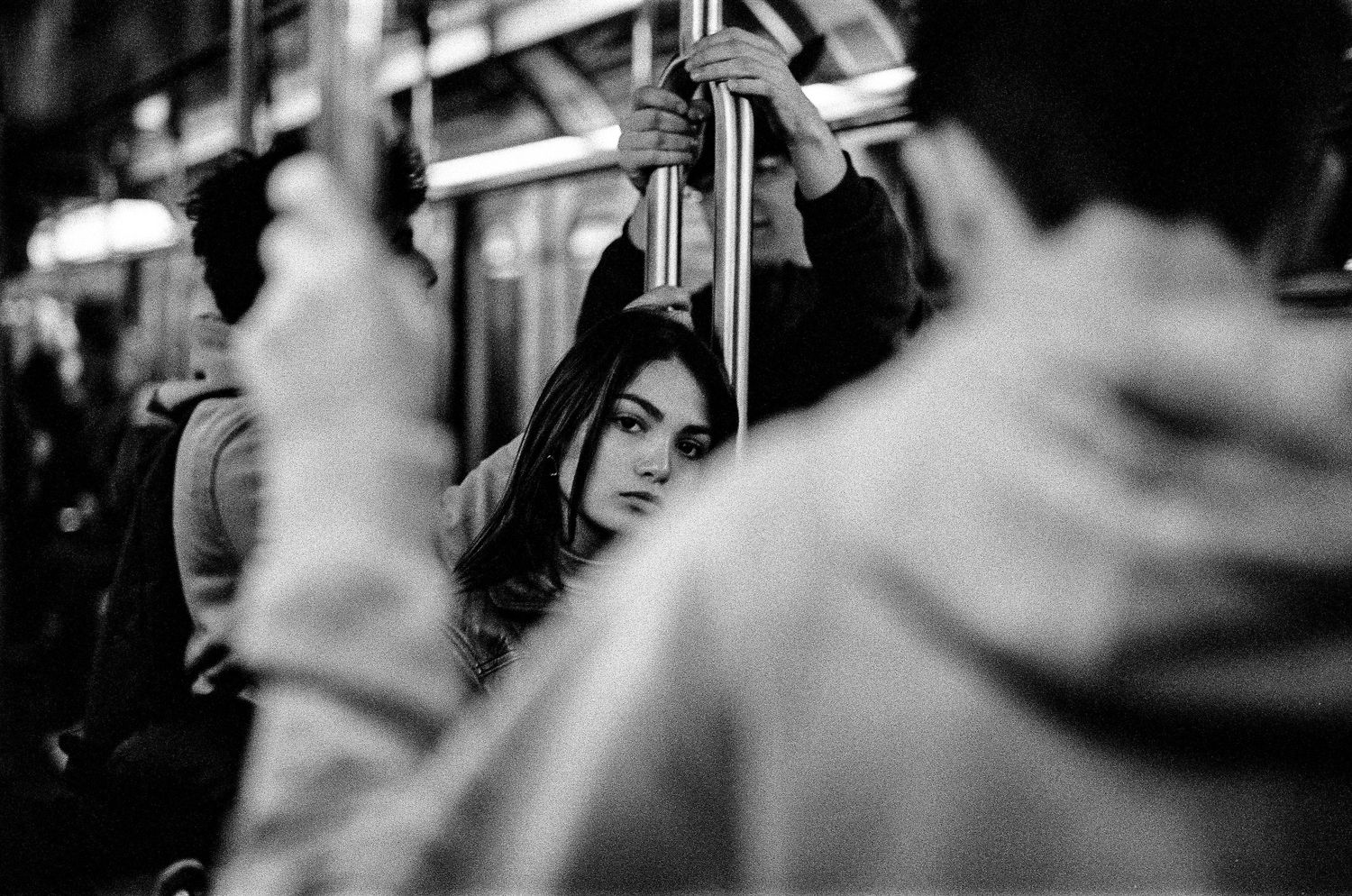
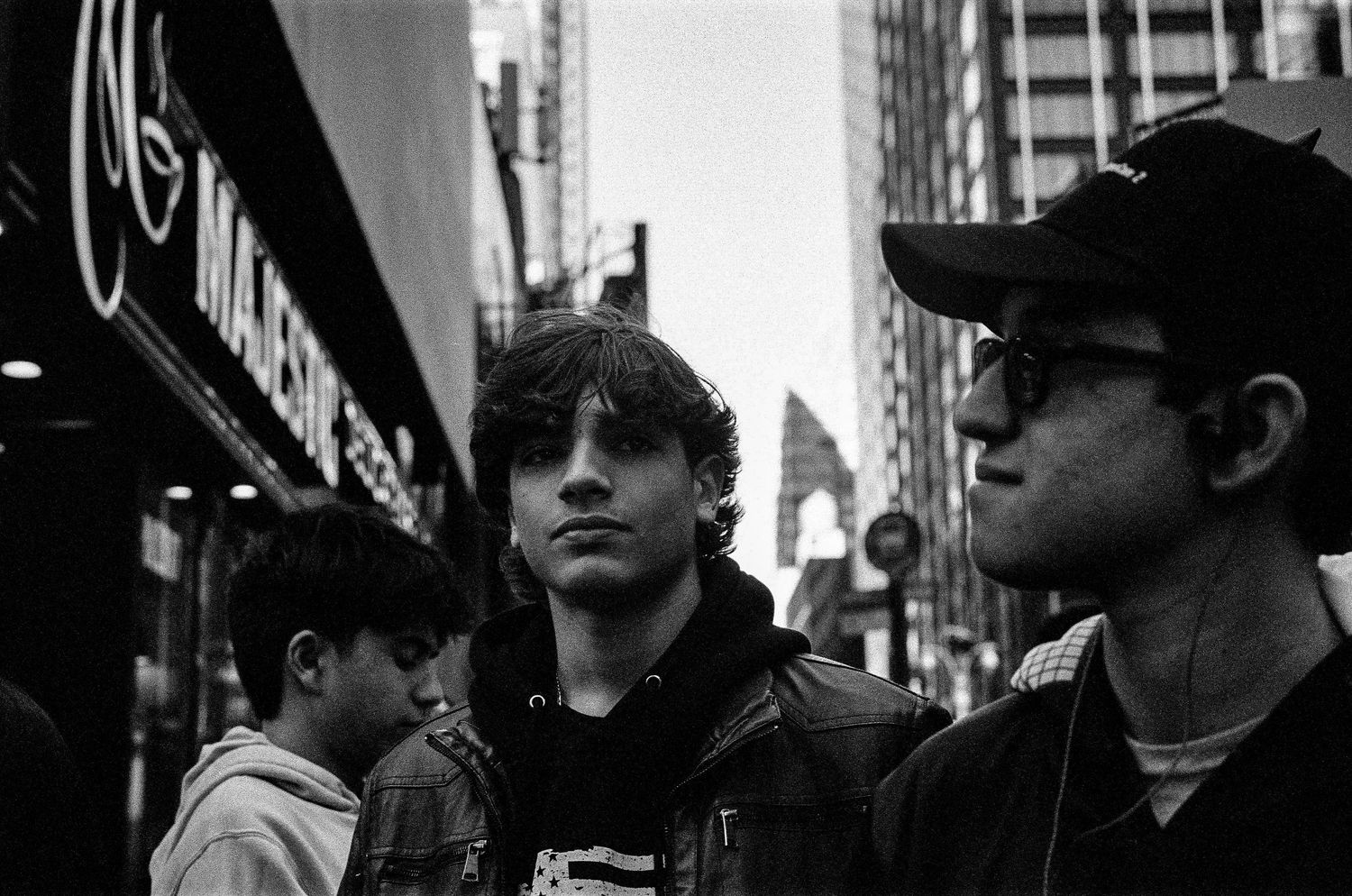
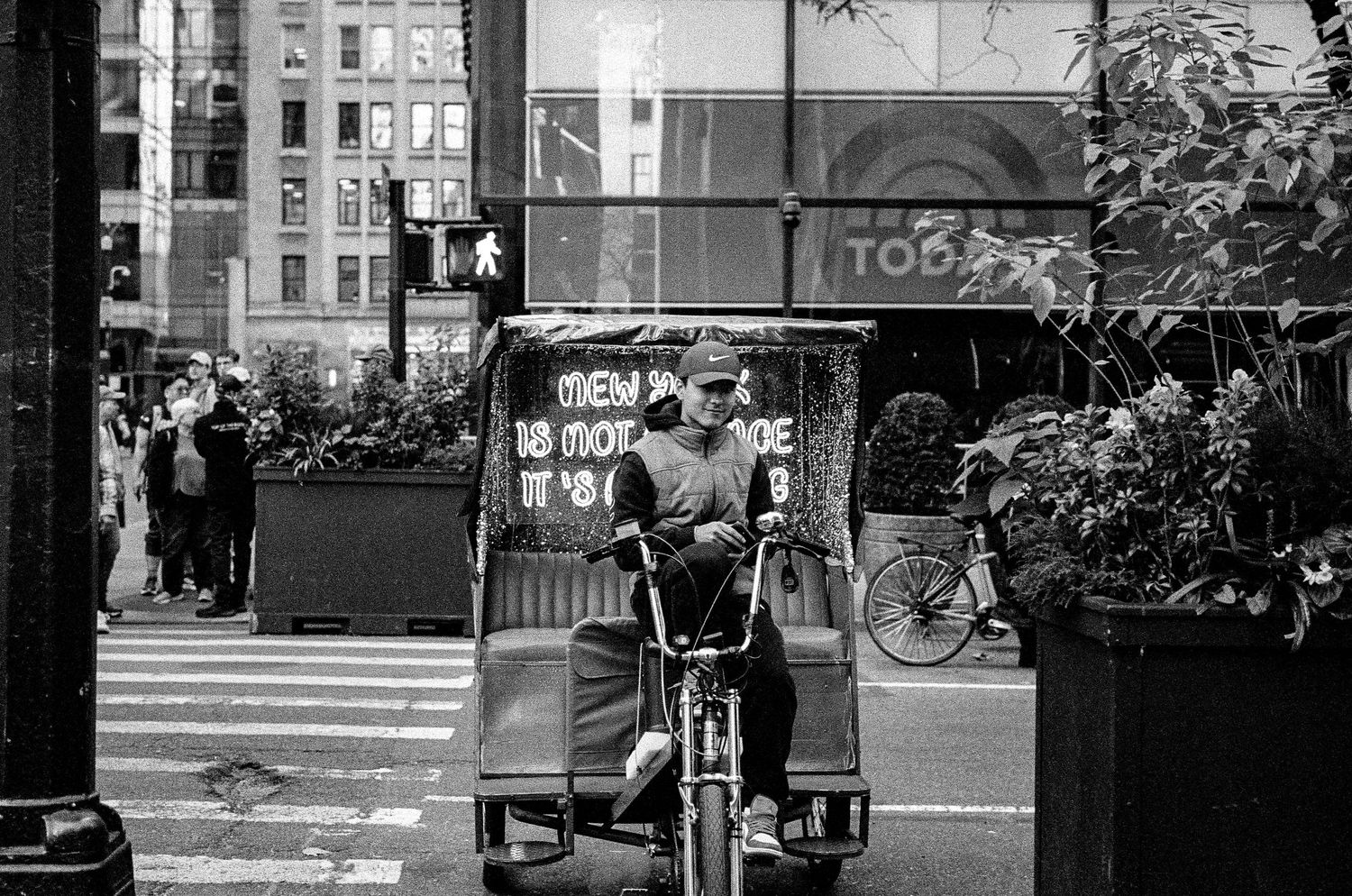
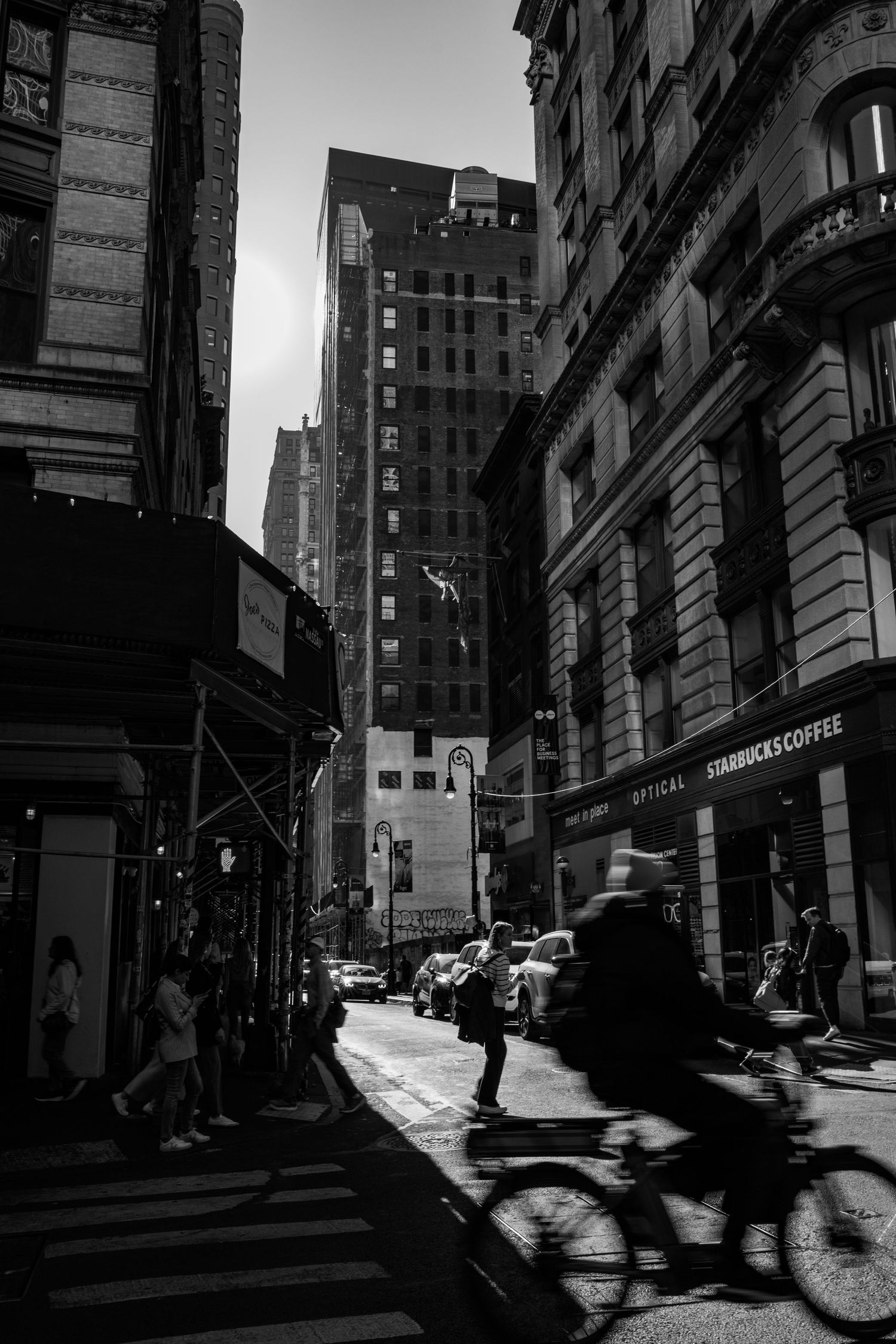
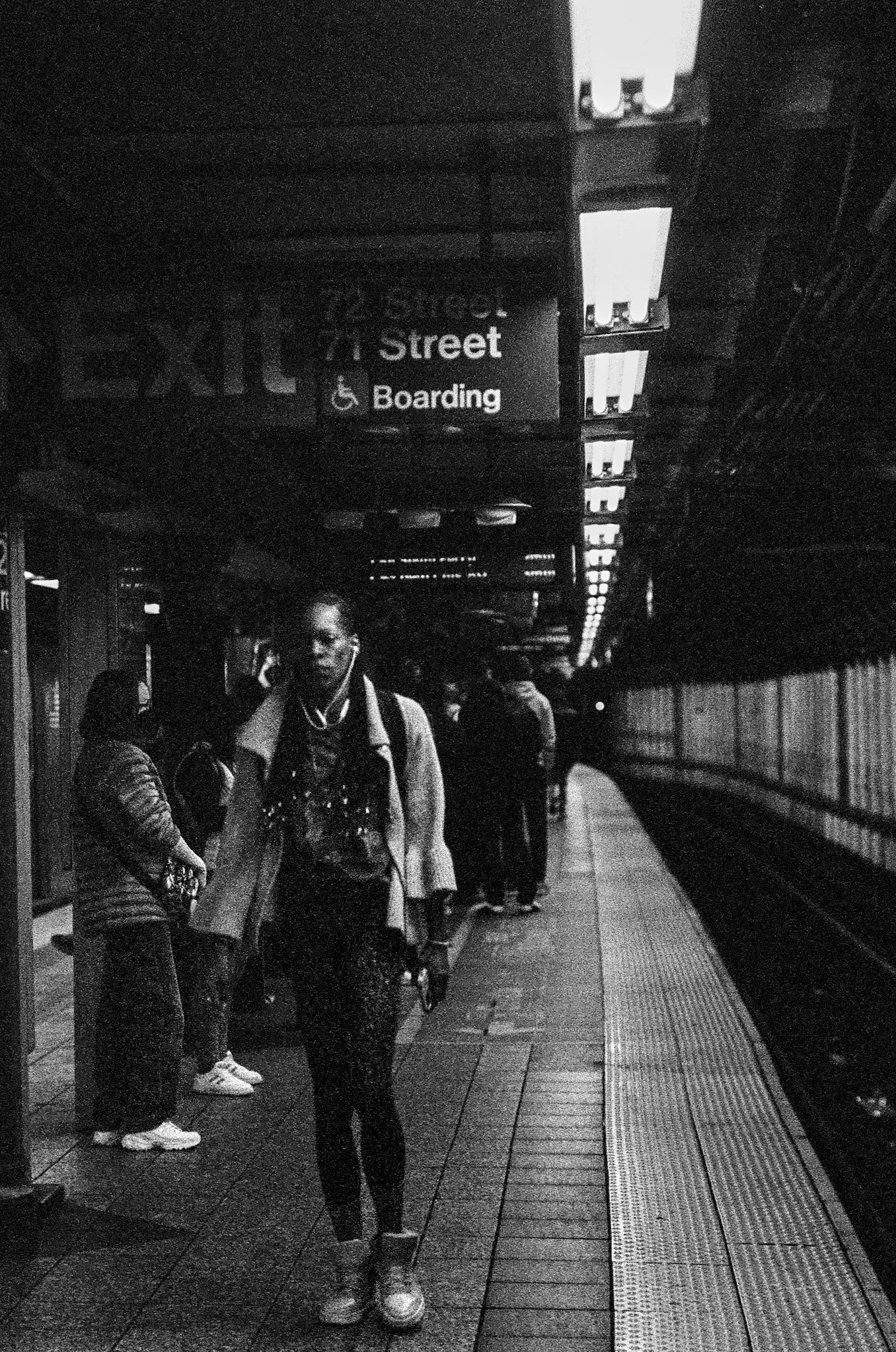
I was grateful for having loaded this roll into my M3 instead of the Leicaflex. It meant that when I went into darkened spaces, like the subway or bookstores, I could still gather enough light with that fast maximum aperture of f1.4 on the TTArtisan 50mm. Photographs like the one above, of our film club student Carolina, would have been impossible with the Elmarit 28's widest maximum aperture of f2.8. I was also in a 50mm groove that had been going for a few weeks. The M3 is a 50mm machine, but the viewfinder also makes it really easy to see those contrasts in front of you. Scenes like the one with the rickshaw cyclist are made better by using Tri-X. By removing the color of the world around the cyclist, attention is immediately drawn to him. And because the contrast and grain are so heavy, what could have looked like a very contemporary photo now seems almost timeless.
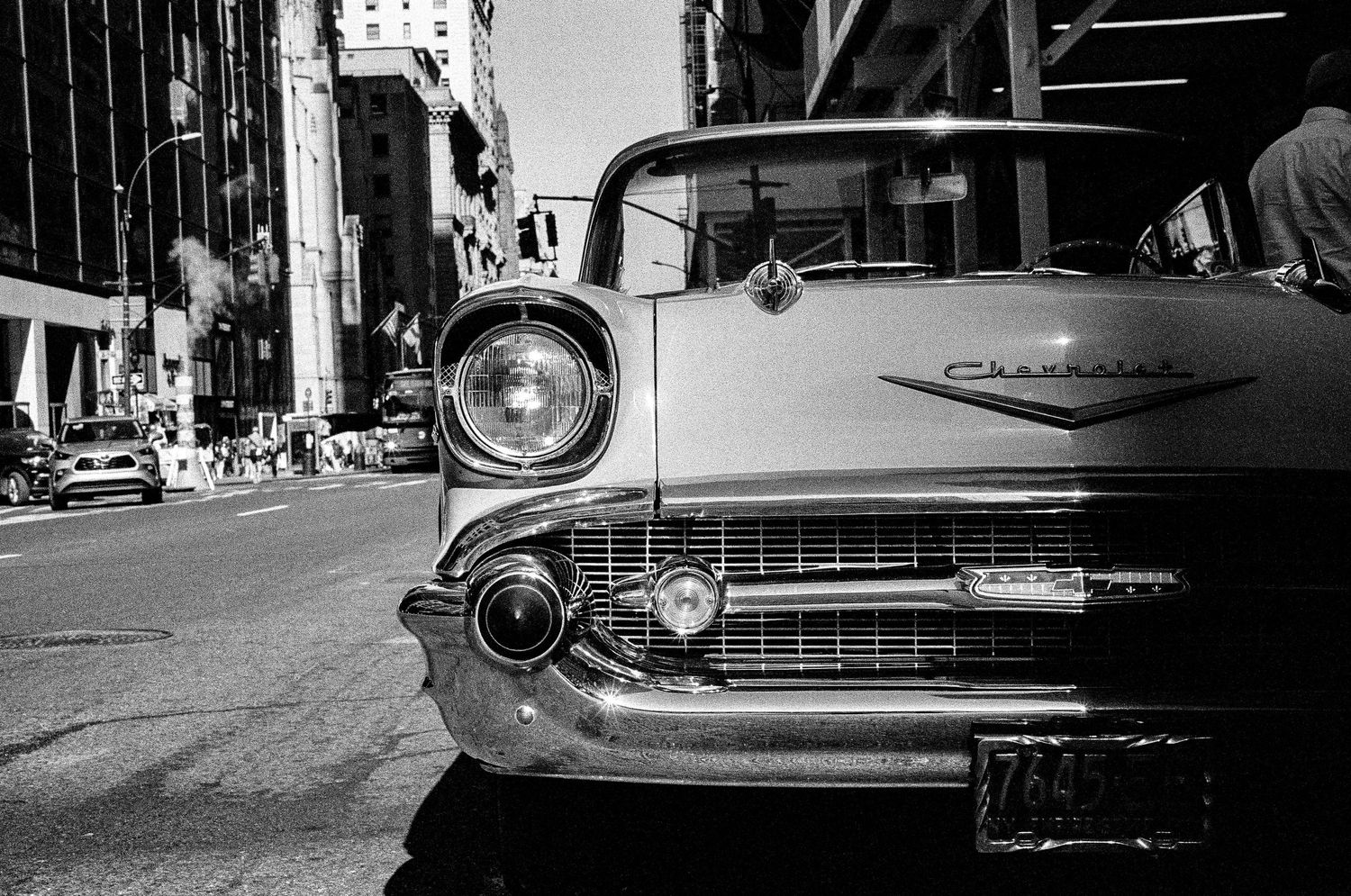
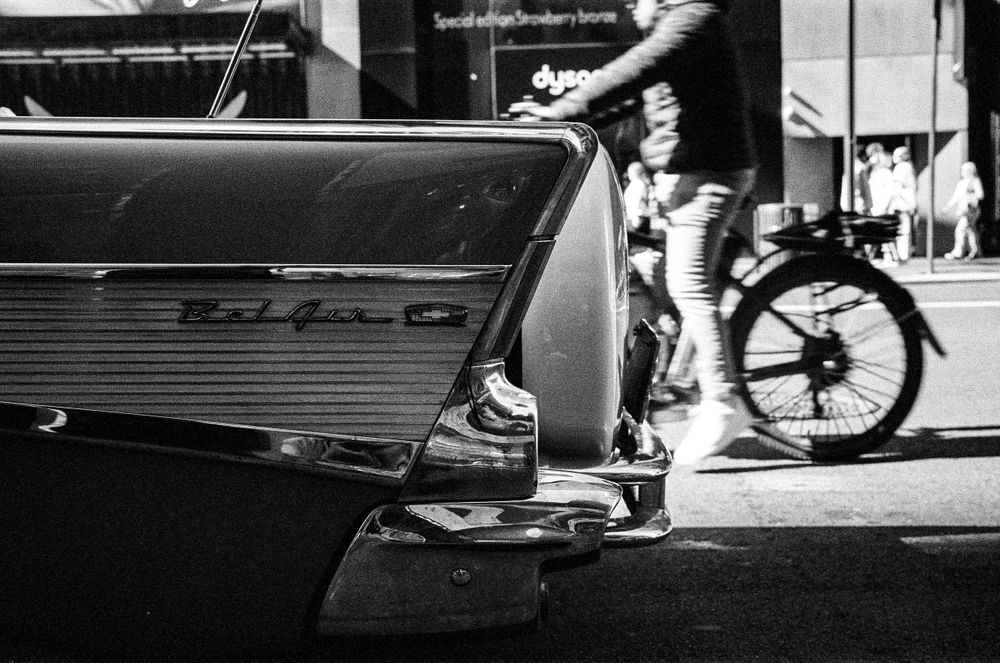
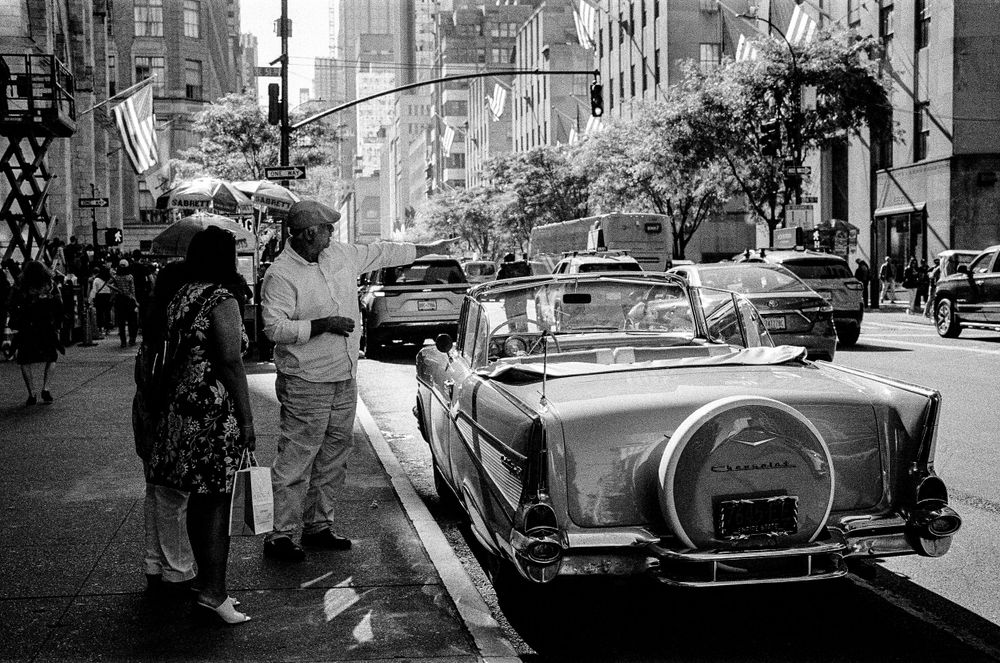
I spent the next few days mixing it up between rolls of color film and black and white. But every time I loaded up Tri-X I was contrast hunting. I lucked out when I had just loaded up another roll in the M3 and saw this 1957 Chevy Bel Air across the street. I ran over and spent a good amount of time with the car and its owner, photographing away. My frame was split into perfect thirds as the right half of the car was covered in shadow, with light increasing with a gradient until the car ended and left only the New York streets to fill the leftmost third of the frame.
Scenes like these are best in monochrome. Every color film would have rendered the classic color differently than the next. But with Tri-X, all I need to concern myself with is contrast. And, as I have before, I will mention the timelessness of this frame.
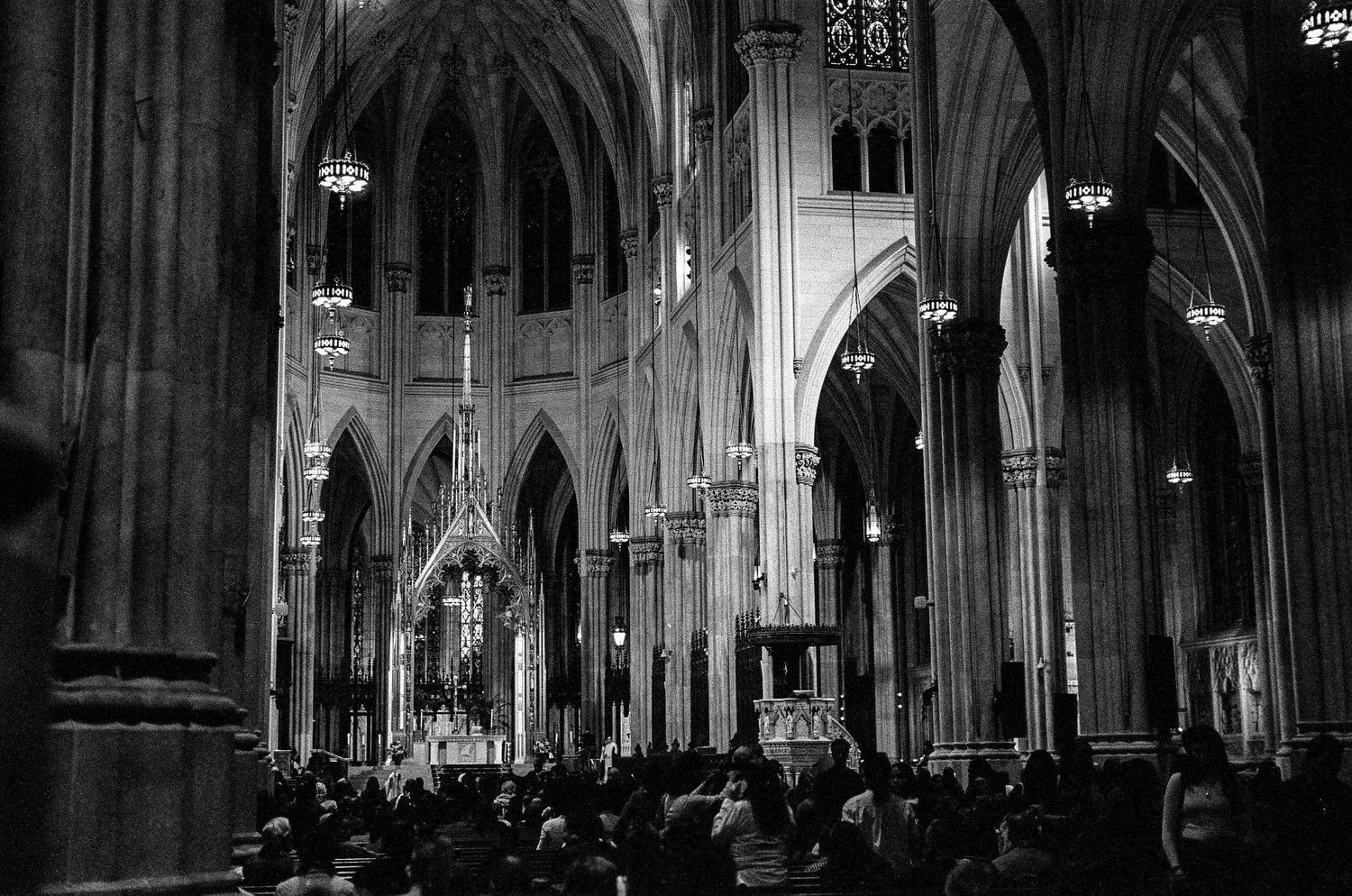
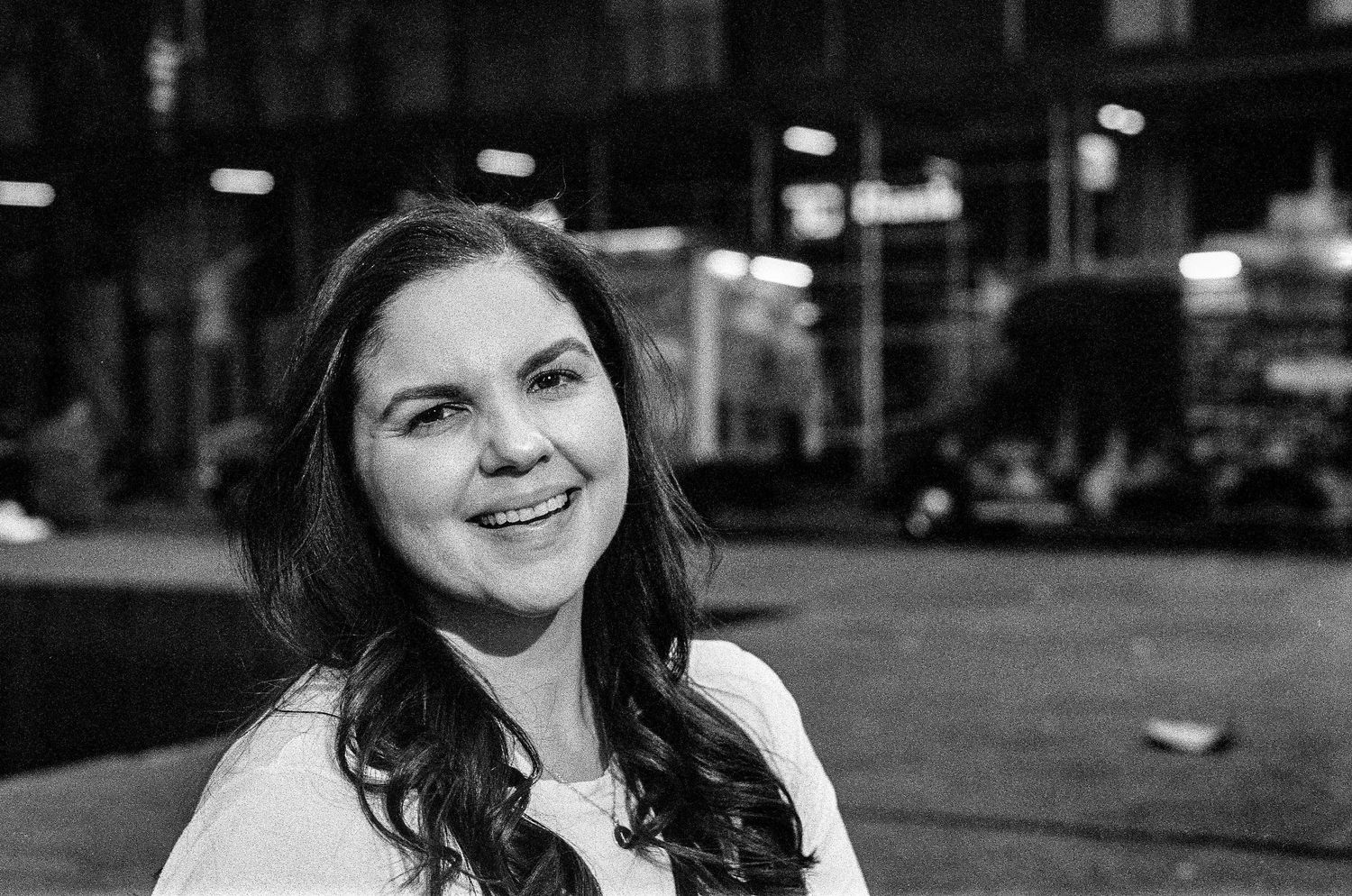
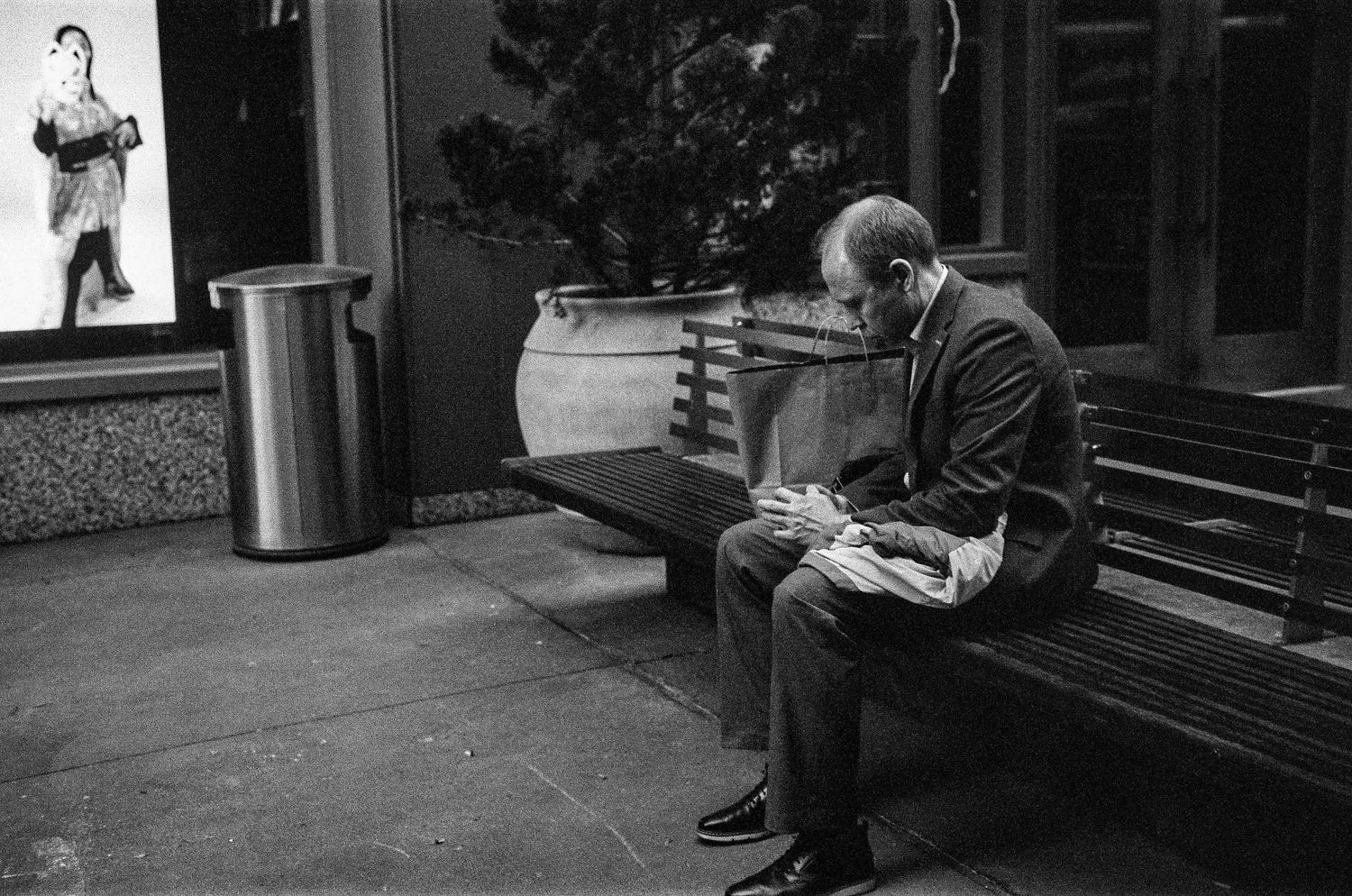
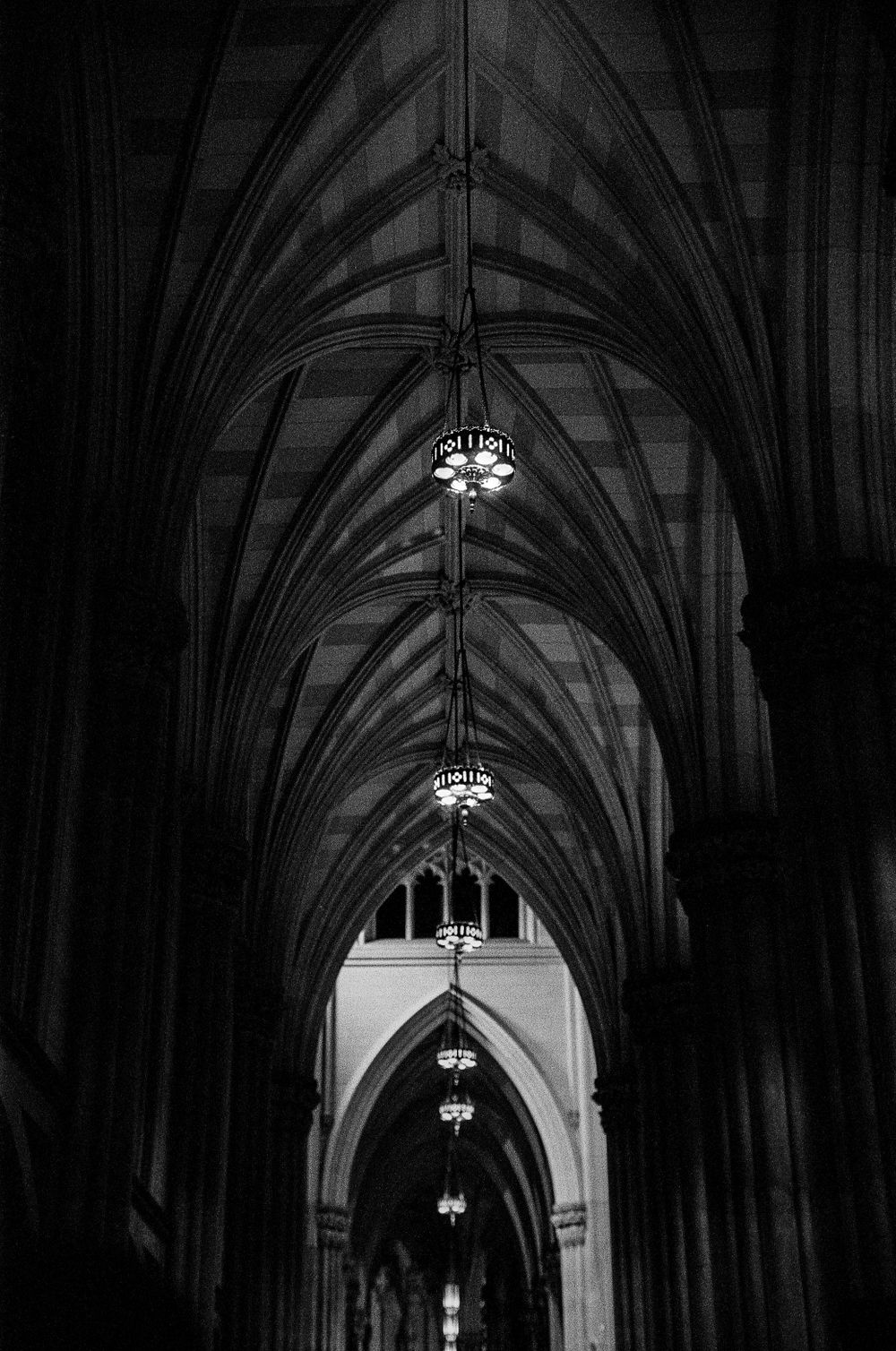
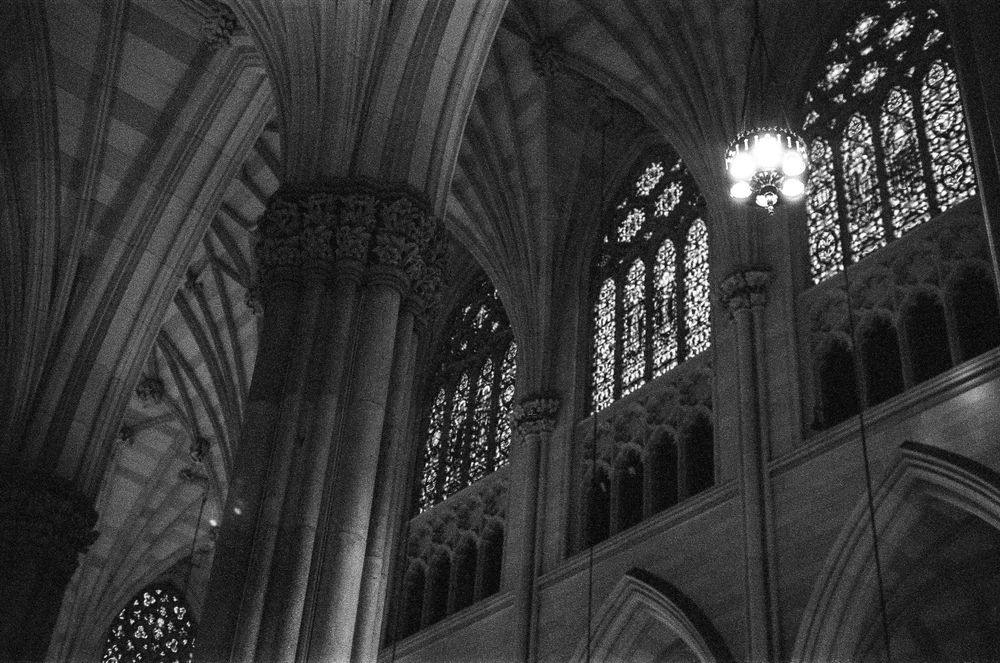
This second roll of Tri-X in particular had lots of different lighting situations thrown at it. I went from unclouded, clear skies to shadow-heavy contrast to low light interiors and it handled everything that came its way. I'm very surprised with how well the photos inside of St. Patrick's came out. I was shooting at very low shutter speeds and yet the photos were sharp (I've been so used to avoiding those slower speeds for so long coming from SLR cameras). The portrait of my sister, Lisa, shows how great this film shines when you've got some good lighting on your subject. All the little details in her face are brought out beautifully.
Pushing Palm 400
It wasn't enough that I was shooting with a camera with which I was more or less unfamiliar. Sure, I had put a test roll of Kodak Ektar 100 through it before leaving Miami, but I had exactly 36 exposures worth of practice with the M3 when I left for Manhattan. I had decided I was going to finally experiment with pushing film. In truth, the decision was made to attempt this with CineStill 800t, but I had just bought a roll of Palm 400 and thought, "Why not push this two stops to 1600?" It was nerve-wracking, to be quite honest. I felt like there was no way this should work, but the science behind it makes sense. Not only that, but there are plenty of examples of this actually working and many do this regularly. So, I pushed those thoughts out of my mind and took to the streets one night with Palm 400 pushed to 1600.
The results were...well, they were a mixed bag. Some exposures were beautiful, with increased contrast, deep blacks, and bright highlights, and sharpness where it should have been. But most were underexposed. This leaves me wondering if the CineStill 800t will likewise be a mixed bag. It is possible that Palm 400 simply doesn't like to be pushed this hard, although two stops doesn't seem like that much when some folks are pushing other emulsions four stops and getting great results. But part of leaning into film is not sweating the missed exposures and enjoying the ones that did work.
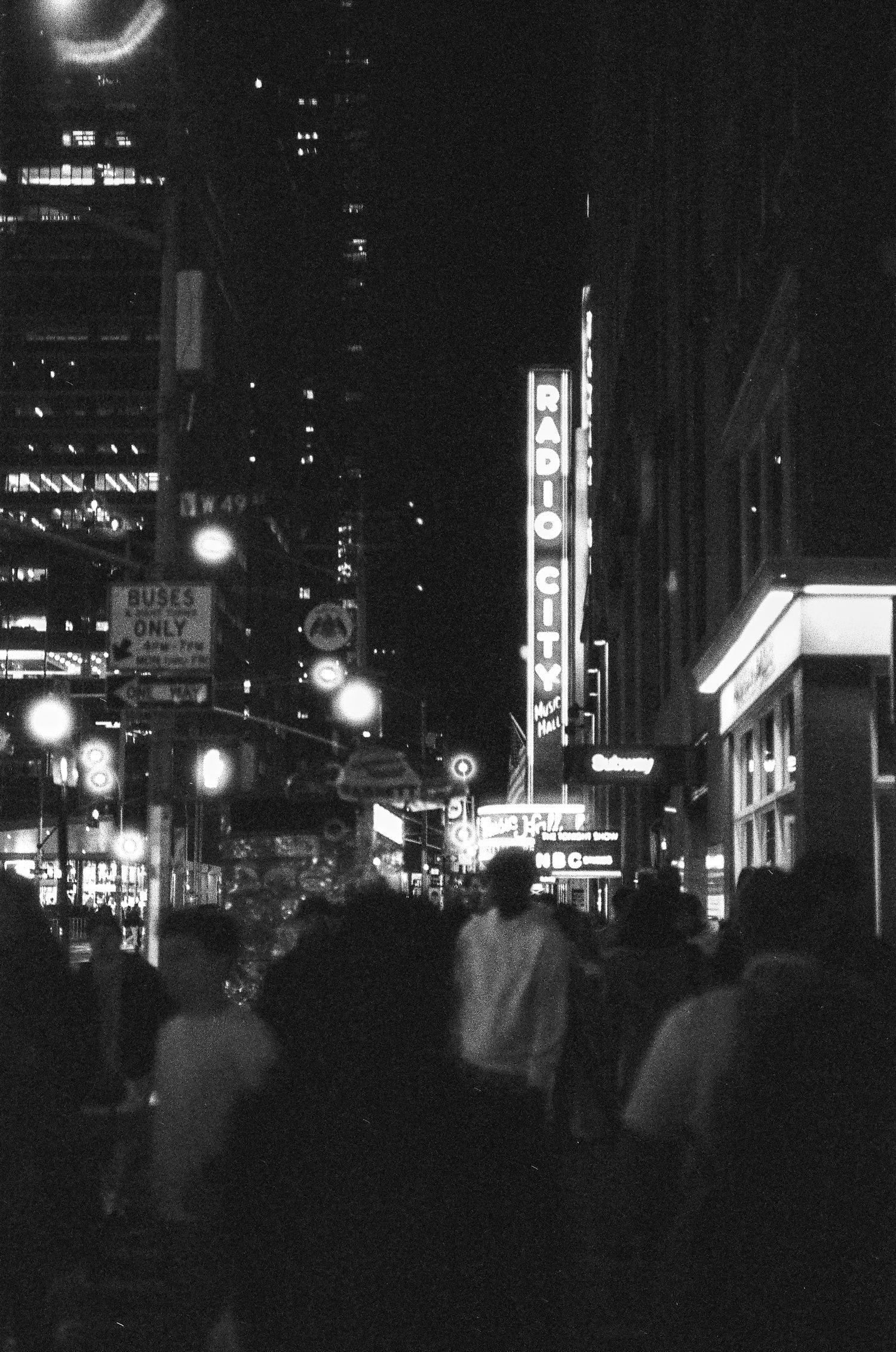
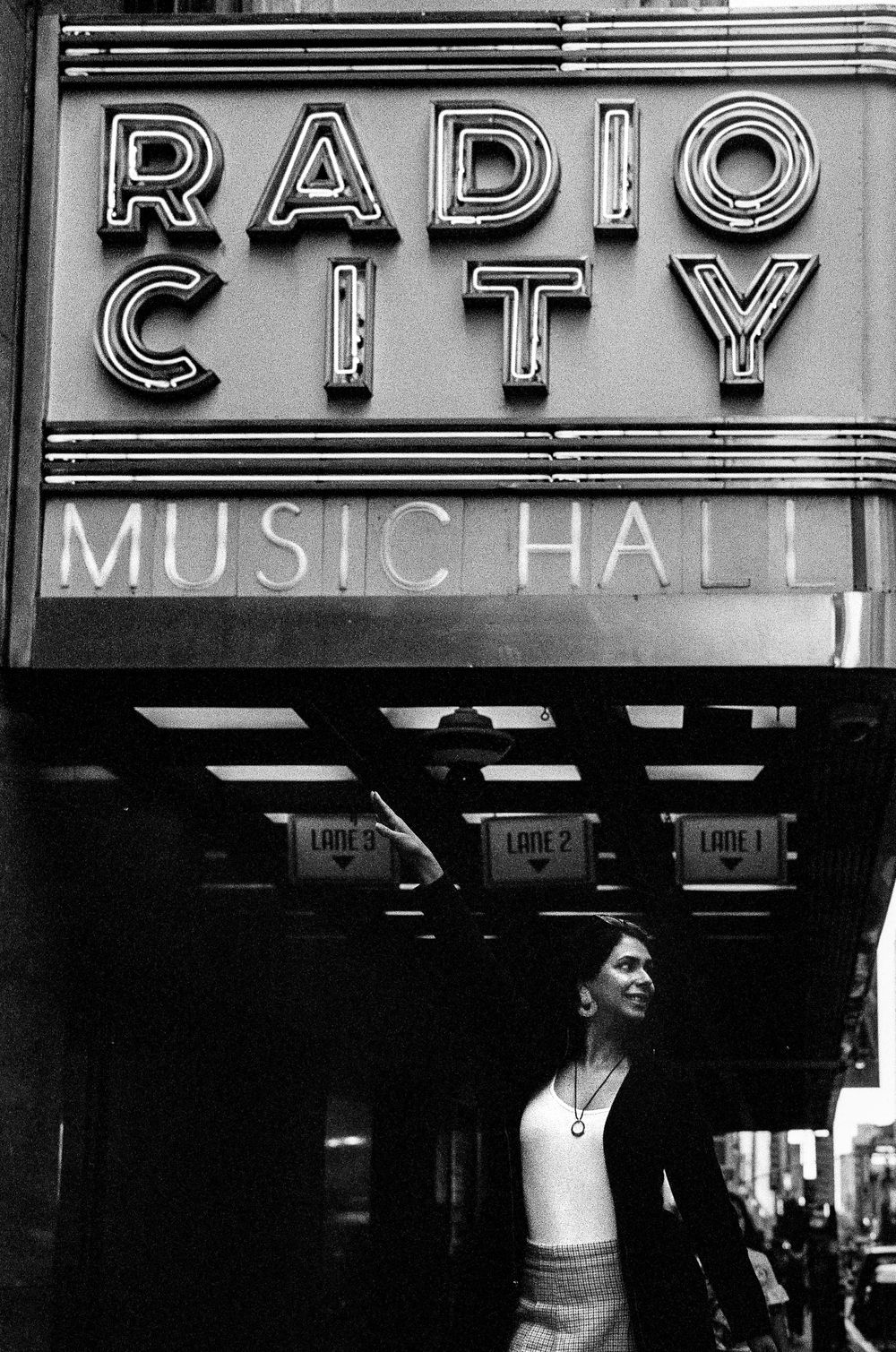
This one of Radio City Music Hall, with the hustle and bustle of 6th Avenue on a late October evening, may be my favorite exposure of the three black and white rolls. There is a mood and vibe captured here that reminds me of the New York I first fell in love with so many years ago.
I'm fairly certain this was made with the lens wide open at f1.4, focused to infinity. The highlights are rendered beautifully, adding a softness to the whole affair that leaves me grateful for the overall look of this pushed film. Again, the feel I most associate with, timelessness, oozes from here. In a few years I'll forget when I made this photograph, but I'll remember the way it made me feel.
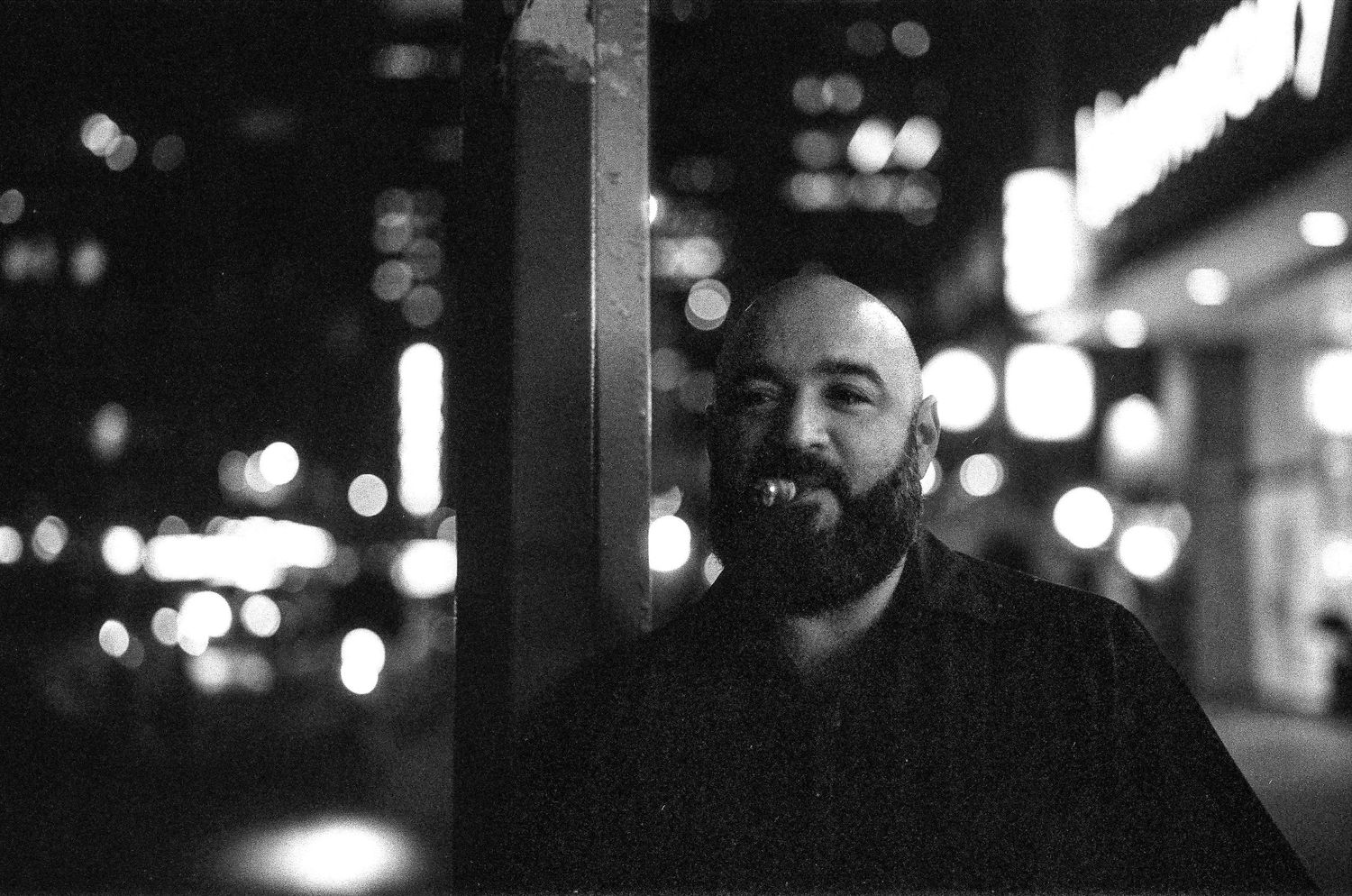
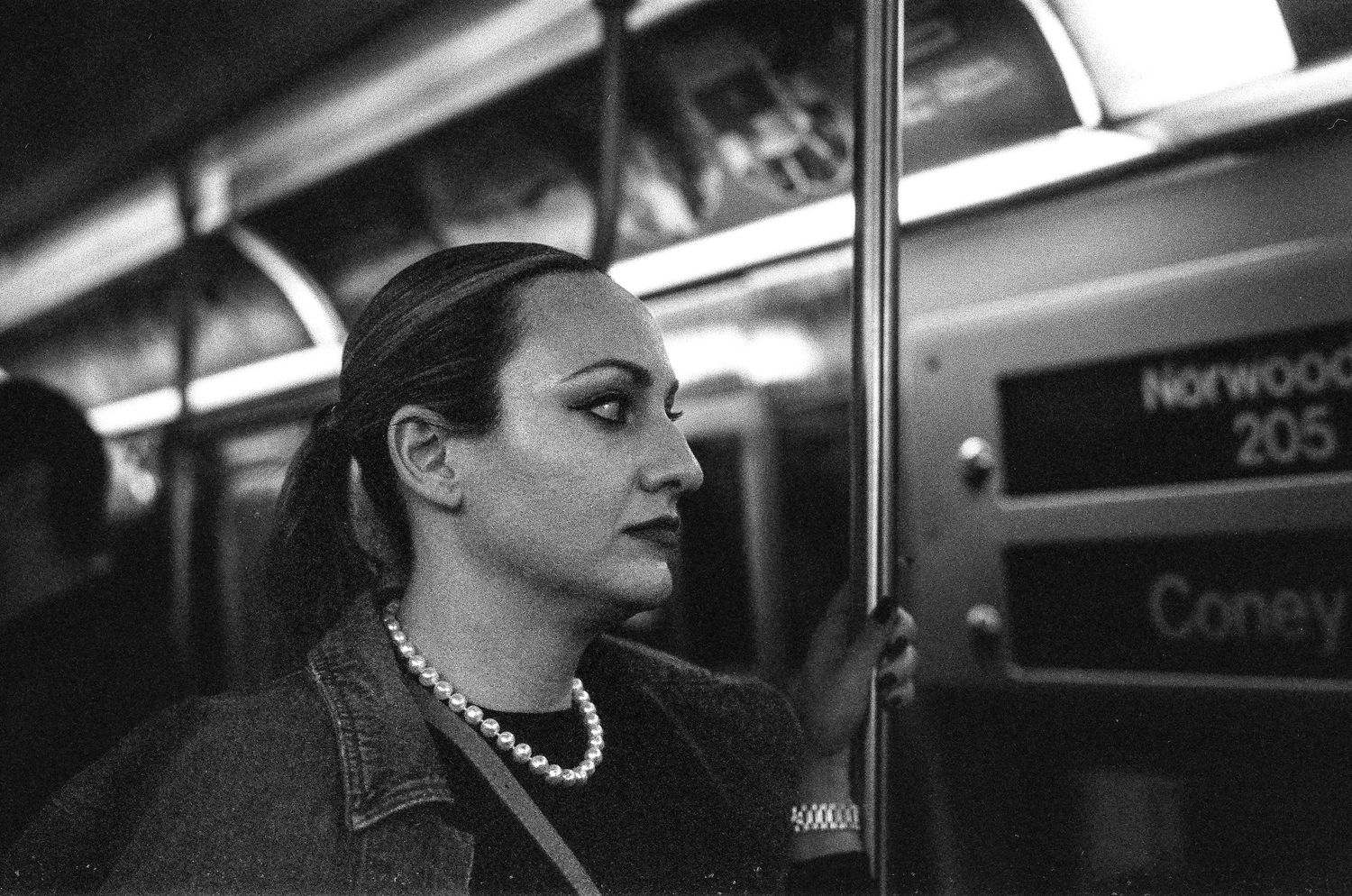
Regardless of the errant exposure issues, I really like the results for the ones that worked. The portrait of Ralph, made around midnight on 6th Avenue and 54th Street, and the portrait of Steph, made on the train heading to our favorite spot in Chinatown, are great examples of how chasing contrast while pushing black and white film has a payoff. The heavy grain adds to the mood here. And while I've written many times that I am not obsessed with bokeh, can we stop to admire the gorgeous bokeh of this TTArtisan lens? I can't believe what the Hong Kong lens makers are able to do at the prices they sell them for. I am stunned. The portrait of Ralph, with so many specular highlights littered in the background, and the portrait of Steph, with how sharply yet pleasingly in focus she is, display this lens' quality beautifully.
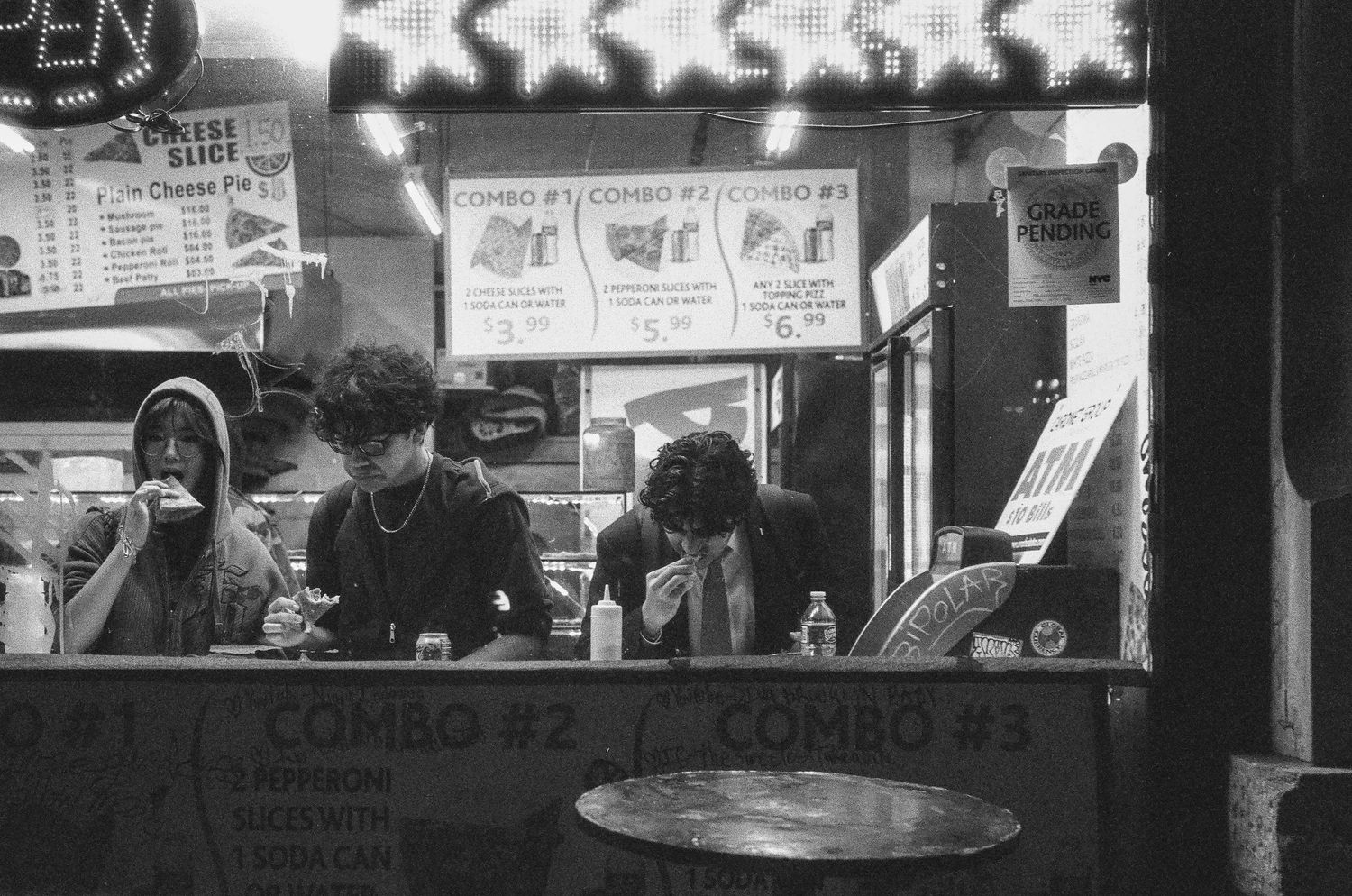
But this also works for classic street photography. The photograph of the three people eating at the diner counter has just the right balance of shadow and highlight contrast. I lucked out with this one as the person on the left waited for me to bring the camera down from my eye before giving me a wink and a thumbs up. I love when folks on the streets involve themselves intentionally in the process. This can go one of two ways, as I've also experienced people intentionally botching frames. But I've found most people are playful when they see a camera, especially such an old and unassuming one.
Final Focus
The combination of M3, 50mm f1.4, and Kodak Tri-X 400 is a killer one. It might be that I'm honeymooning after receiving these scans, but I've been favoring color film for so long that maybe it's time I take a break and focus on black and white some more. Then again, I'm sure I'll have my love of color film reaffirmed when I get those scans back soon. But something about New York City in monochrome just hits right.
For street photography, I don't know that there is a better black and white film. I love Ilford HP5. But I've consistently had issues with Harman films, whether it be with the film not catching and advancing or with the film physically tearing at the sprocket holes, I have been let down by Harman/Ilford on many occasions. I see myself shooting more Tri-X as time goes on, because the results are always fantastic. And when I'm not worrying how the film will look after development, I can focus entirely on the actual making of the photograph...a novel concept, I know!
I'll push some more black and white film before I decide if it's something I want to continue doing. I'll probably try this with a different emulsion. It is possible my light meter suddenly stopped working, but that is unlikely as my second roll of Tri-X was shot after the pushed Palm 400 and both rolls of Tri-X are properly exposed the whole way through. I think it is more likely that I simply pushed Palm 400 past where it could reasonably resolve information. It's unfortunate, but the photographs that were able to resolve those shadows are some of my favorites of the whole bunch.
I think I'll be loading up some more Tri-X soon. Right now, I'm living life in monochrome and loving it.
To be continued in Adventure in New York, Part II.
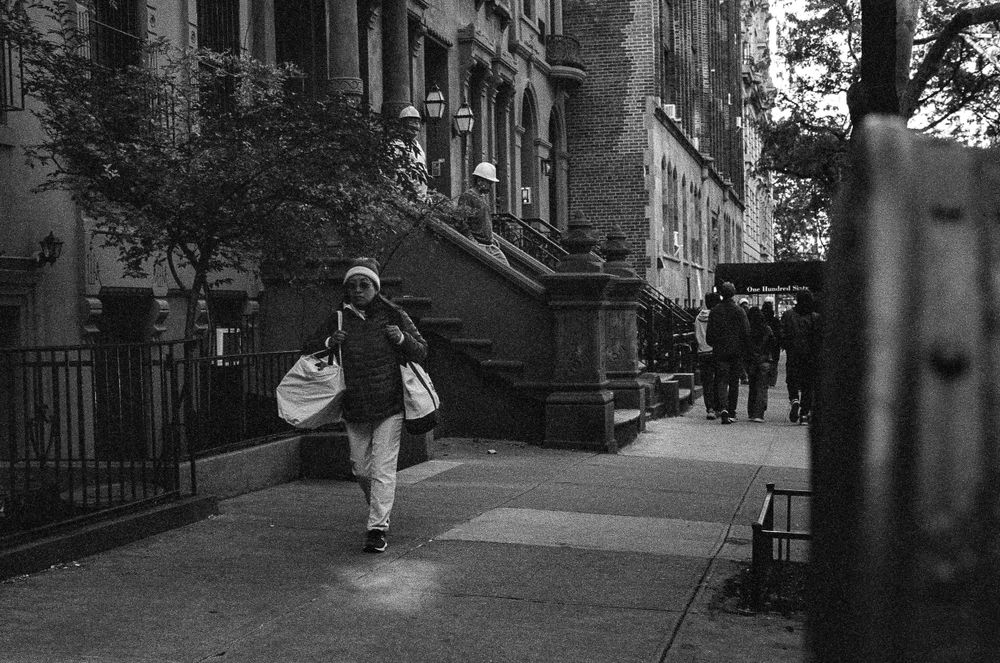
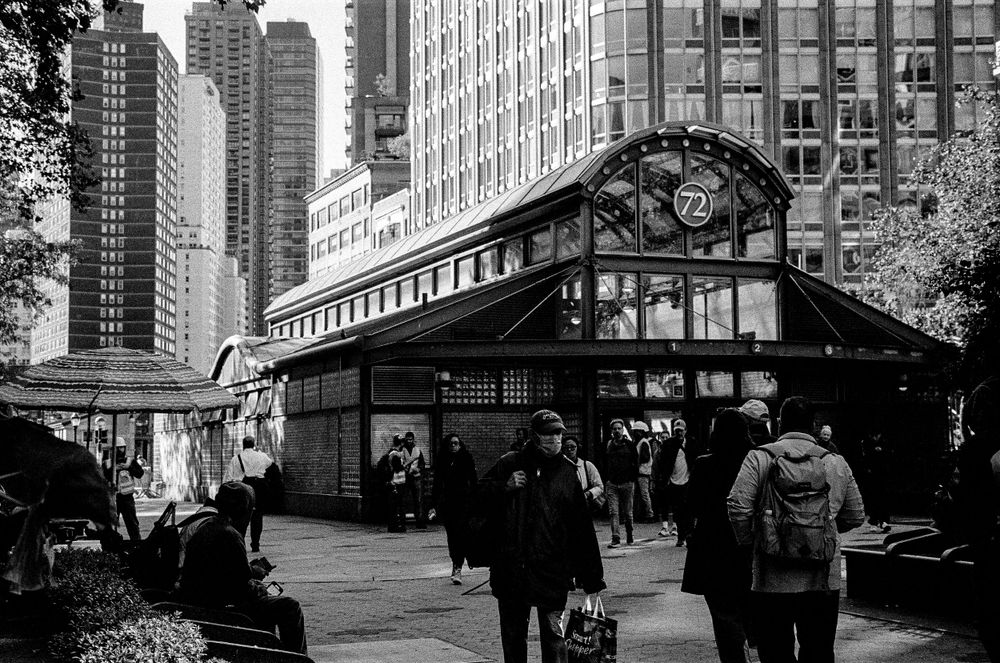
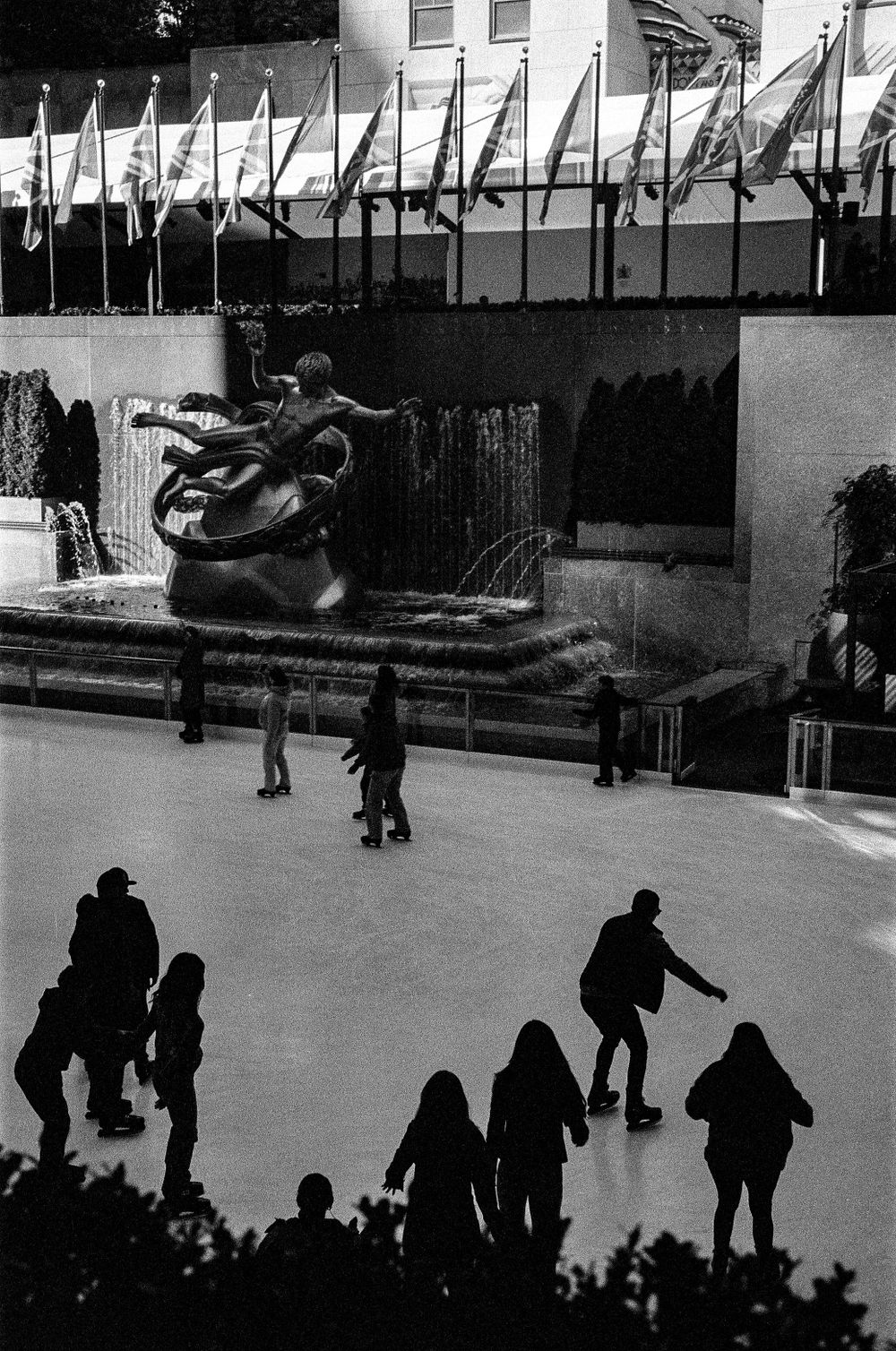
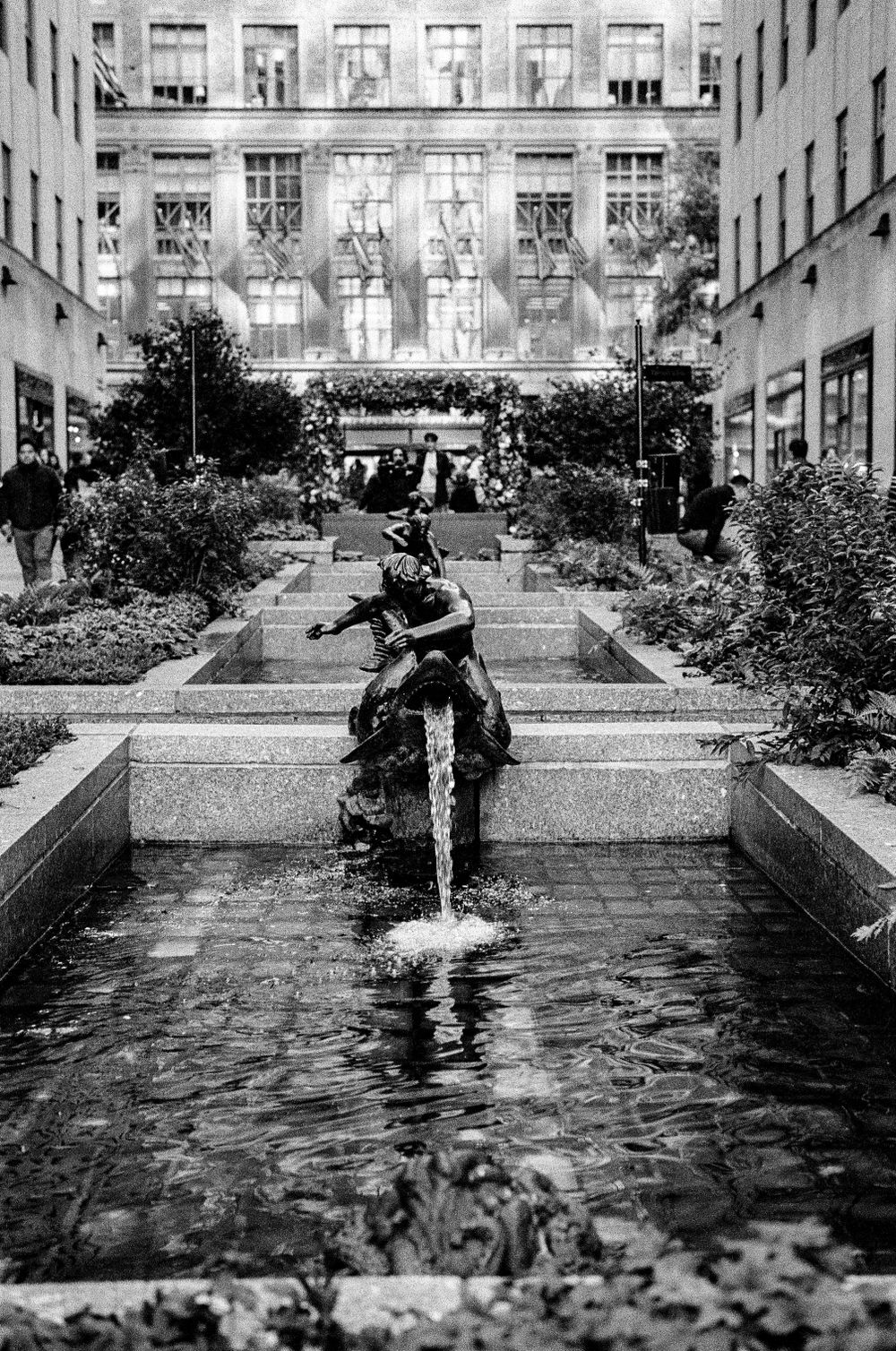
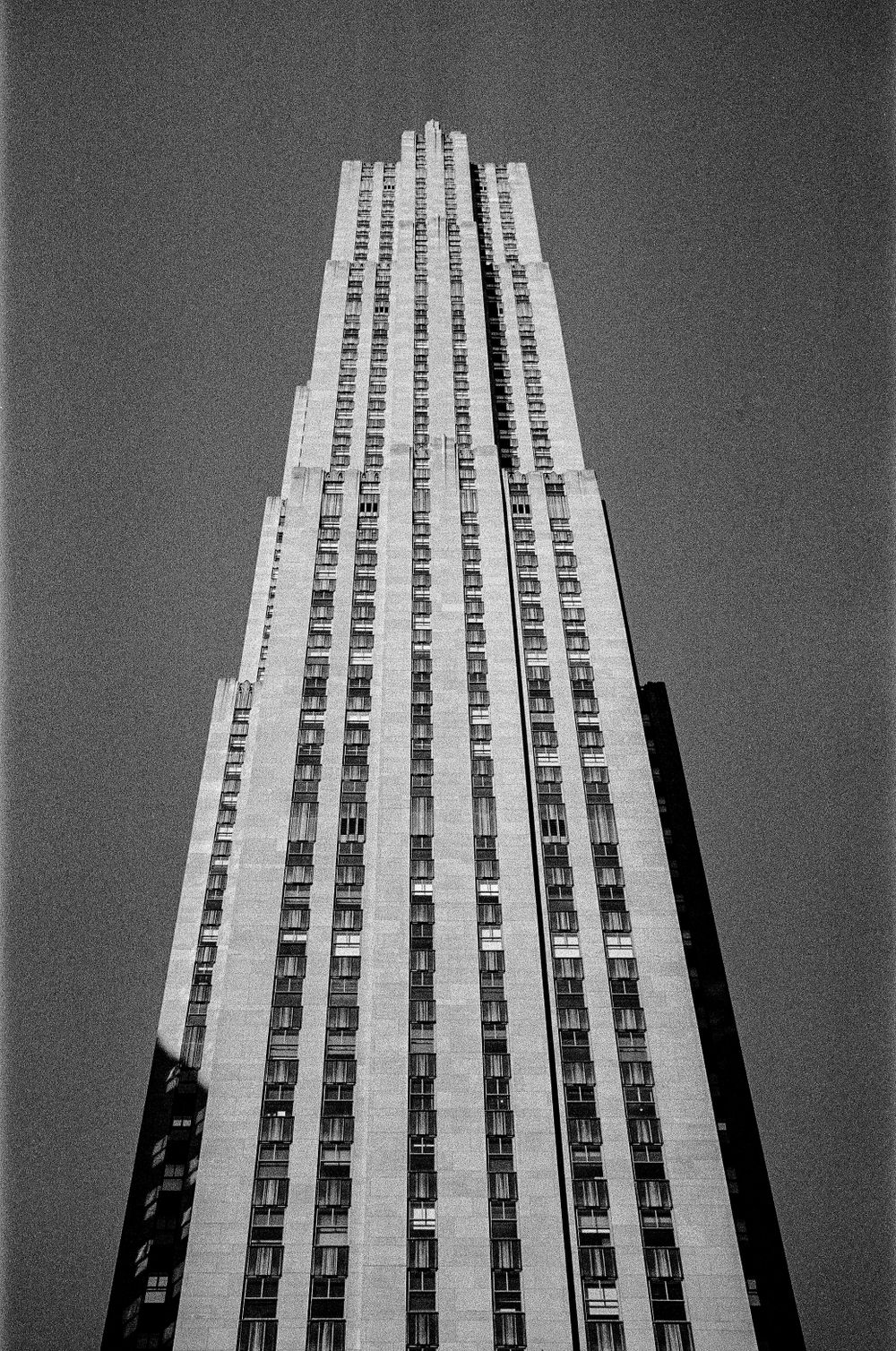
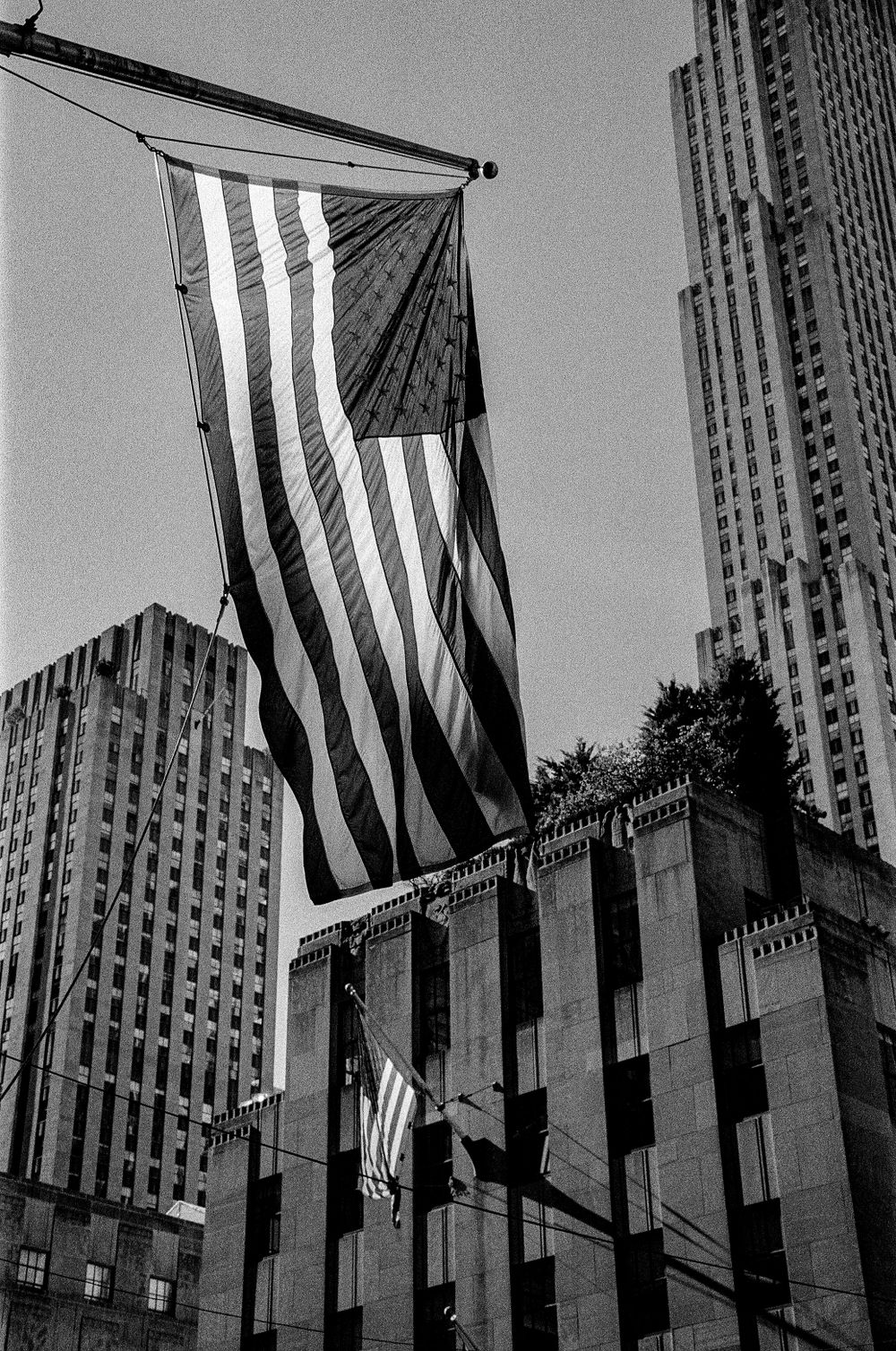
More Manhattan in Monochrome

All images © 2020-2024 David Ulloa Studio. All rights reserved.