Color Grading
Finding a color palette that can be considered your own or signature is a long and arduous process. I have gone through multiple phases in my color preferences. In a lot of ways this is one of the reasons why black and white photography is superior to color photography. Yes, there are tones and contrast to consider, but nothing like with color photography. I started out many years ago using FujiColor 200. That film is pretty legendary for being a fantastic budget option, but I also really liked the results. So why fix something that ain't broke, right? But as I committed more and more to the world of film photography, I found myself experimenting with different emulsions and seeing which was more "my style." This is how I discovered Kodak Pro Image 100 a few months ago and have been using it ever since.
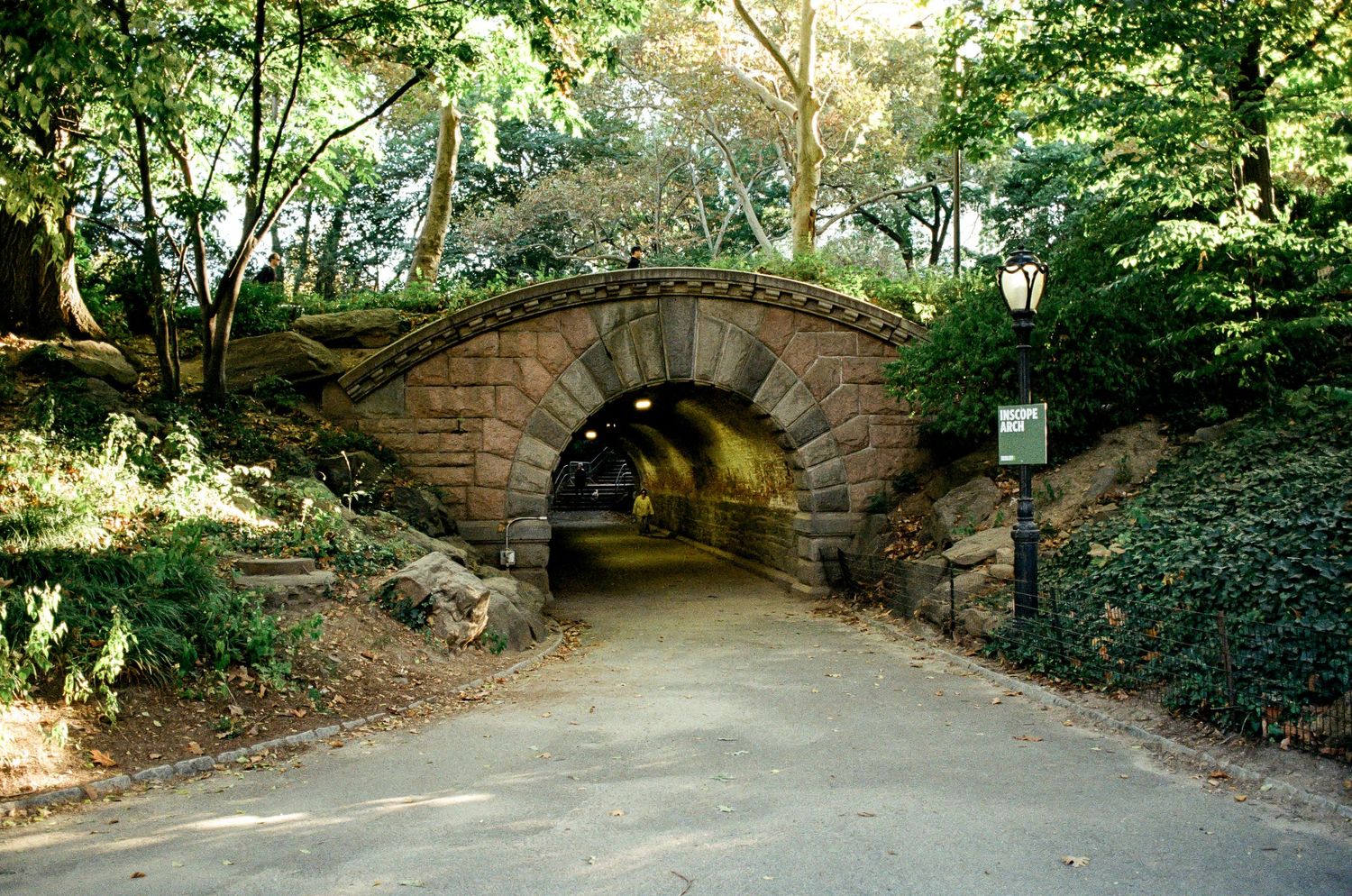
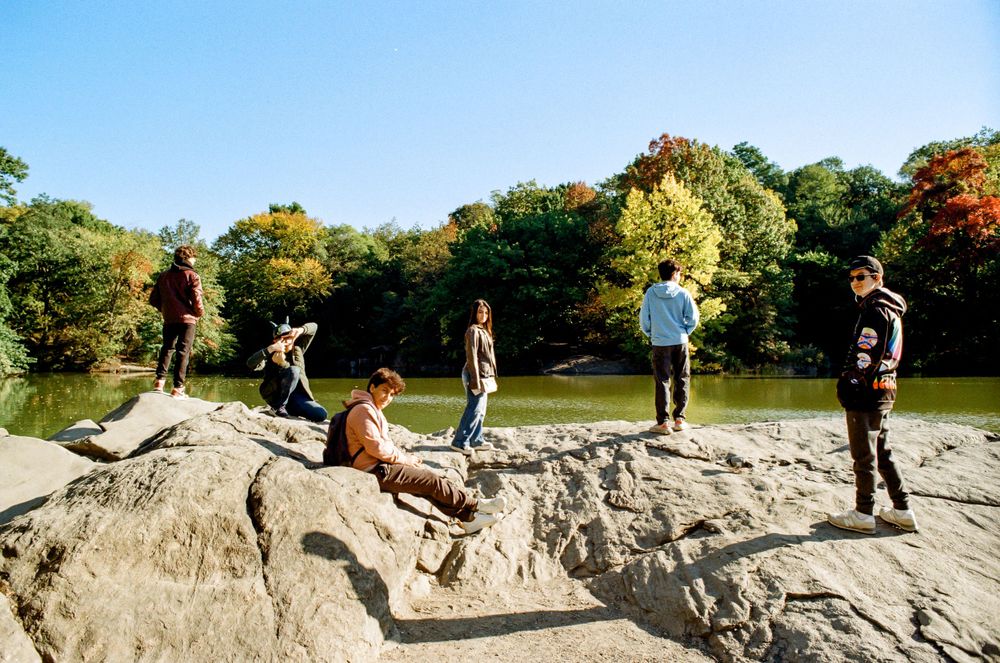
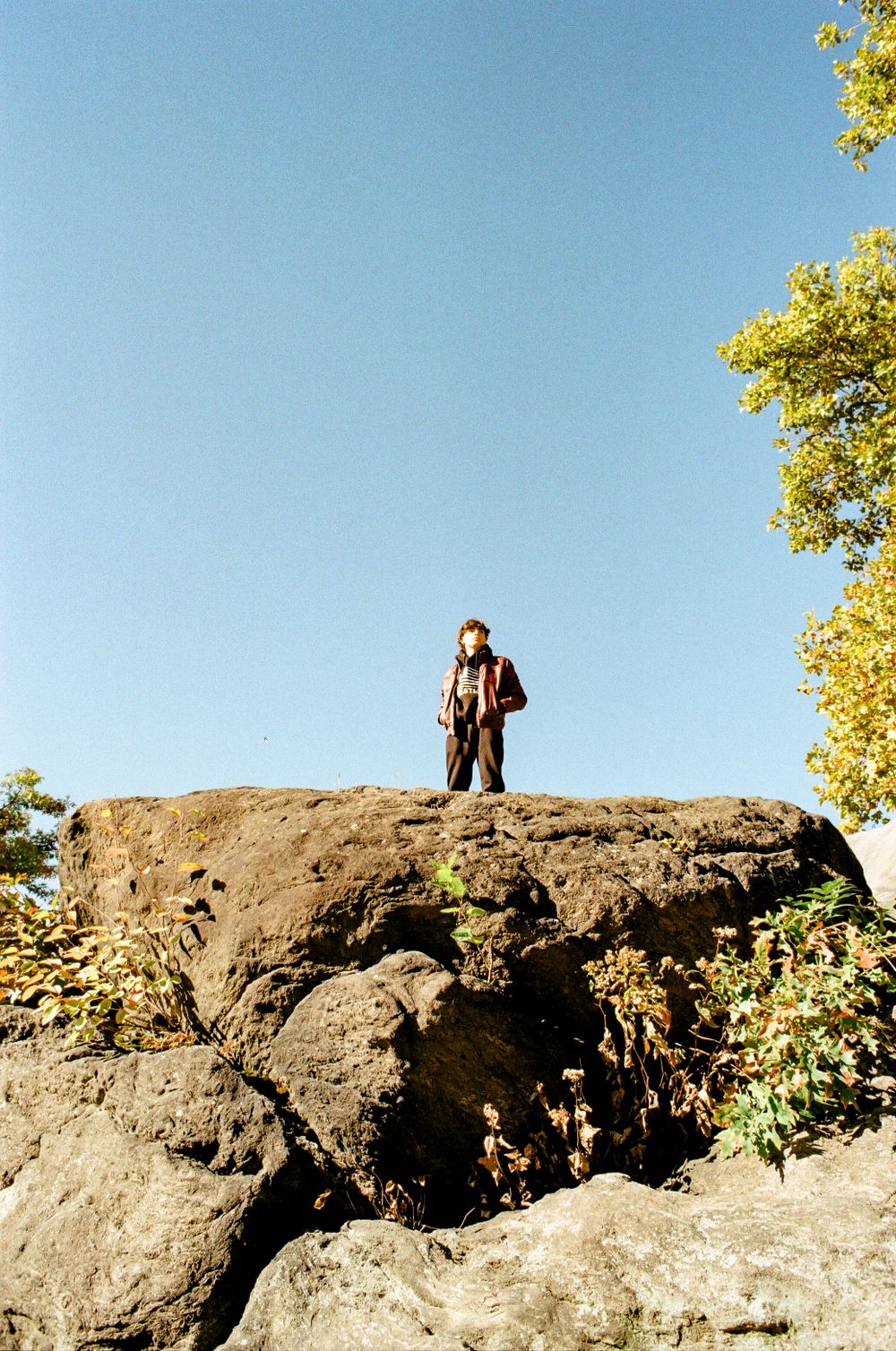
As already documented in the last installment of this series, our first day in New York City started with a walk in Central Park. While I had some slide film in the M3, I had also taken my trusty Leicaflex SL with my favorite 28mm lens and that's what I put this first roll of Kodak Pro Image through. While it would be the only roll of film shot with that camera on this trip, I quite like the results I got from it.
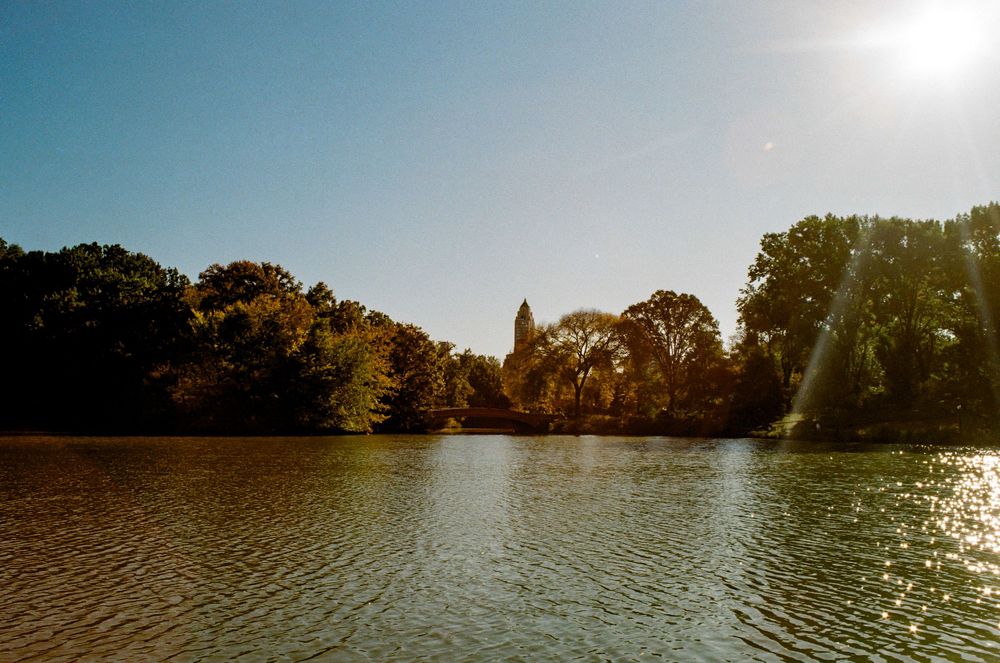
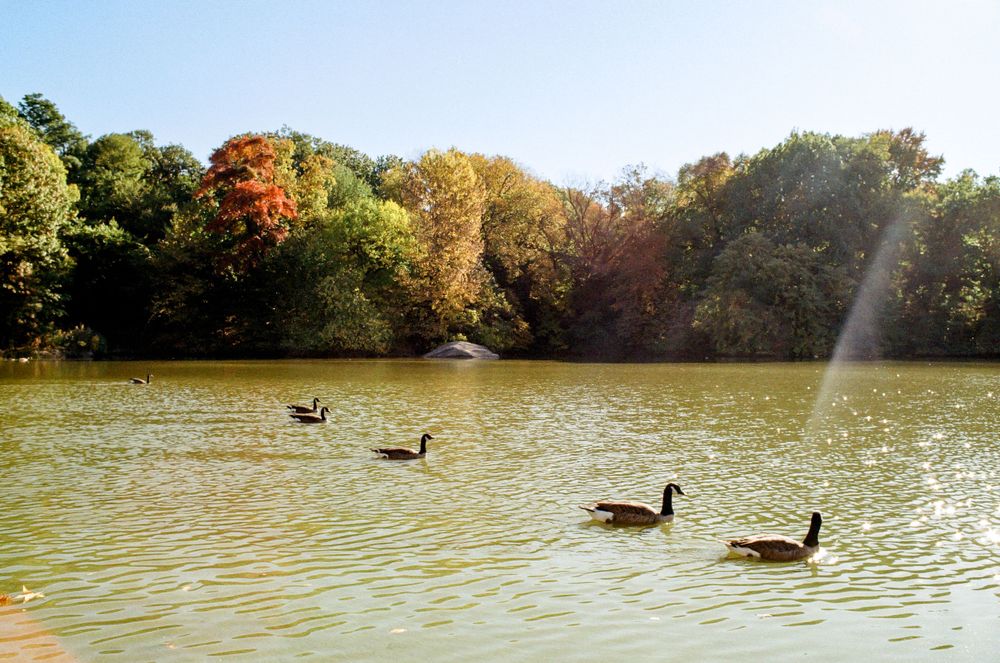
That lens is particularly sharp and contrasty. I went sans lens hood, even with that lens' tendency to flare when shot into the sun. This might have been a mistake, as one of my favorites from this roll has some serious flaring happening, but I tend to enjoy lens flares.
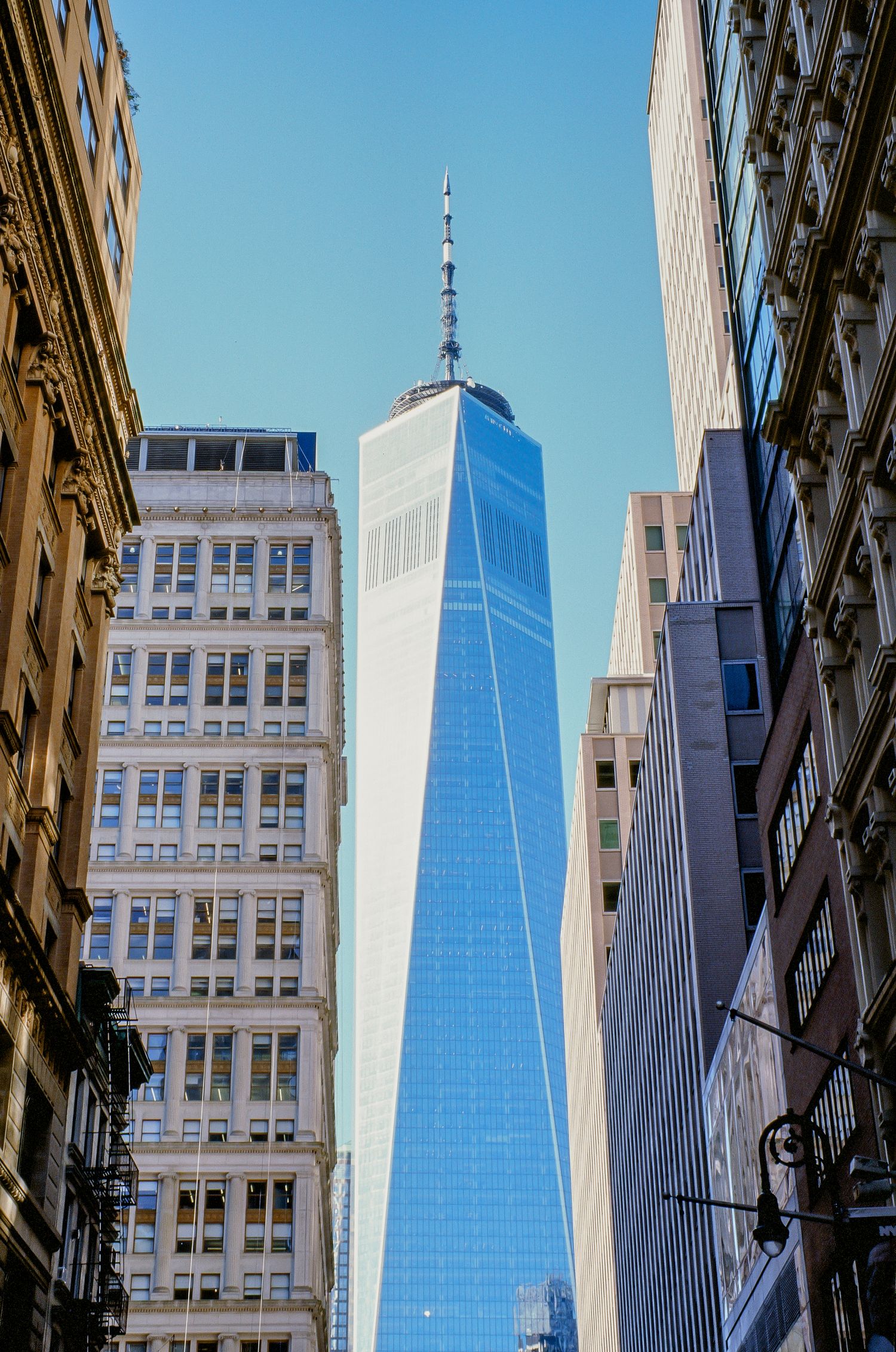
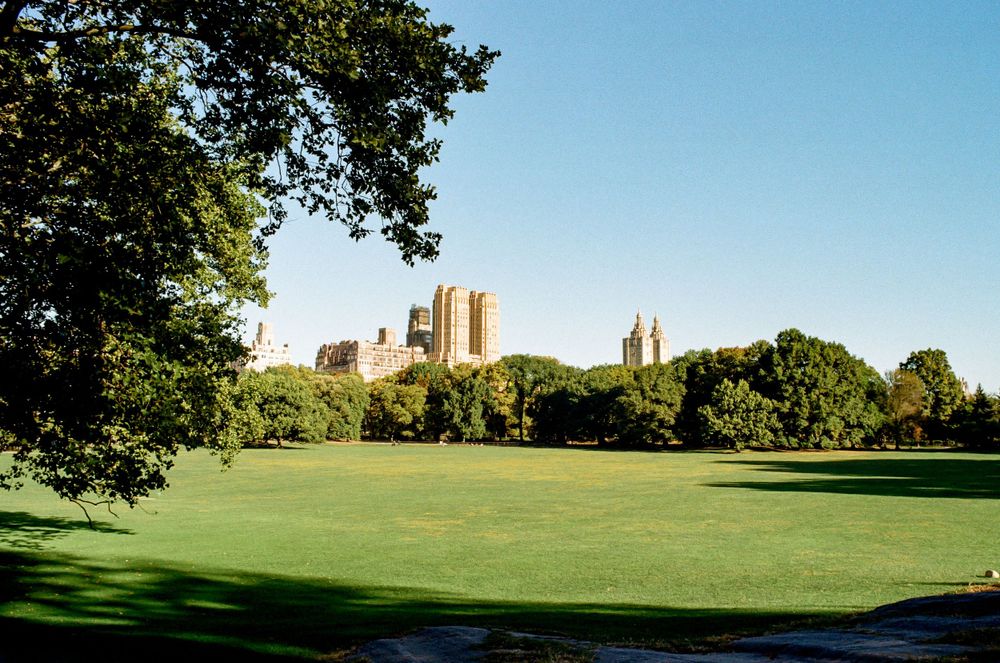
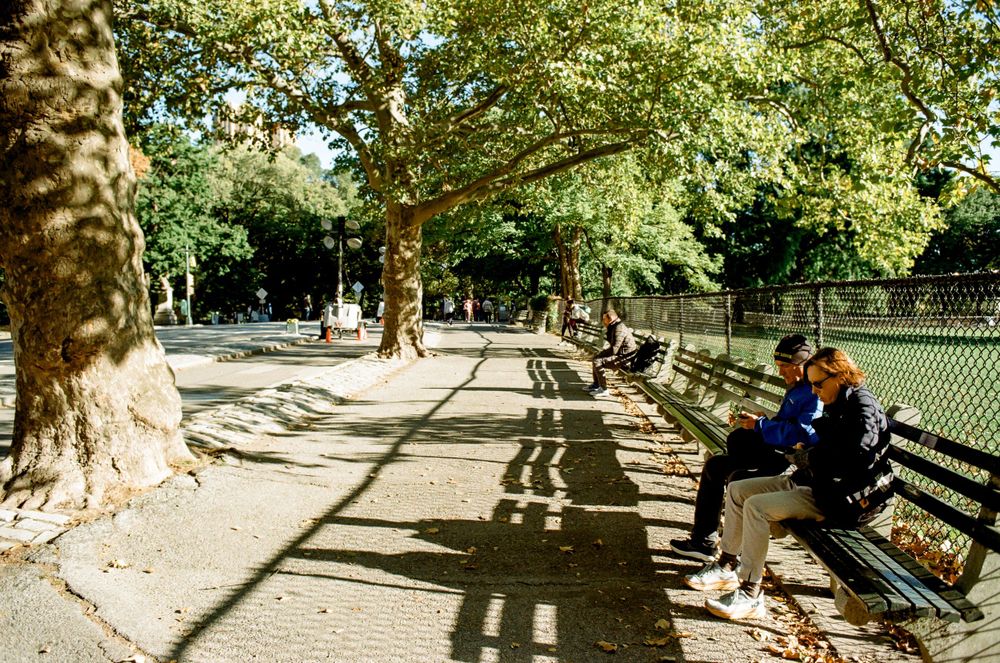
Even when being shot directly into the sun, Pro Image always produces beautiful colors. The blues and greens are rich, without being overly saturated, and the gradients found in the autumn leaves pops with vibrancy.
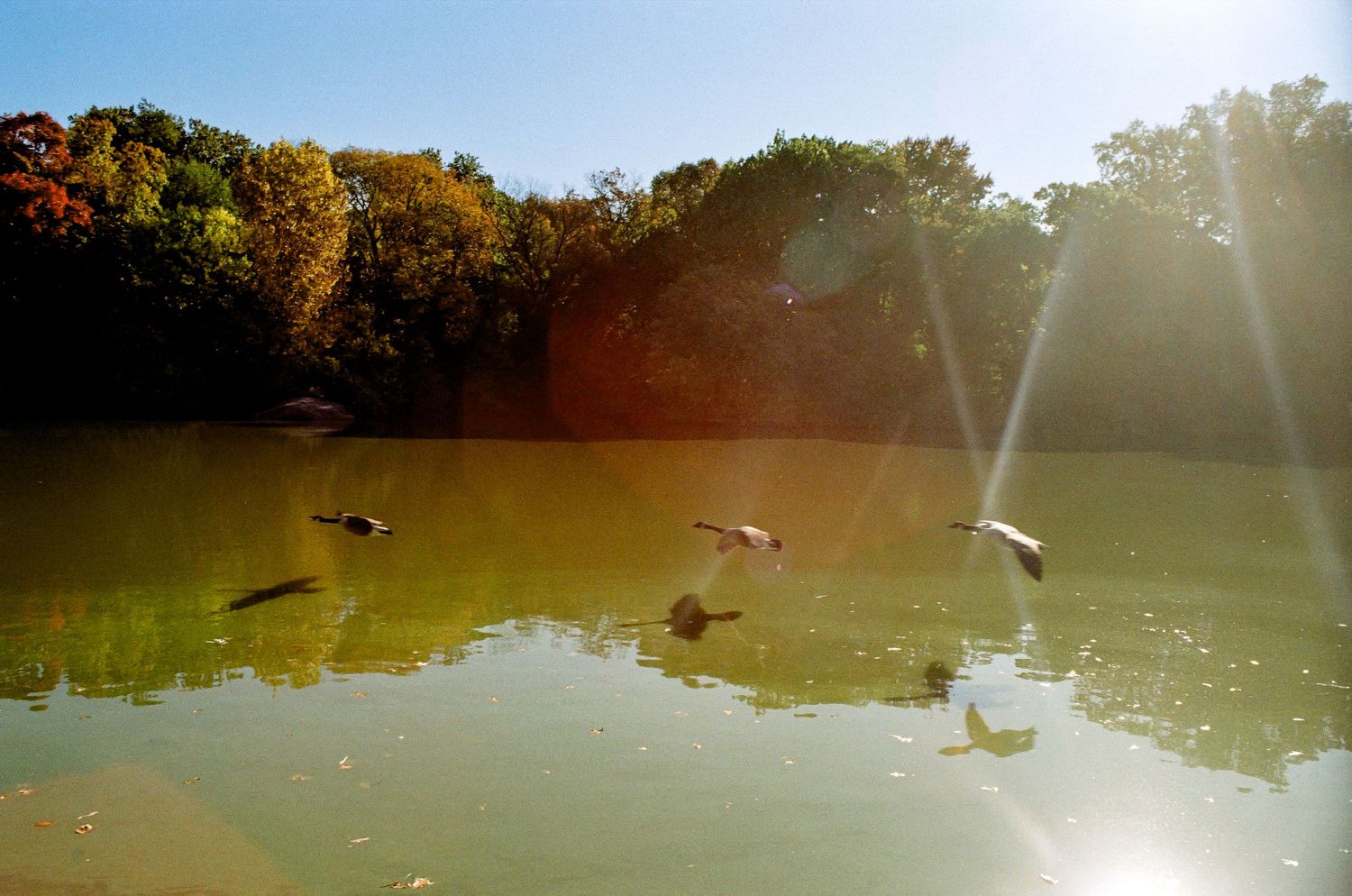
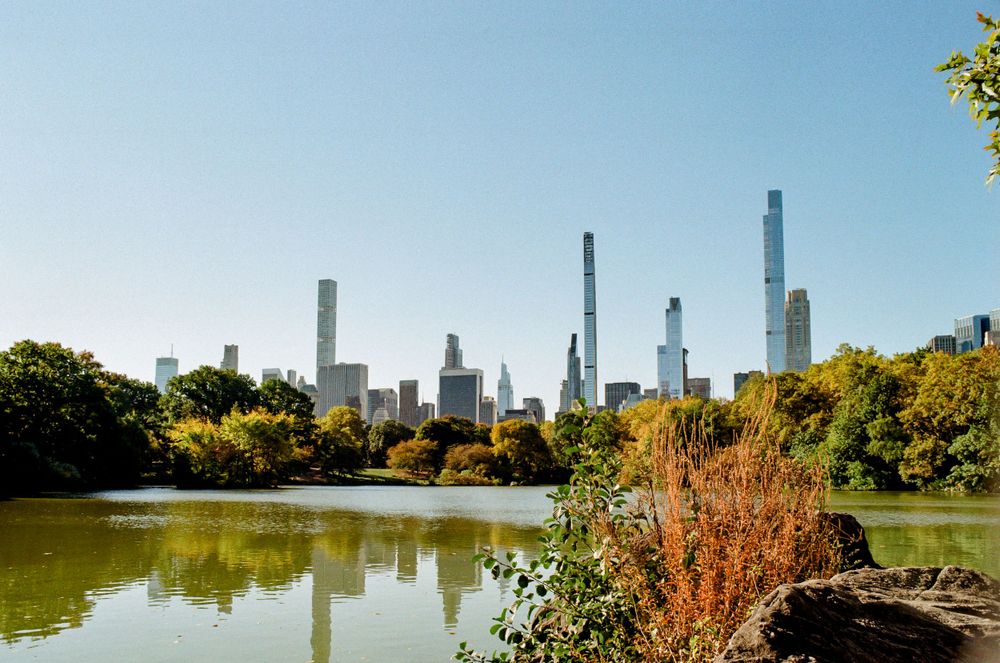
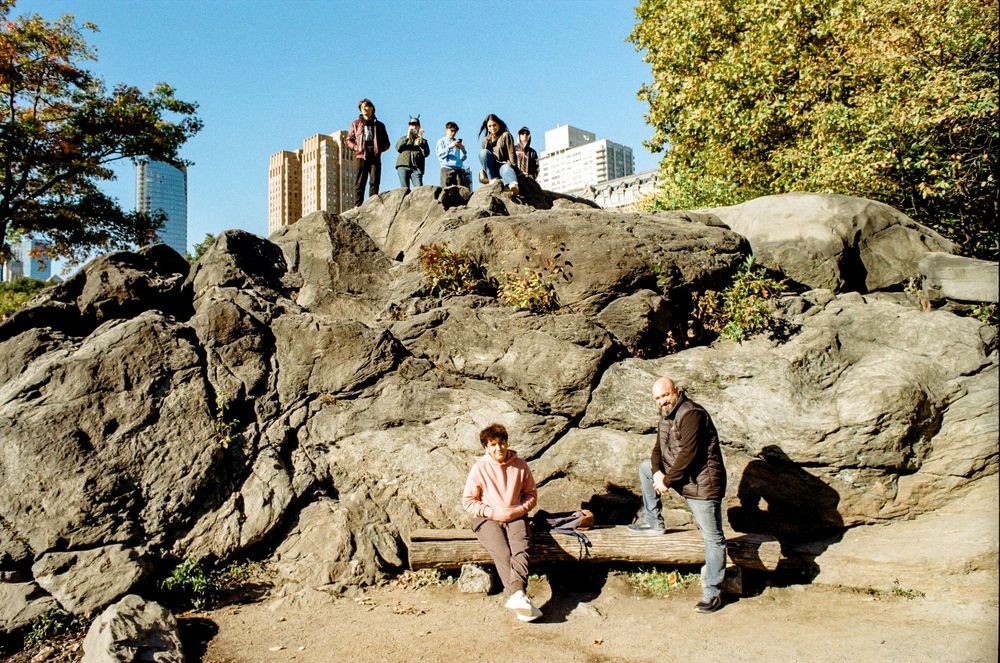
While I ultimately wanted to stay on 50mm and would switch permanently to the M3 for that reason for the duration of the trip, there are benefits to having a 28mm on hand. This shot is one I attempted with 50mm, but couldn't quite get the framing right. I moved around a bit and just couldn't make it work. But as soon as I raised the Leicaflex SL to my eyes, the Elmarit 28mm found the composition right away.
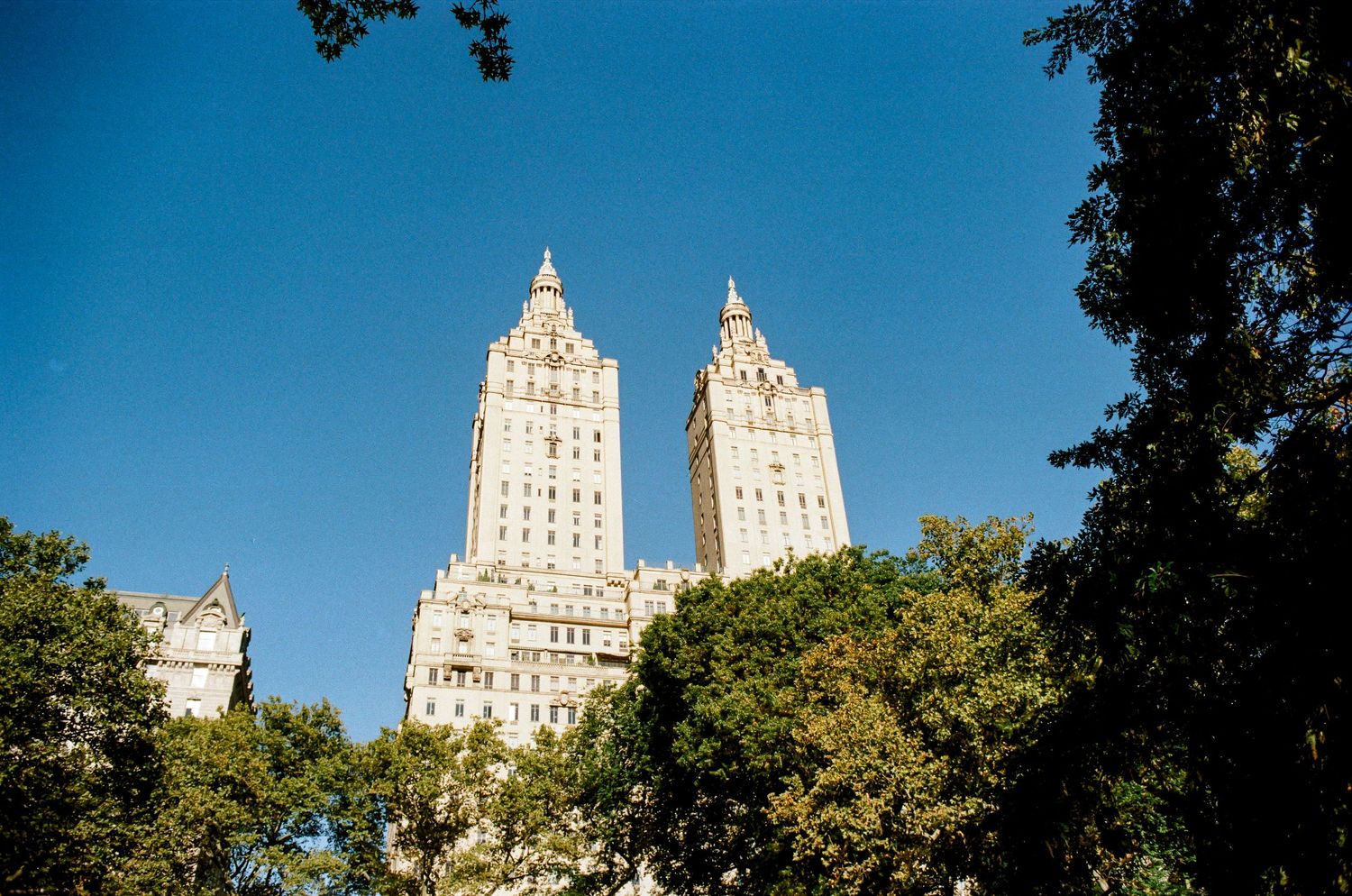
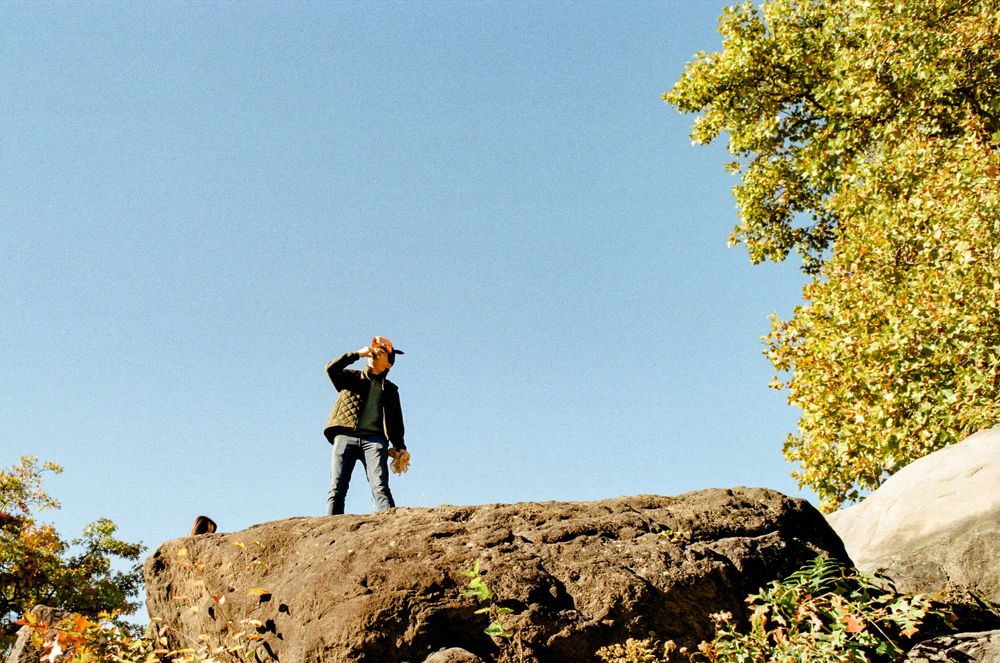
Without the sun directly in its view, we see even richer colors. This is why I fell in love with Pro Image. Those blue skies never need to be tweaked. They always yield exactly the shade of blue that I remember seeing at the moment. With other films, I often have to edit the skies to yield the shade of blue necessary to recreate the scene as I saw it. And while blues and greens tend to be colors that I desaturate a bit in digital photography, I do not need to adjust at all with Pro Image. They are always perfect.
Pro Image Street Photography
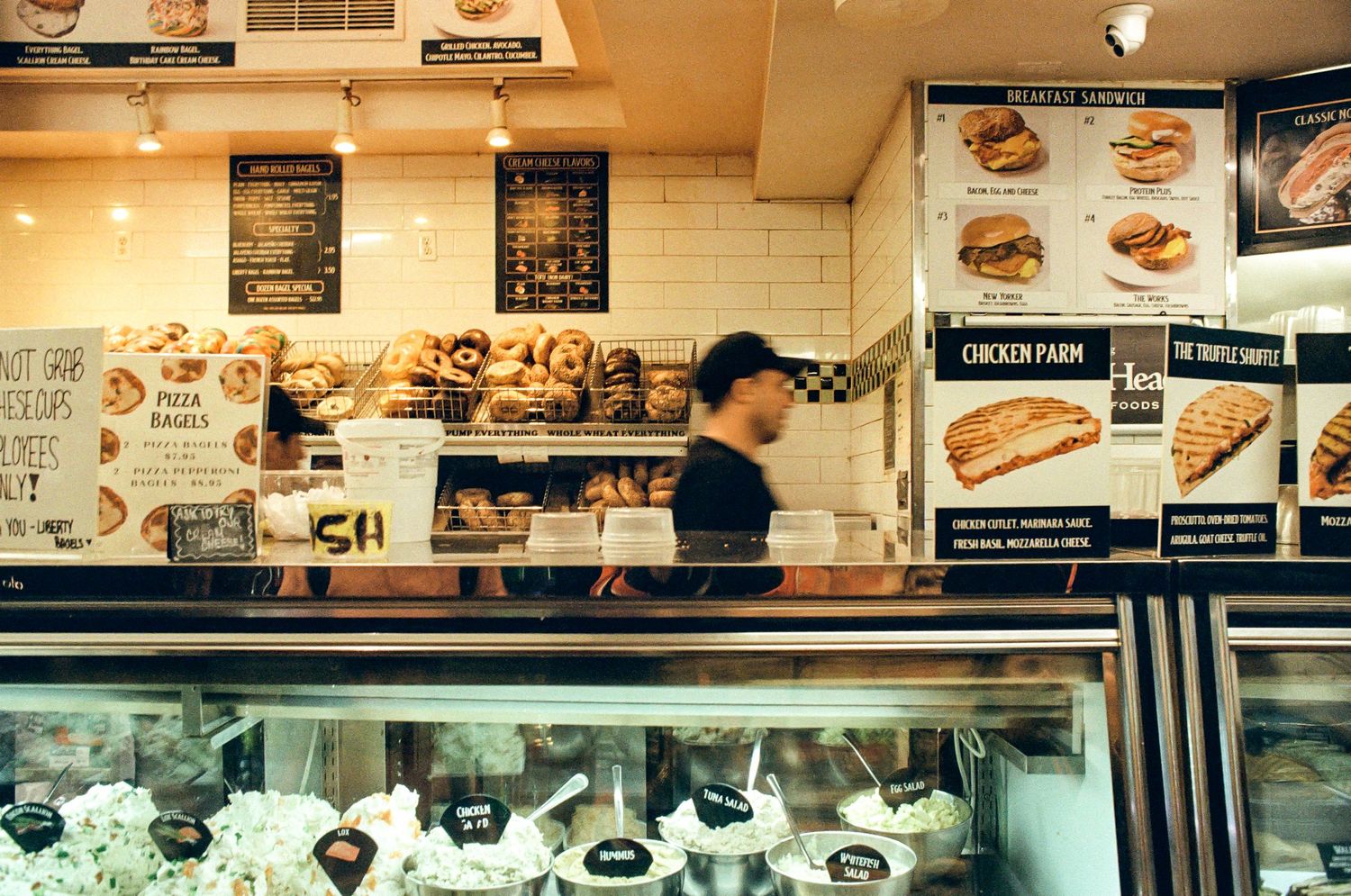
Once I finished that first roll of Pro Image, I wouldn't get back to that emulsion for a few days, but when I did, I decided to use it for my favorite kind of photography, street photography. We left our Midtown hotel and got breakfast across the street, where I made this first one.
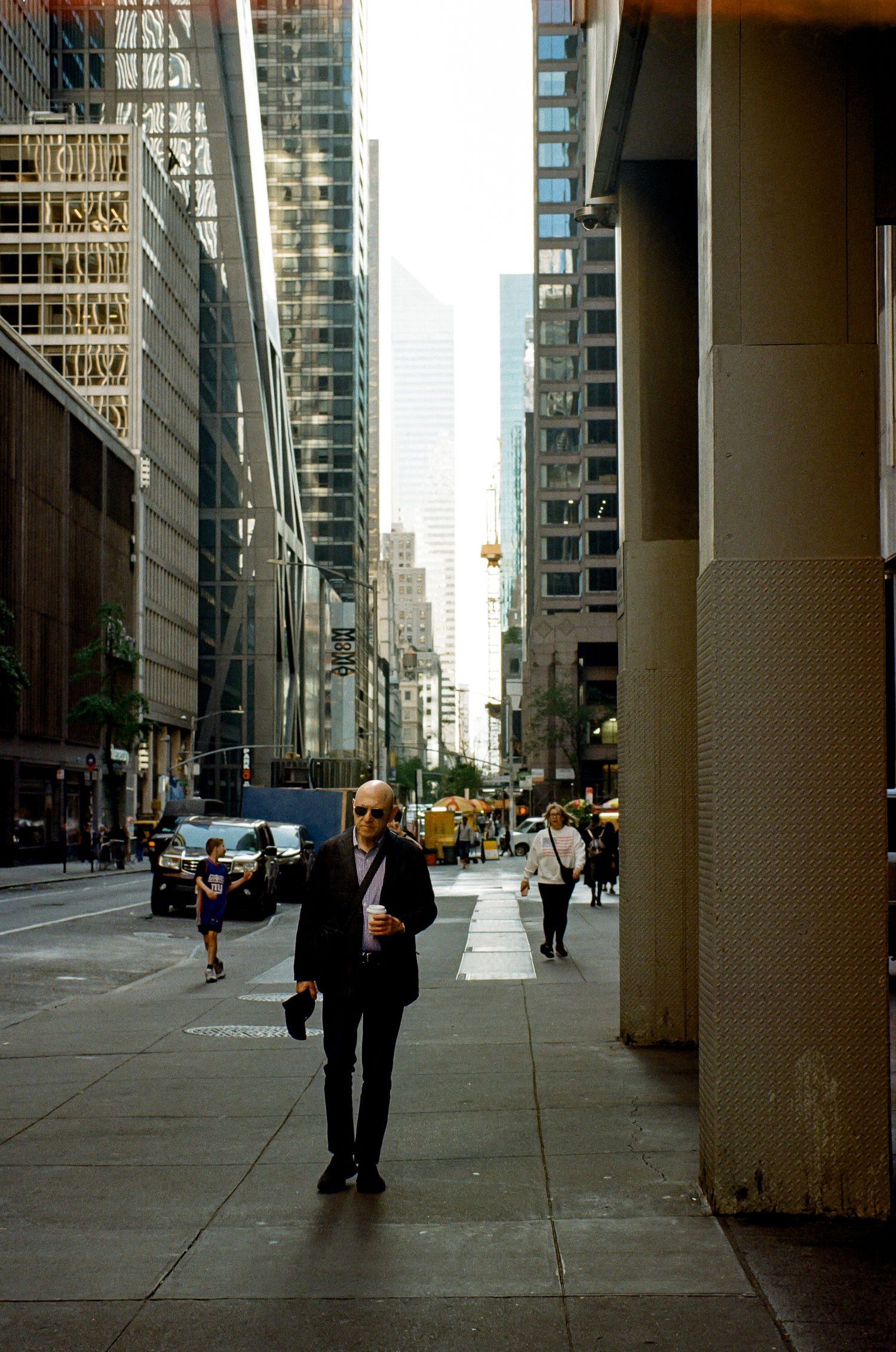
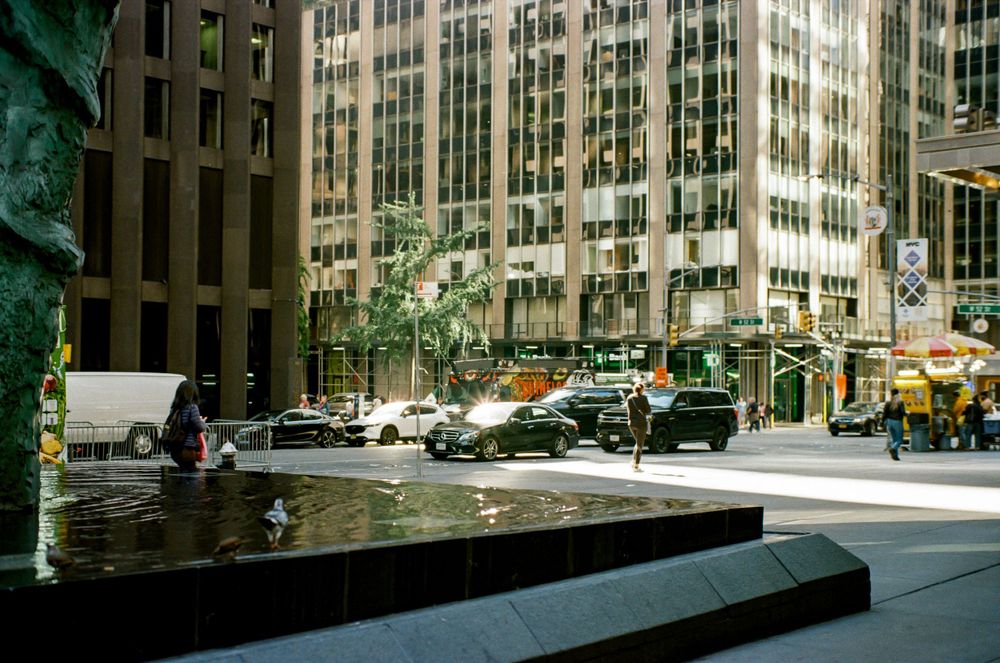
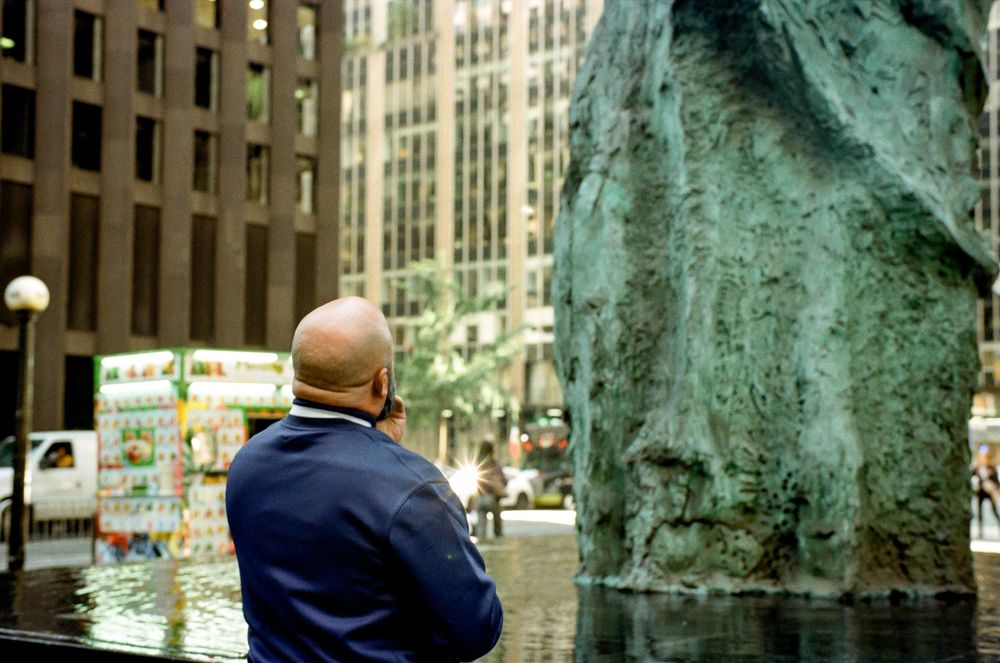
Pro Image's amazing black tones is one of the reasons I love it so much. Everything seems to be outlined and isolate itself from the next thing. For subjects this even seems to be exaggerated. Considering the subject of this photo, this gentleman pops right out of the background. This could be that the TTArtisan 50mm f1.4 is an amazing lens (it is), and it could be my editing style (probably), but those are constants within my photographs made in New York, while this amount of subject isolation is not. I really think that the black levels in Pro Image help subjects separate themselves from backgrounds.
What's more, its ability to create depth, again something that is working in conjunction with the lens, is quite amazing. I've made digital photos for years and this is something digital camera sensors are getting better and better at, but still fall short of film. The way depth is rendered on film is just...different. The combination of distance, haze, light, shadows, and grain, it seems almost unexplainable. But everything seems to have more depth and weight on film. And with Pro Image, that seems almost exaggerated.
Considering again this same photograph, the distance between the subject and the woman in the American flag sweater in the middle ground could not be more than 20 feet, and yet that gap seems to be measured in leagues. Likewise, the distance between the middle ground and background seems to be eternal. My lens was stopped down to about f5.6, if memory serves me correct, so there is a nice depth of field caused by this, but I am still surprised when I see this level of depth because it simply does not happen with digital cameras. Even on my Leica Q and Leica SL, I cannot get these results. And I am using vintage Leica R lenses on the SL, removing another variable from that equation. Depth is simply better on film, and possibly best with Pro Image.
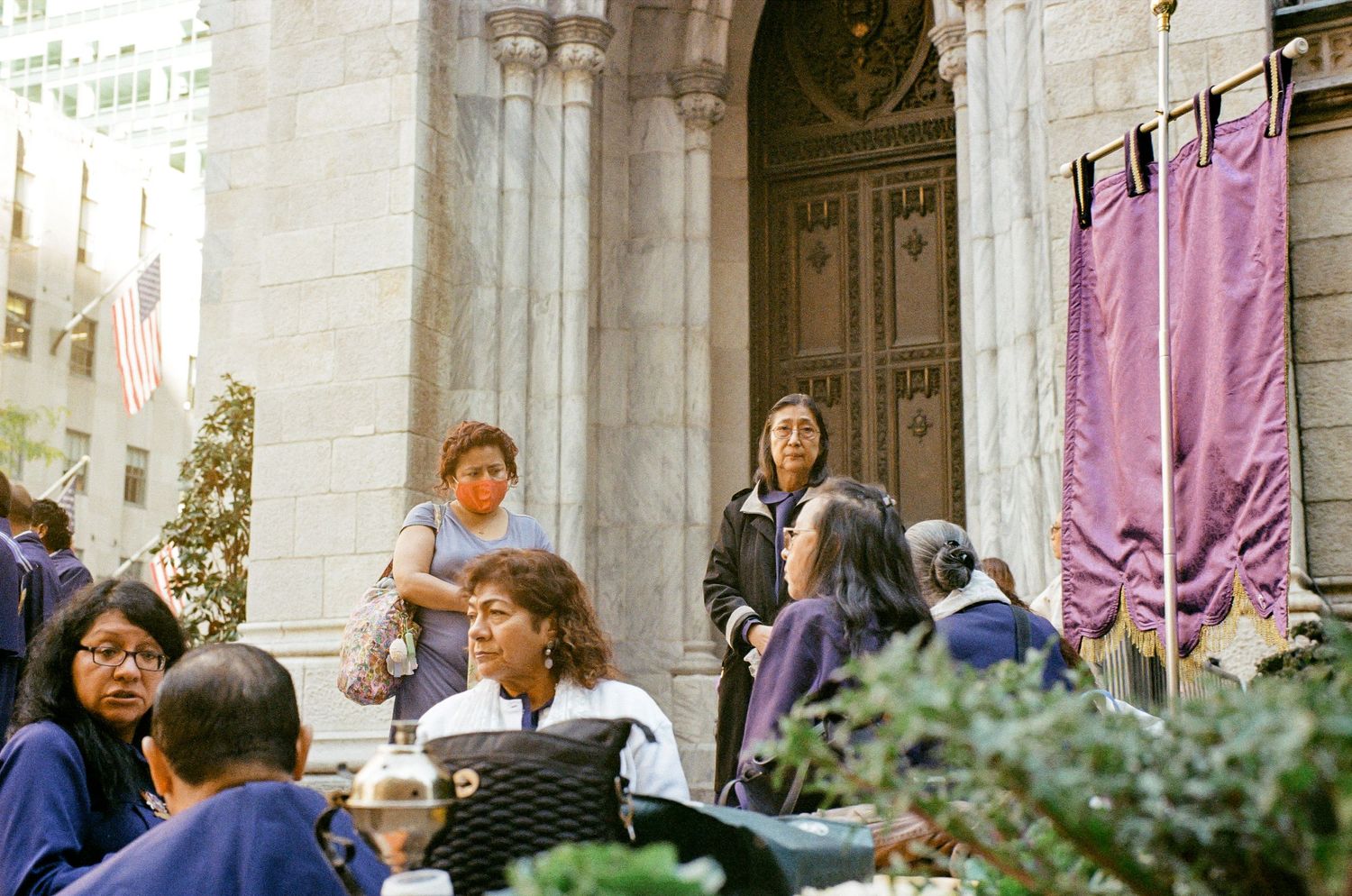
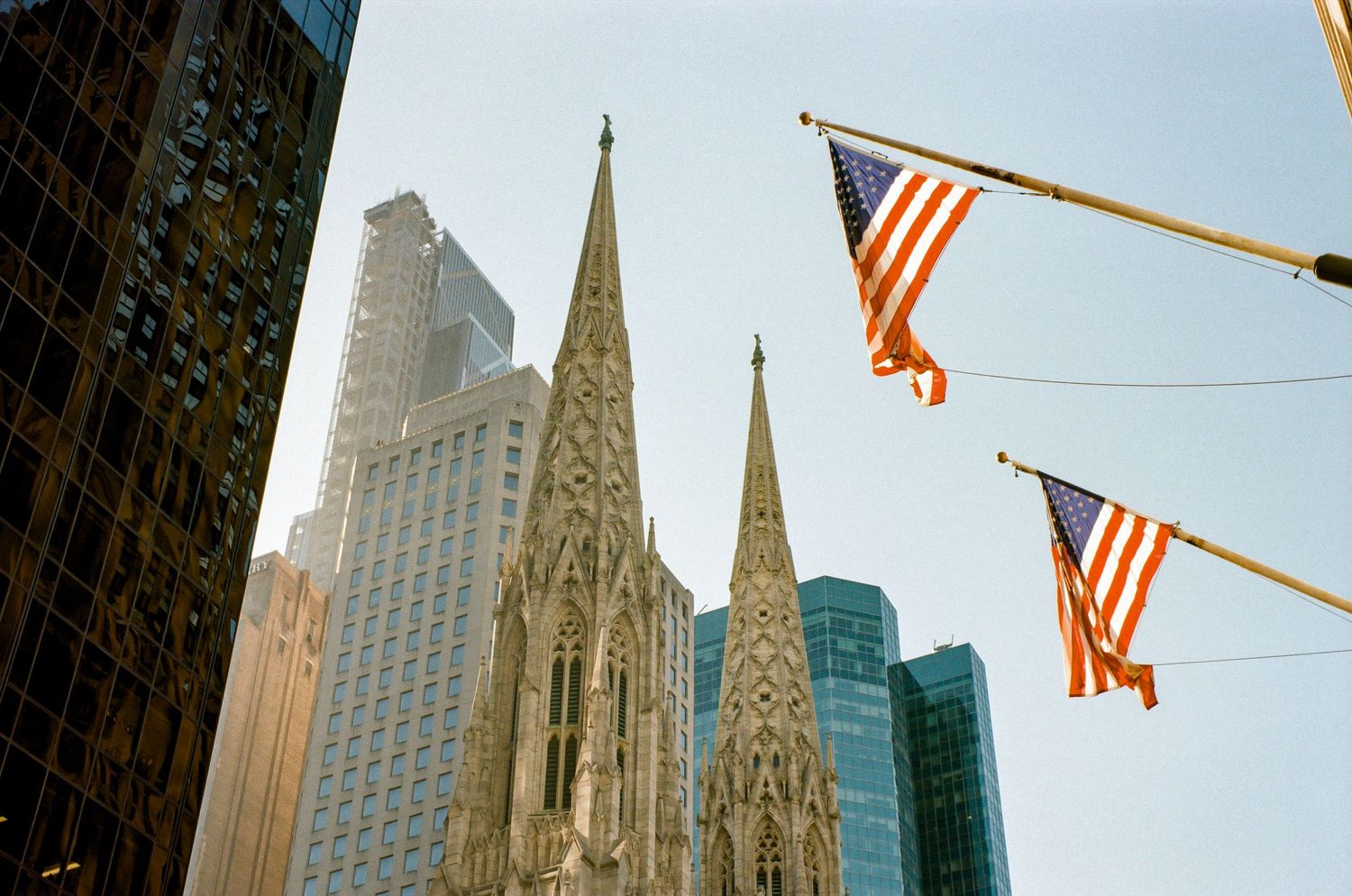
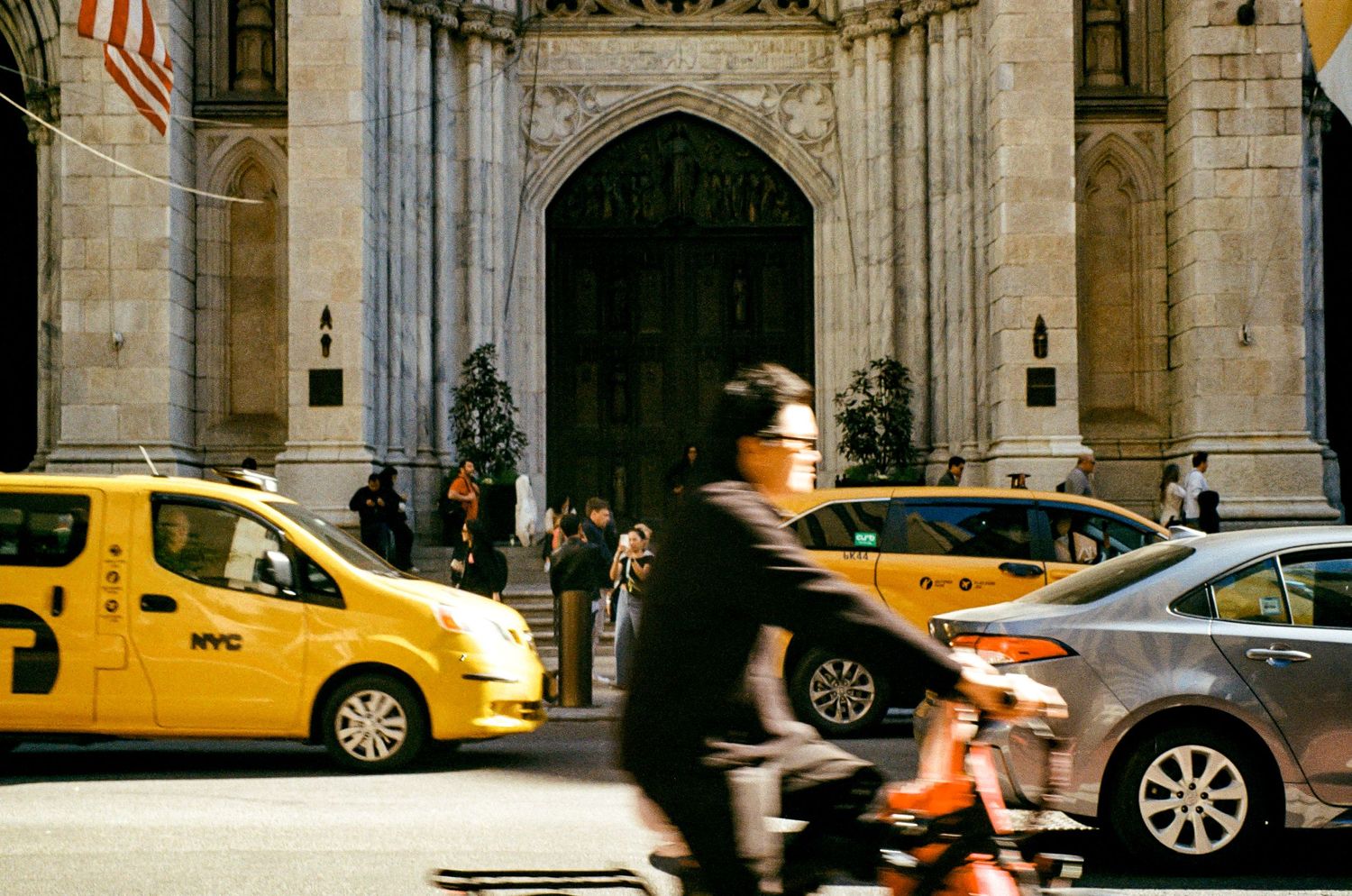
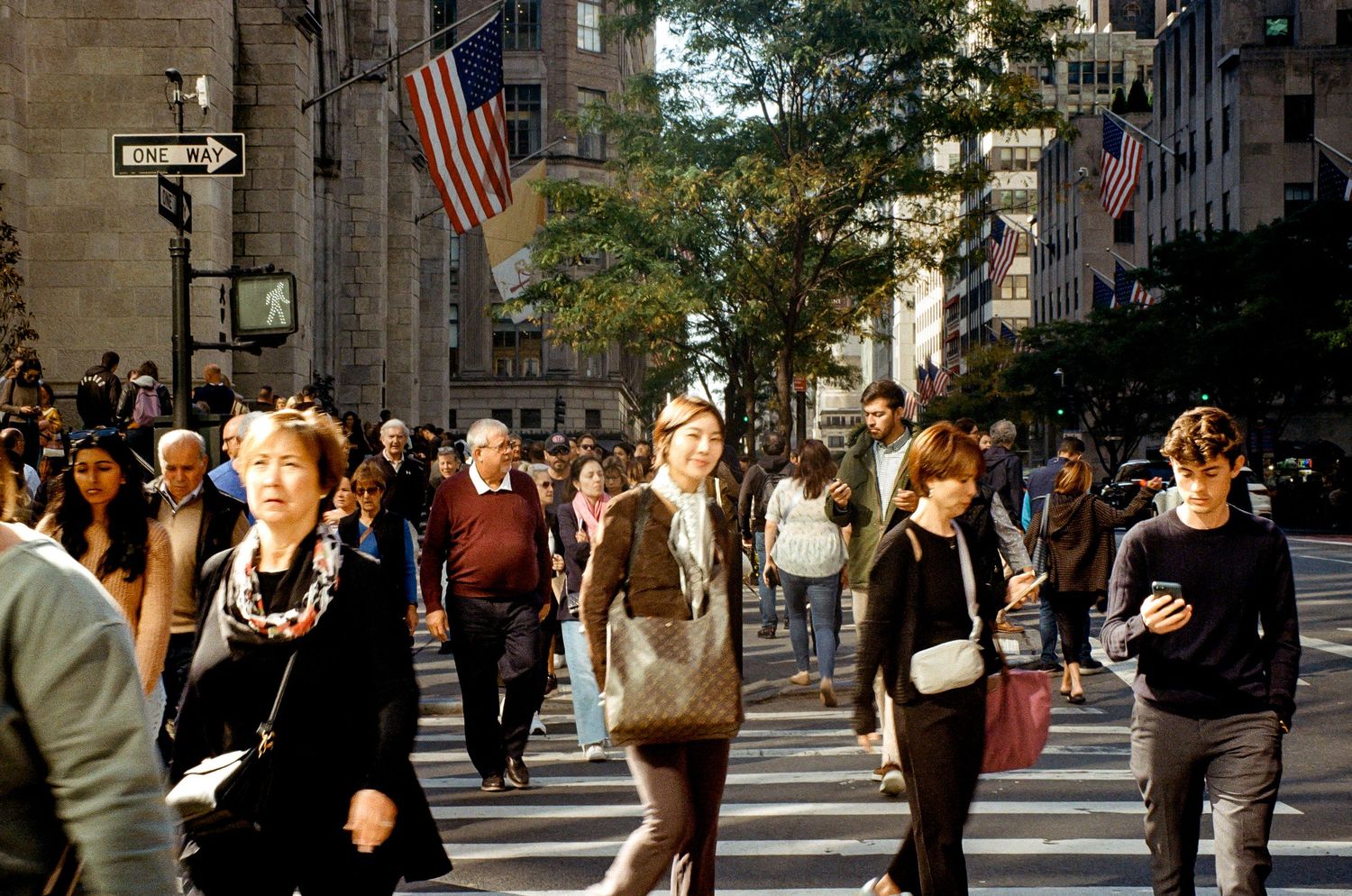
The depth that is found here, be it from the lens, film, or combination of the two, is quite incredible. This photograph of the woman crossing the street in front of Saint Patrick's Cathedral is one of my favorites of this roll for that reason. There are many elements that work for me in this one. For starters, the row of trees bisects the image almost perfectly, with flags on either side, creating a sense of symmetry and balance to the background. The "ONE WAY" sign adds a bit of humor to the image as it seems to be the only direction in which people are not moving. And movement is a big part of this as well. With few exceptions, everyone in this image exhibits a bit of motion blur, implying fast paced movement.
It all comes down, though, to the woman in brown smiling at the camera as she walks into the center of the frame. She is looking right at the camera, involving me in the process and begging to be the subject of the photo. What could I do but acquiesce her request?
Final Focus
It is unfortunate that making photographs, like many other activities, requires a warmup time. I find that I make my best photos towards the end of a roll. And both of these rolls were the first rolls loaded on their given days. I also should have known better than to try to force 28mm on myself when all I was feeling was 50mm. Regardless, Pro Image continues to impress me. The photos I make with Pro Image have a truly classic and timeless rendering. These look like the prints I held in my hands as a child.
And one of the best things about Pro Image, unlike Ektachrome, it is affordable. Sure, any roll of film brings with it a cost of entry and exit, but each 36-exposure roll of Kodak Pro Image costs me $10, which after adding the cost of development and scanning brings the total to $0.67 per exposure. That's not too bad considering that Ektachrome at over $1 per exposure, which is at instant photography costs.
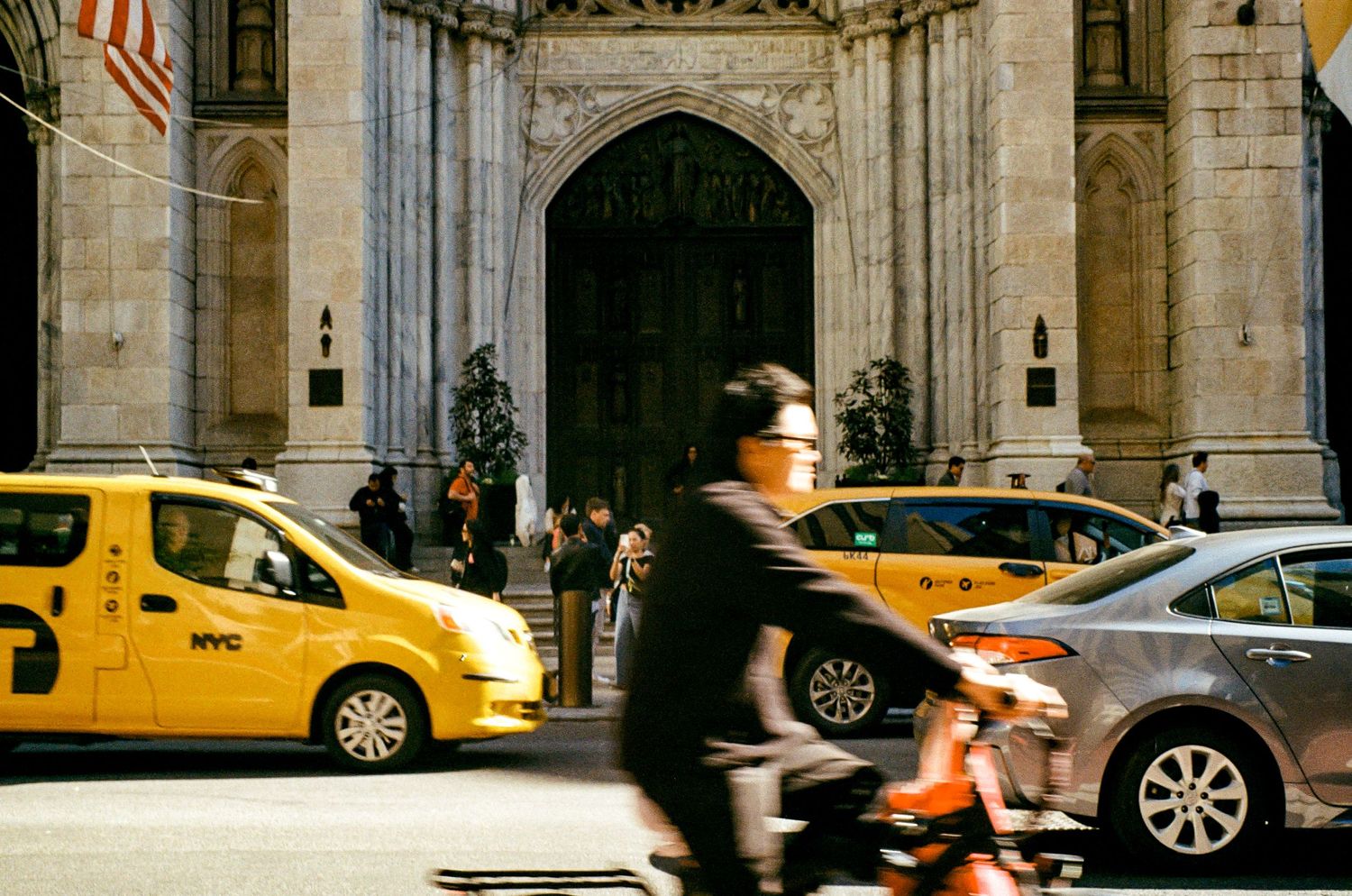
I'm not about to lie and say that this is the best color film there is. If money was no object, I'd shoot exclusively Ektachrome for color photography. But as an alternative that yields color rich, but not over saturated photographs, it is hard to be Kodak Pro Image. I think I'll be using some Pro Image to make street photos in Miami, which I have not done on film. That will definitely be my next project with this emulsion. Because I'm always looking for the next project with Pro Image.
To be continued in Adventure in New York, Part IV.
More New York with Kodak Pro Image 100
All images © 2020-2024 David Ulloa Studio. All rights reserved.