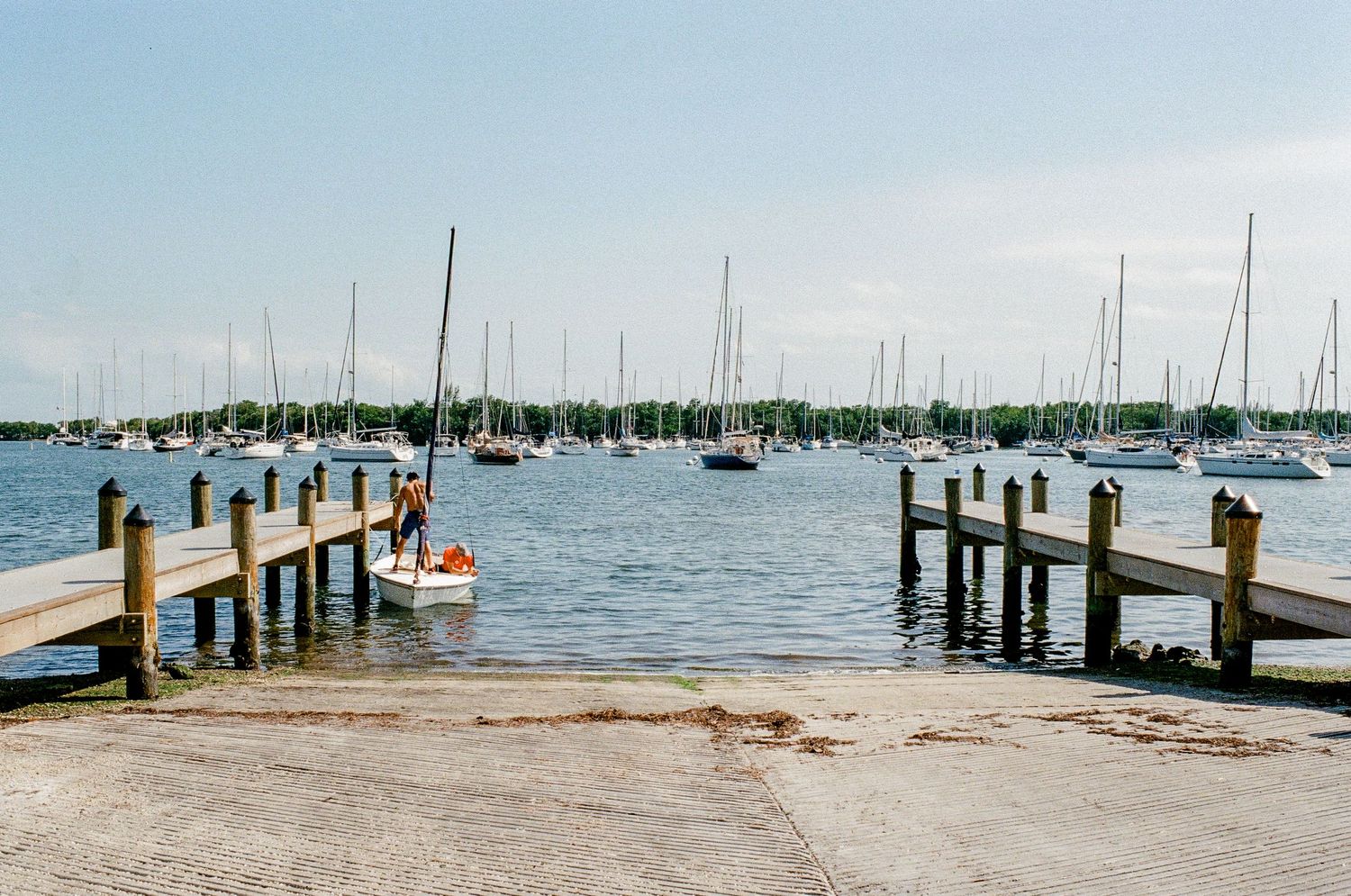
R Mount Loving
My history with Leica begins with the V-Lux 1. I used this bridge camera for about two years and it really helped me learn and grow as a photographer. When I started to take photography more seriously I got myself a Q Typ 116. I immediately fell in love with everything about it. And while 28mm remains my favorite focal length, I wanted to shoot other focal lengths and still get that Leica Look. So I got an R mount Summicron 50 to adapt to my Fujifilm X-T2. I instantly took to this lens and soon others followed. Within a year I had the 28mm, 35mm, 50mm, 90mm, 135mm, and 28-70mm R mount lenses. It was then that I realized I was not using these lenses as intended and got myself an R4s to shoot them with film.
I love my R4s. In fact, a big reason why I started to fall in love with and indeed began to prefer film photography is because of this camera and these lenses. But I started to get the itch to take two film cameras with me. The combinations are endless; one for color and the other monochrome, or different speed films, I could do so much more with film if I had two with the same lens mounts.
I did a bit of researching and knew I wanted to stay within the Leica R system. So I wasn't looking for one of their famed rangefinders or point and shoots. I very nearly went with the R6.2. I wanted something all mechanical and with a shutter speed of 1/2000. This was when I realized that the Leicaflex SL, the older brother of the R cameras, had everything I wanted and had the reputation of being built like a tank. So I patiently waited for the right one to come around and snagged it up.
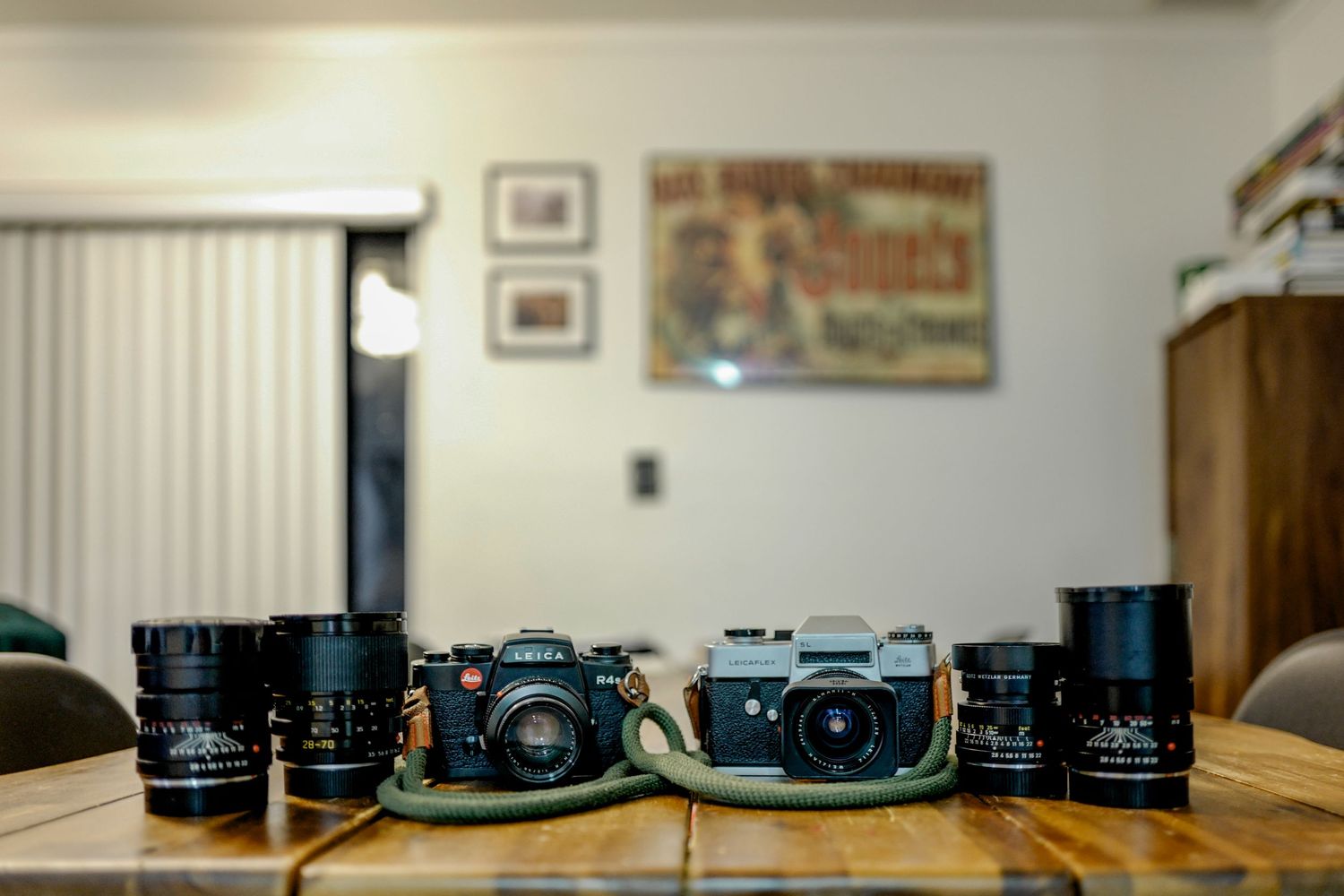
When it arrived I was instantly thrown off by its size. The thing was much larger and more substantial than the R4s. Its reputation was well earned. It was indeed over-engineered. And despite this being an R mount, the feel is quite different. The R4s felt very much like what my experience had been when shooting my Pentax SLRs. Yes, the shutter felt nicer, the shutter release button felt better, the film advance lever was more substantial, but it felt very much like shooting a very nice SLR. Which, by the way, I love. I am definitely an SLR fanboy. I like being able to see in the viewfinder exactly what my photograph will look like. But the Leicaflex SL has a totally different feel. Starting with the fact that it has a cloth shutter curtain and not a metal one. The film advance lever is also a bigger and more satisfying one to use, unlike any other I've ever used. Needless to say, I was excited to put a test roll through this and make sure everything worked.
It had a working light meter after all these years, but these batteries are no longer produced. This meant I could either use an adapter with a new battery or I could use an external meter. I went with the second option. I have a TTArtisan (I'm a big fan of all their products) external light meter and decided to go that route.
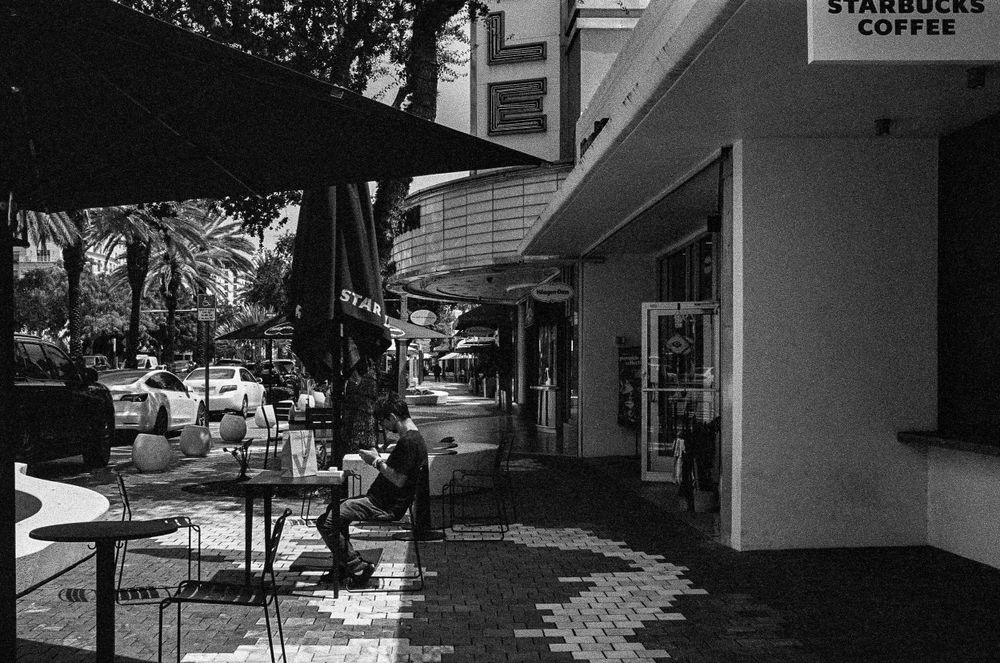
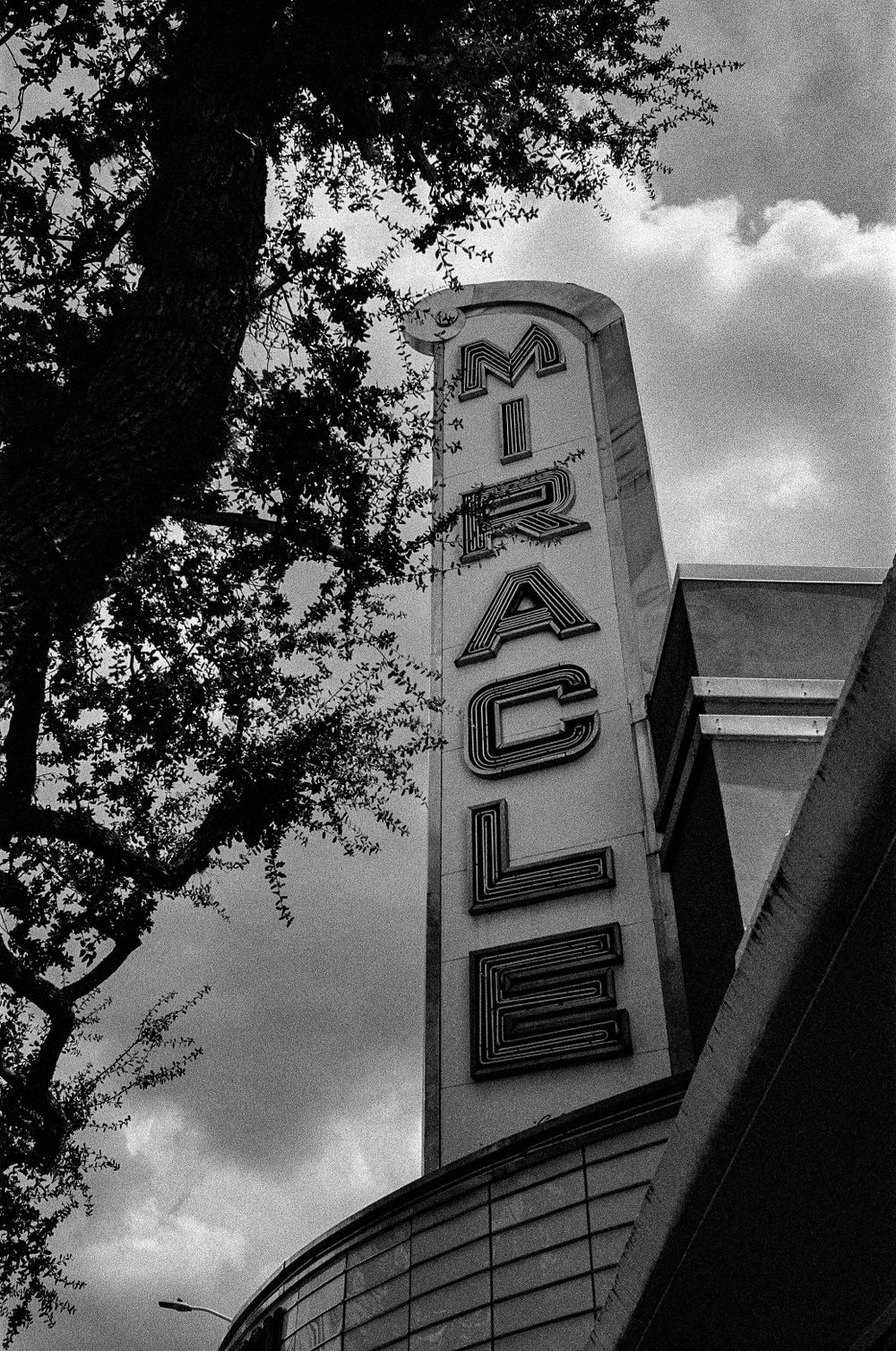
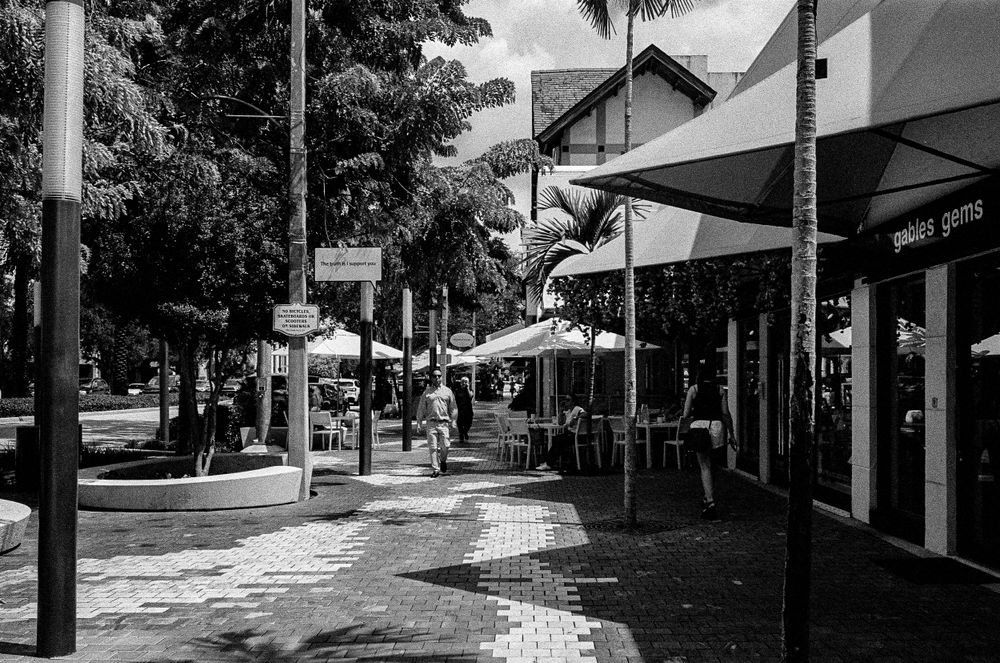
I simply wanted to make sure that the shutter was firing accurately at different speeds and that there were no light leaks that needed to be addressed. On a camera that is entirely mechanical, that's pretty much all you need to be concerned about. With this one specifically, the viewfinder was so pristine that I don't think I've ever seen one that rivals it. Not just in size and brightness, but in how spotless it is. Having had many vintage SLRs before this, it is hard to find something quite this clean. So I mounted the Elmarit 35, loaded up some Kodak Tri-X 400, and went out to Miracle Mile.
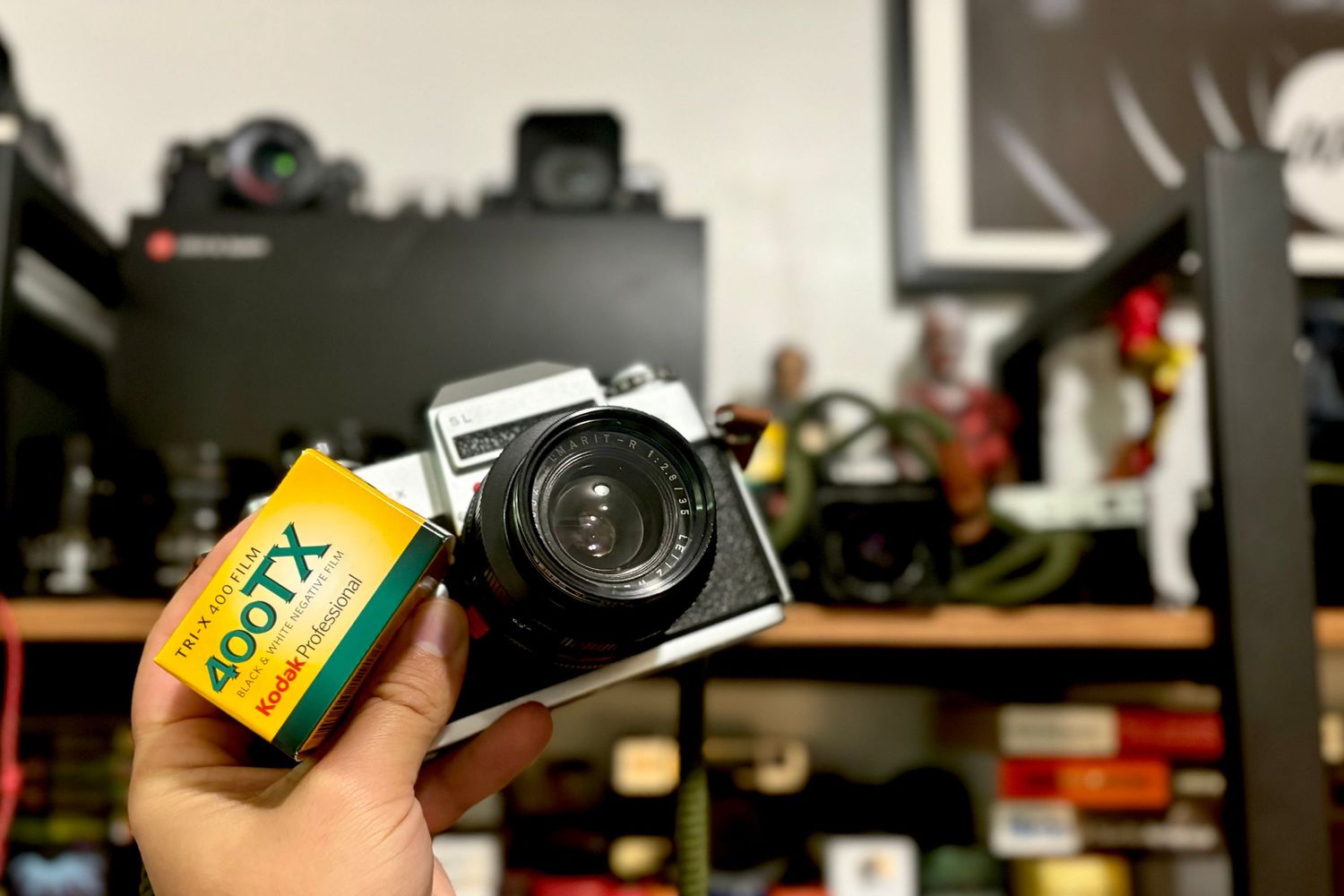
Expired Tri-X
Because the purpose of this roll was really just to test the camera and ensure everything was in working order, I had decided to use some expired Tri-X. Now, I am not the kind of photographer that enjoys expired film. Many lean into the sort of strange and sometimes beautiful effects that are caused by shooting expired film. I like knowing what I will get and do not enjoy the variables that shooting expired film presents. But after doing some reading I found that only after about 10 years past expiration does film really begin to show the odd effects that we often think of as "expired."
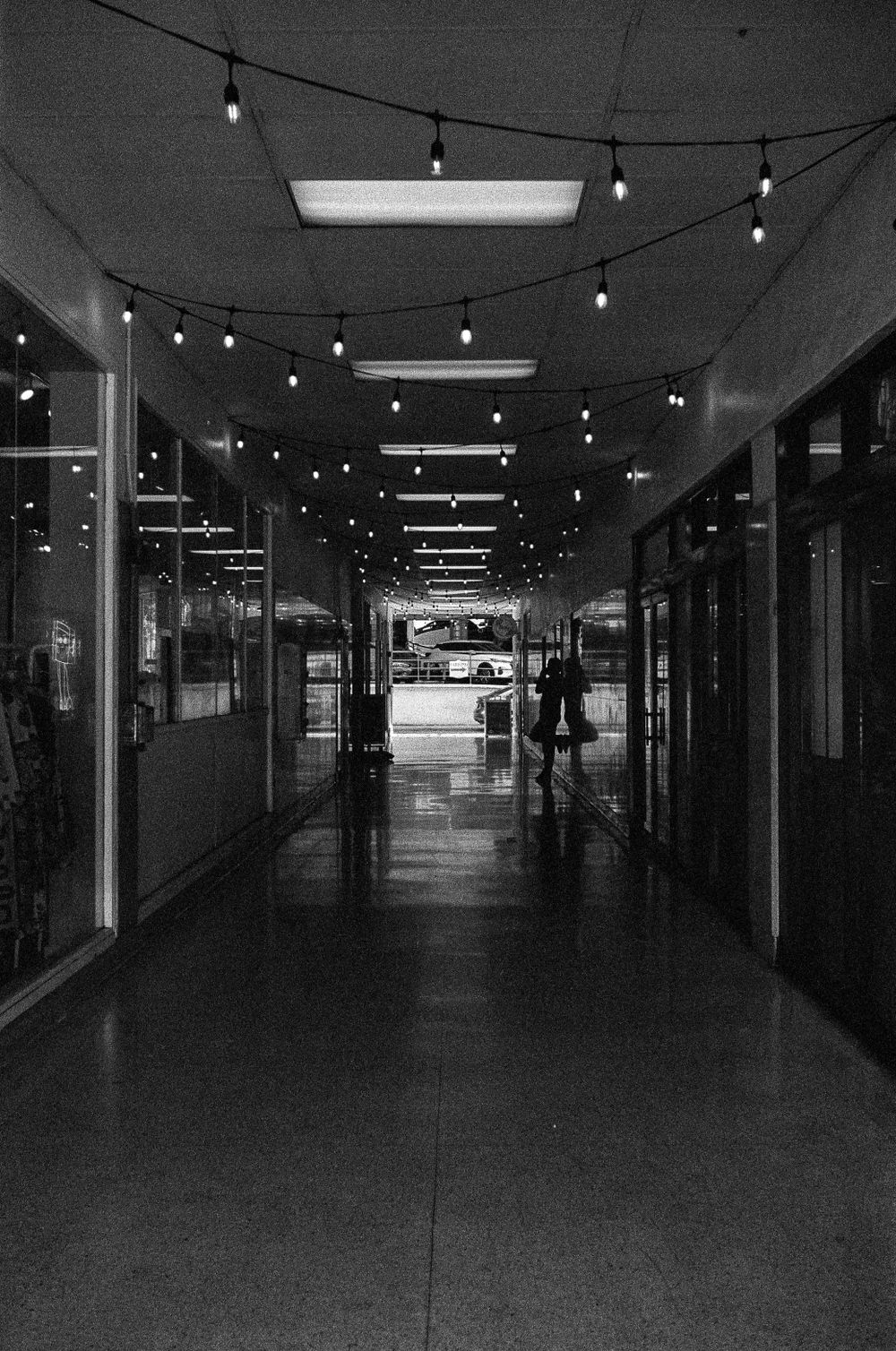
so, I was very surprised when I got these scans back from the lab. Because, despite this being a test roll, I treated it as an opportunity to make some decent street photographs.
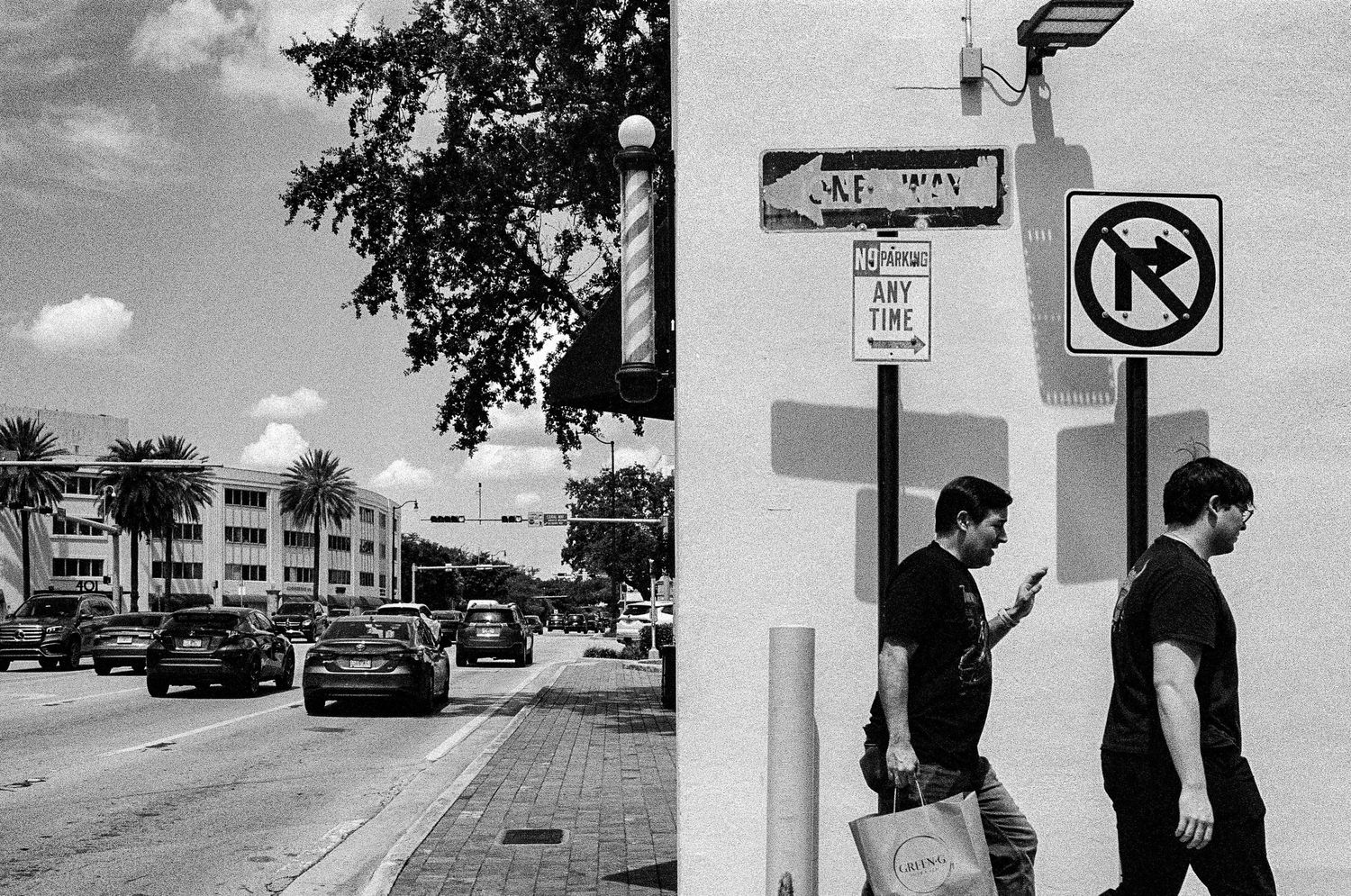
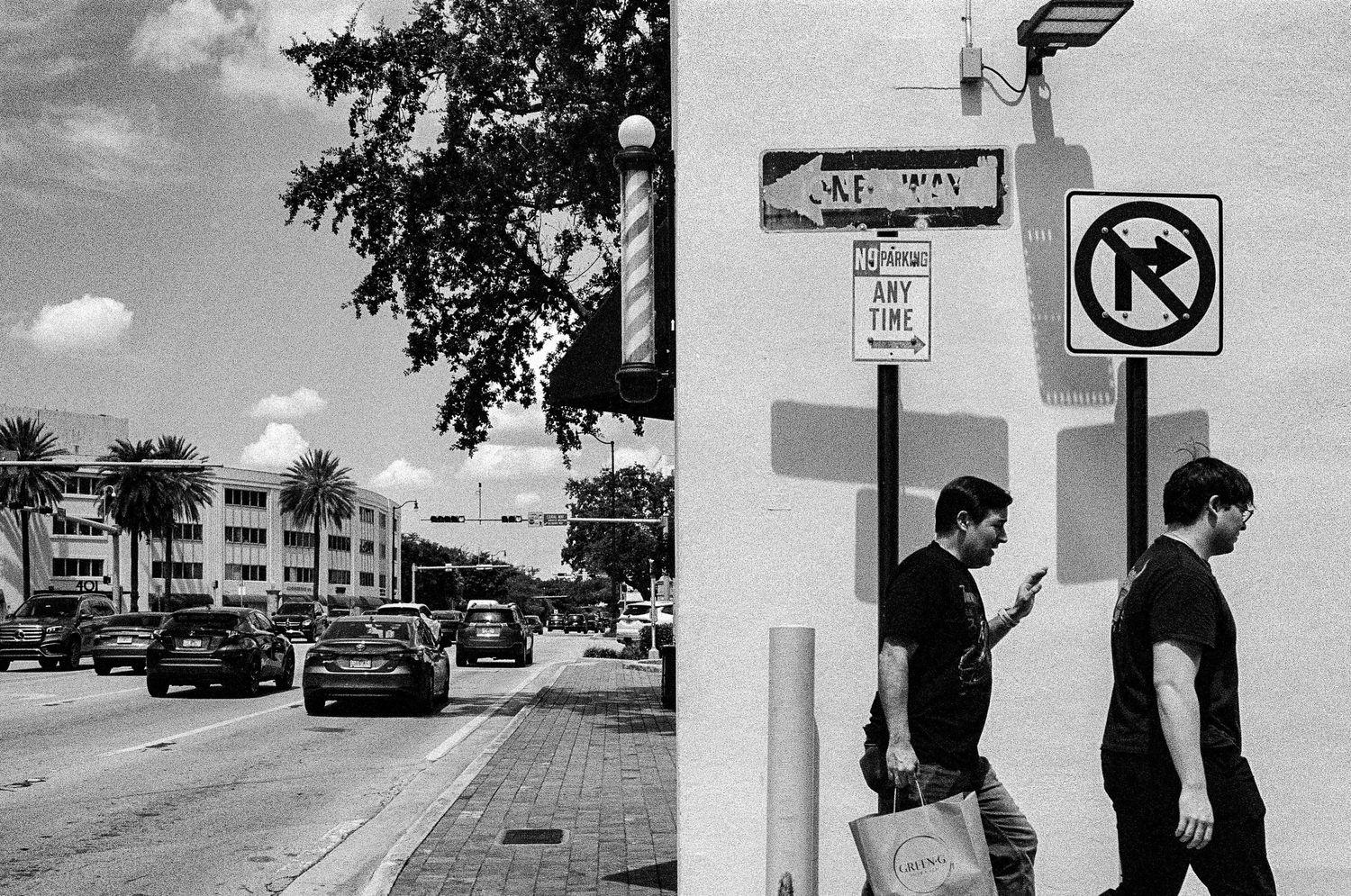
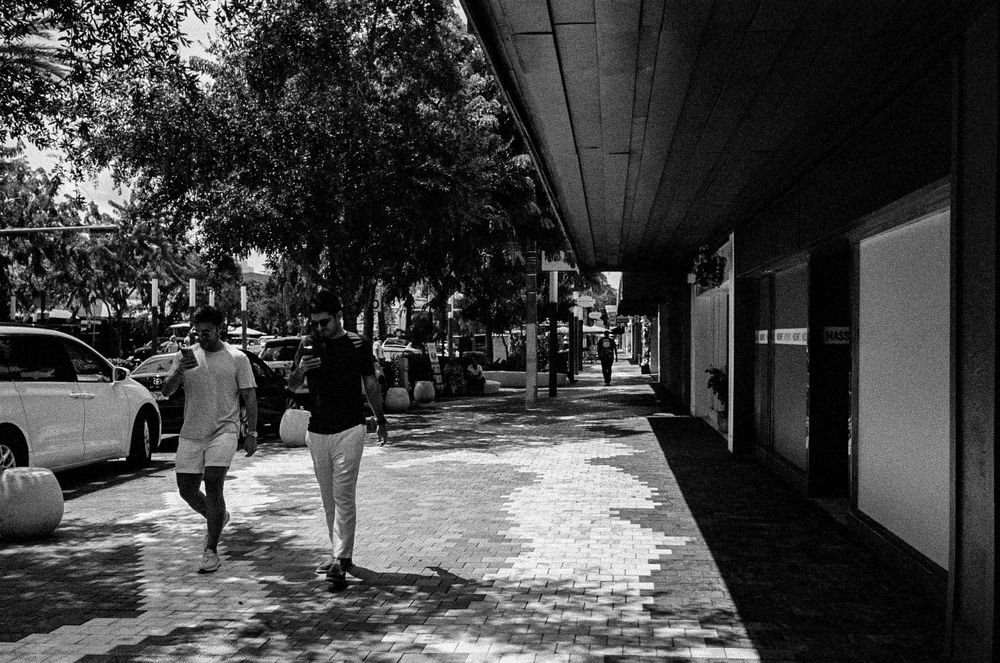
This first one was a happy accident. I was fiddling with my external light meter to get a reading. I had just put it back in my pocket and these two walked in front of me. I'm glad I had the camera in my hands, or I would have missed the shot. Every sign reads for no one to travel in the very direction these two dudes are walking. I love this sort of irony in street photography. And I was very lucky that I thought to split the frame in half with wall. Everything worked. Having this be the first exposure of the roll really set the tone for the rest of it. I knew I was going to have a great time.
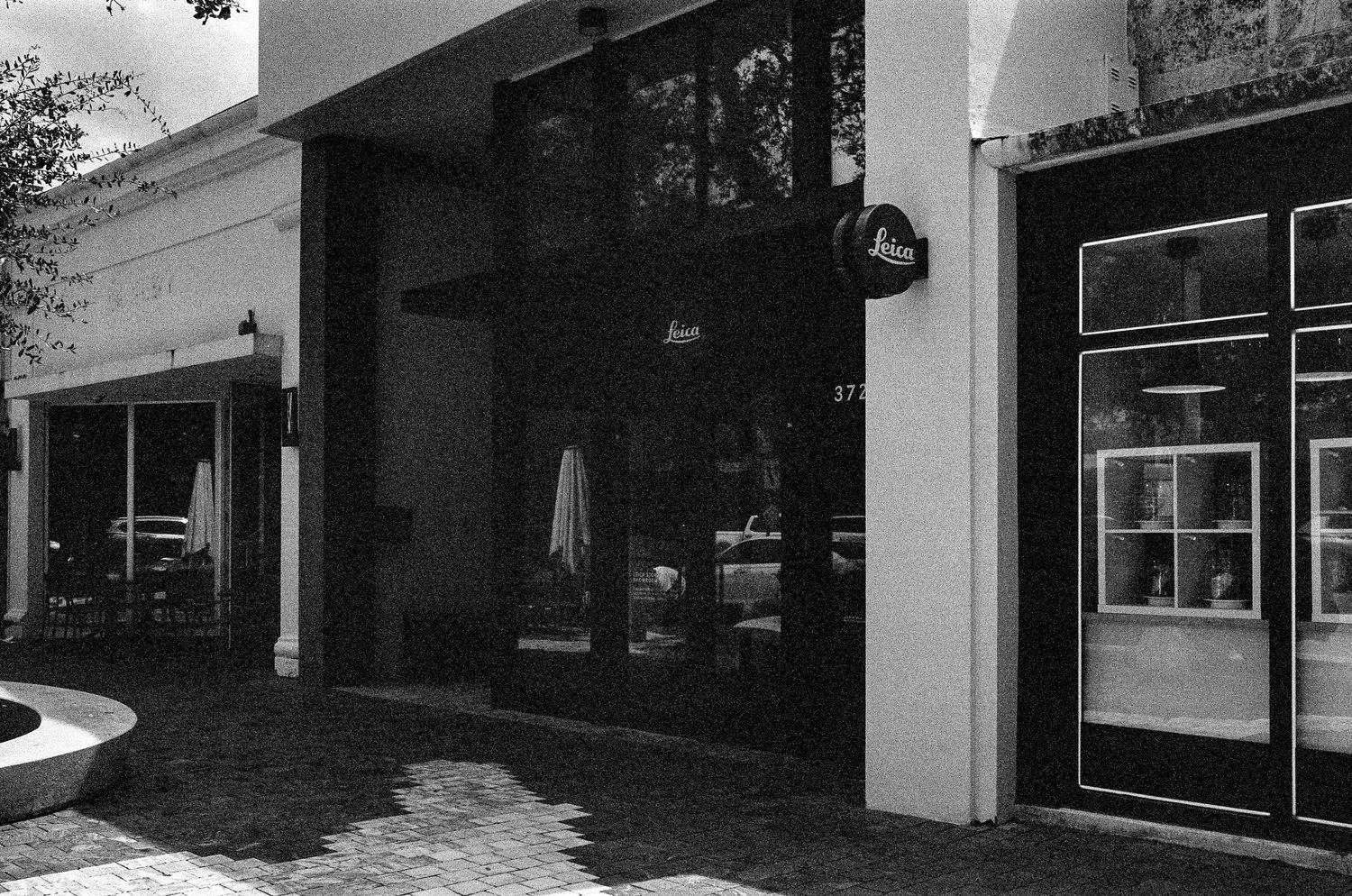
I rounded the corner and there, like a reminder of what I was doing, loomed the red dot of Leica Store Miami! This was a great way to test the contrast of this expired Tri-X. I did actually have a reason to stop in, as I needed to inquire about my R4s and a shutter issue it had developed.
**Totally unrelated, but DAG is who I was directed to and he took some time to explain what the issue was and I'm happy to say my R4s is still functioning fine (mostly...just not at 1/1000 shutter speed).**
I've always had great service at Leica Store Miami and thought it was interesting that just earlier that day I had seen a leaked image of the new Q3 43 and here were all of the big shots at the store together at the front of house. I hadn't ever seen that before, so I took note that there was likely something worth getting together for. Wink wink.
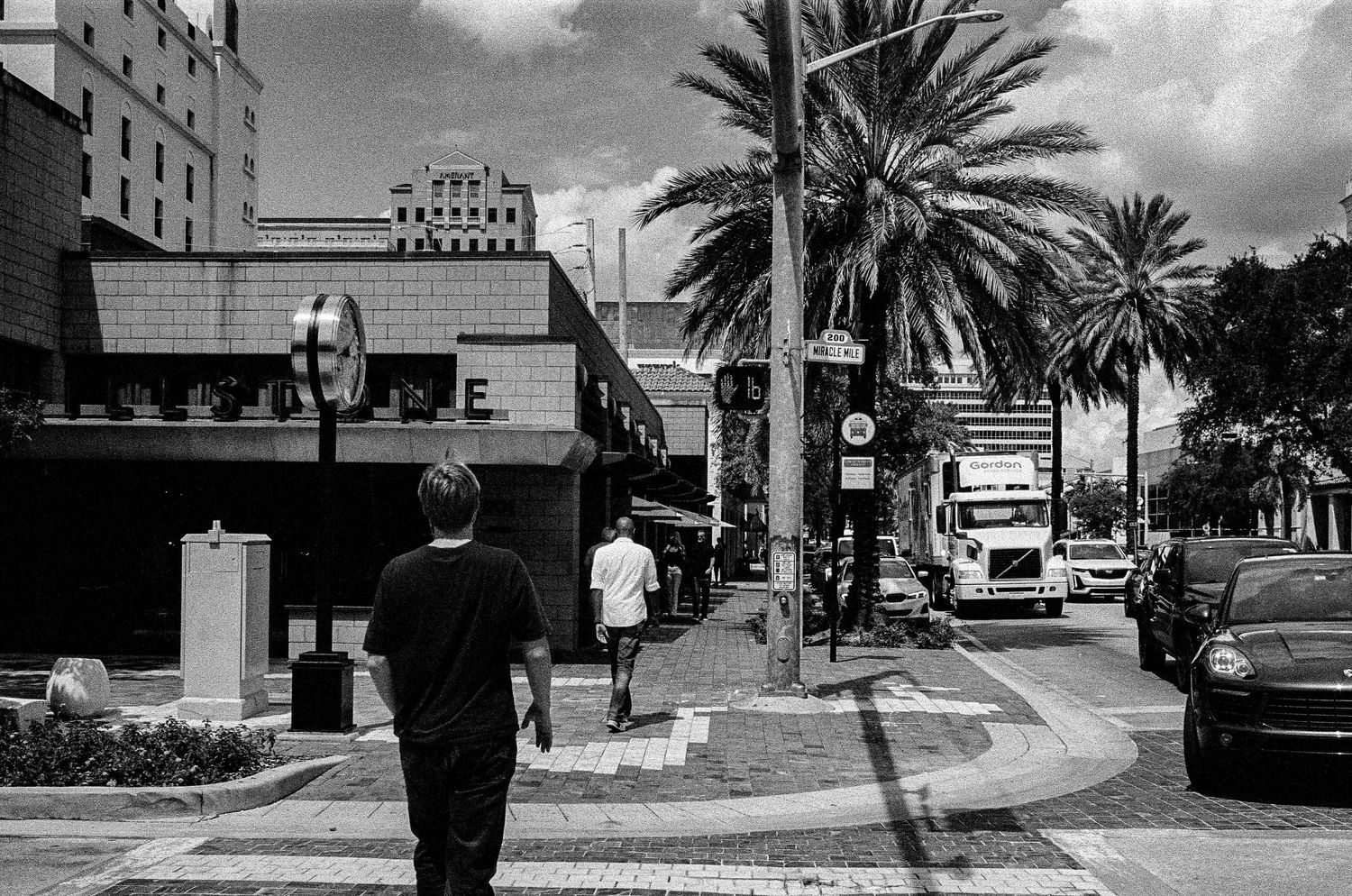
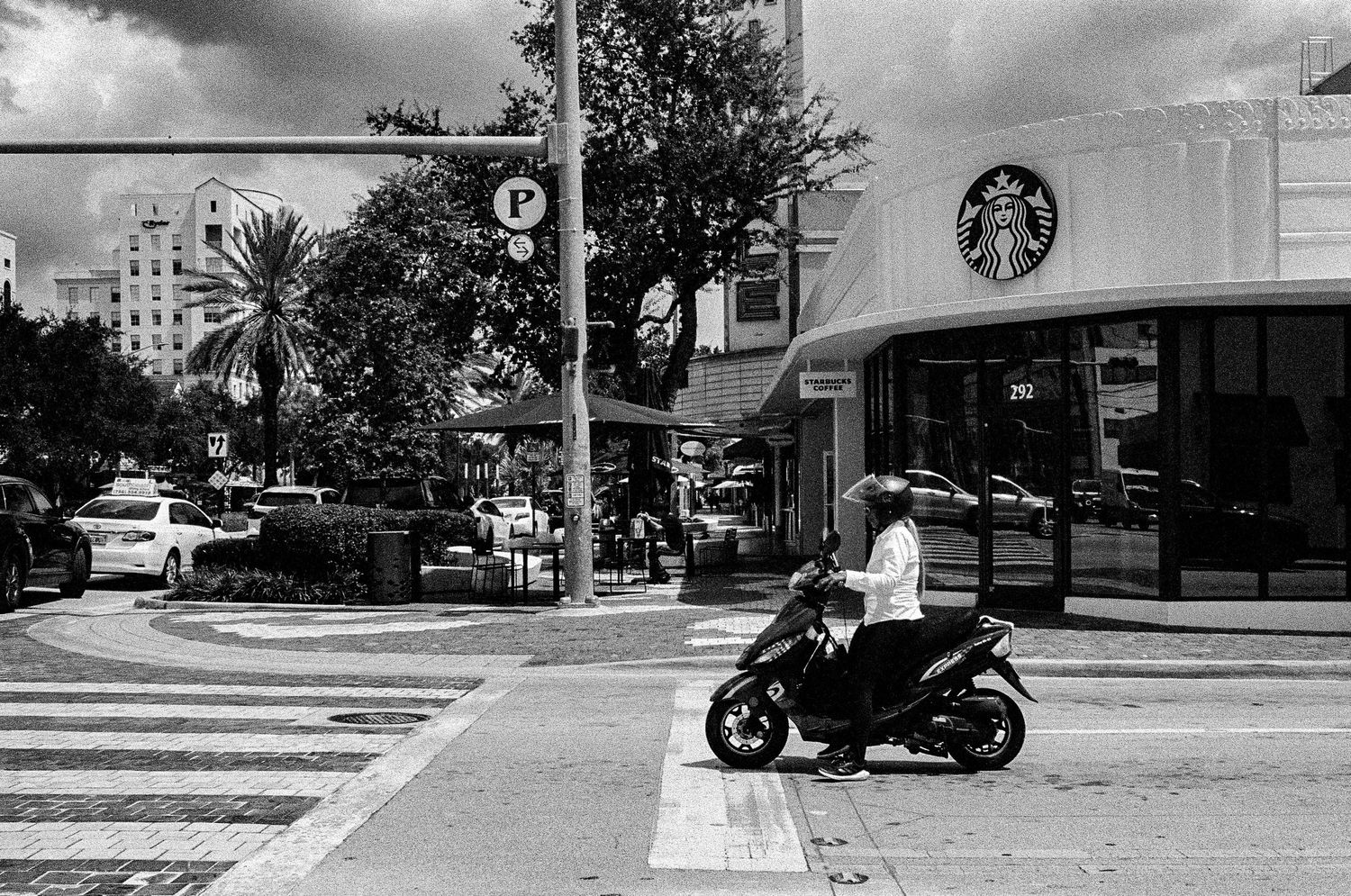
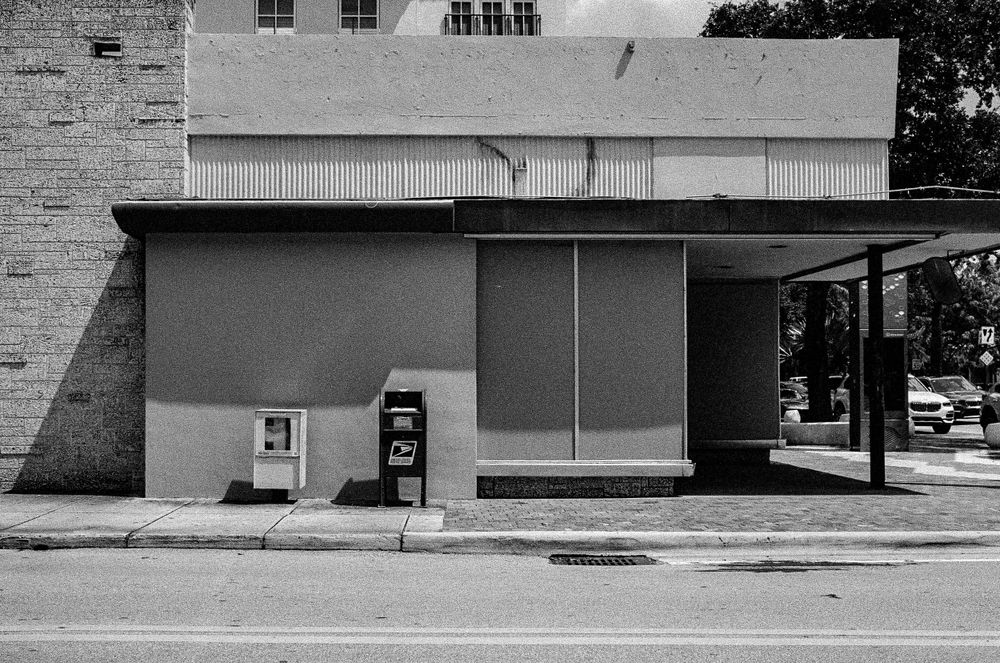
I walked two blocks and decided to cross the street at Ponce. I'm not crazy about the composition or subject in the either of these two frames, but would you look at that dynamic range?! This was my first time using Kodak Tri-X 400 and it was five years past its expiration date! I really should try some fresh stuff. Something about the frame with the people walking does work for me though. I made it while walking across the street. Maybe that's it? I don't know why, but I do like that one. Anyway...
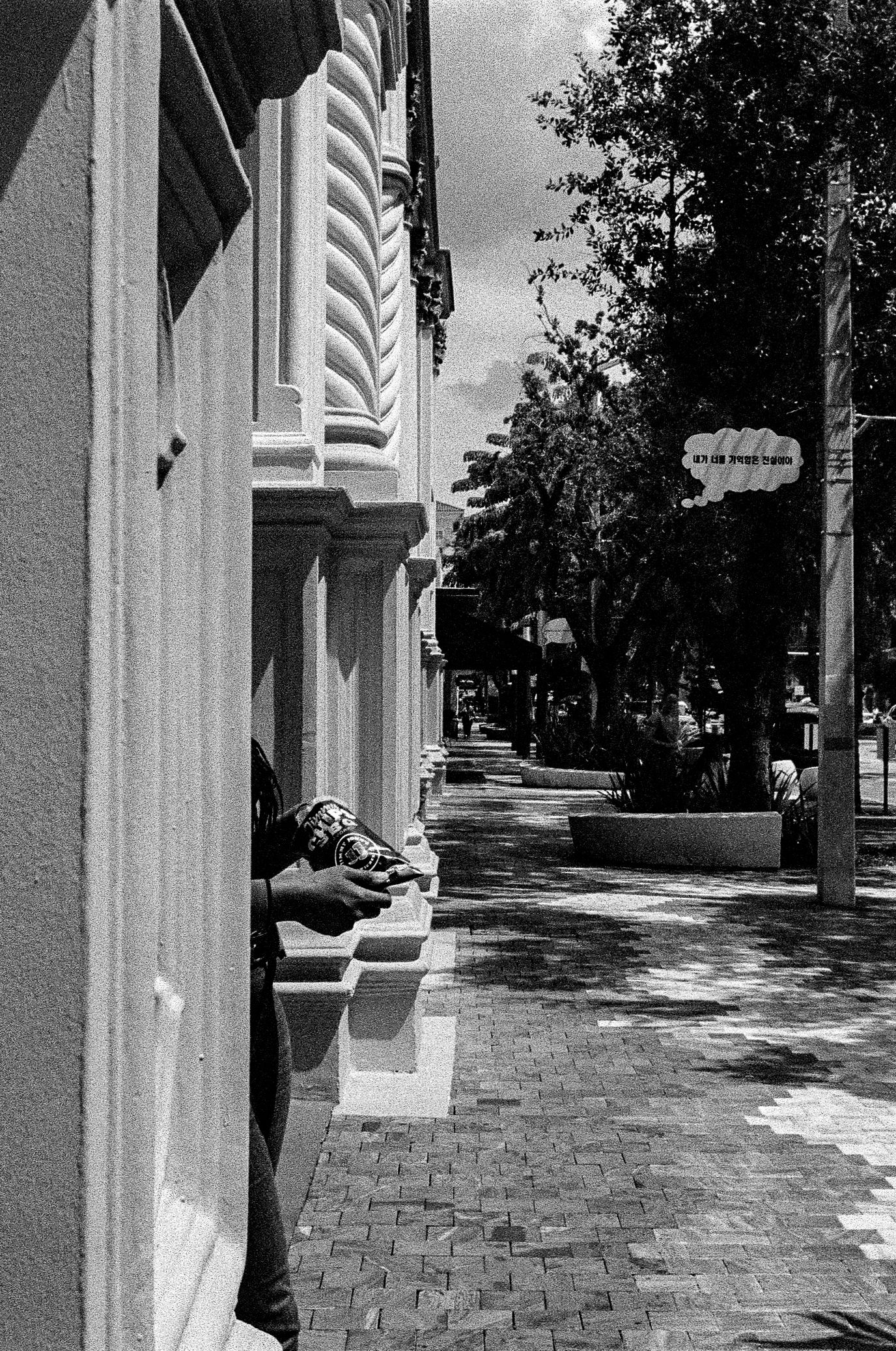
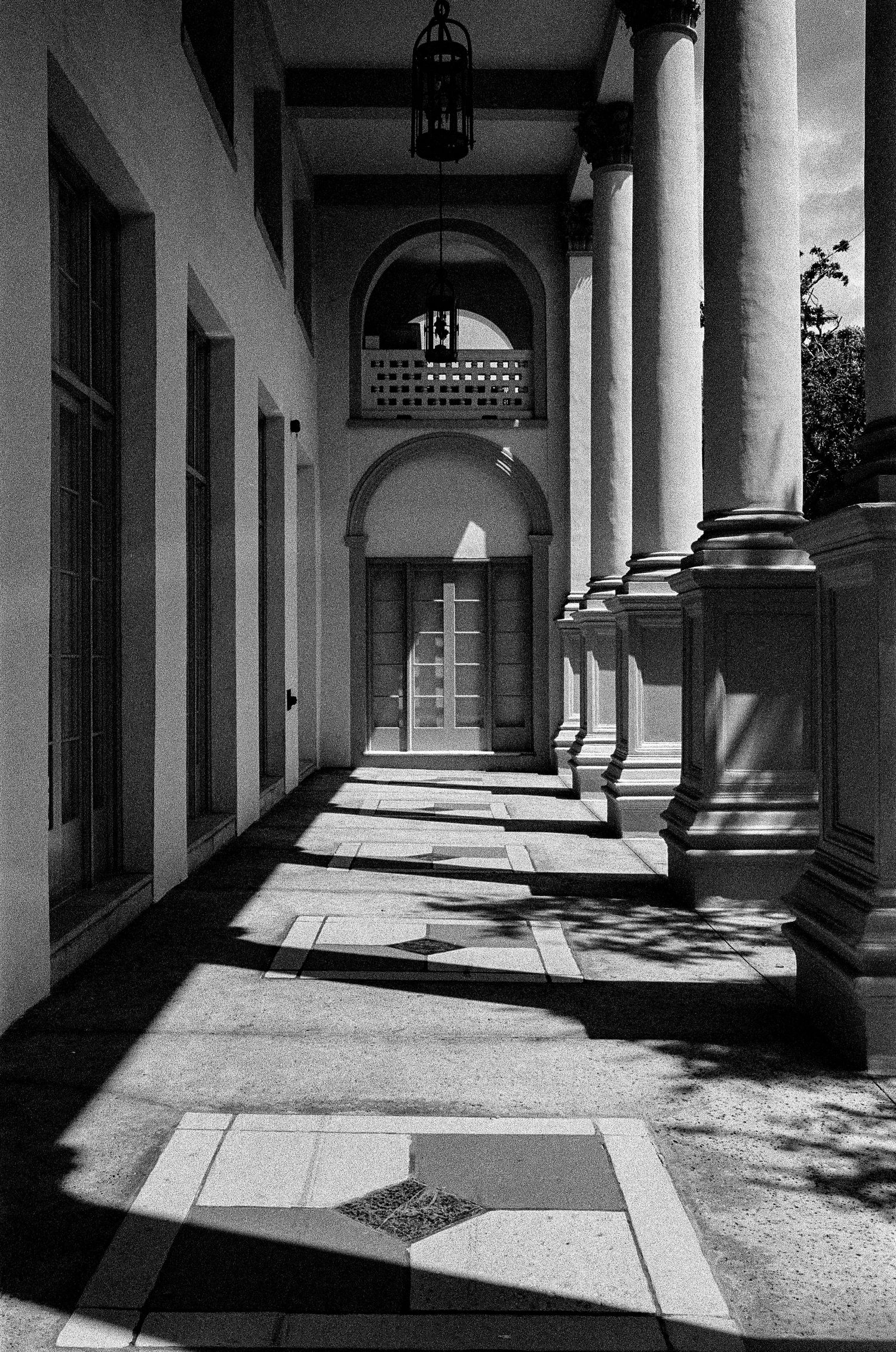
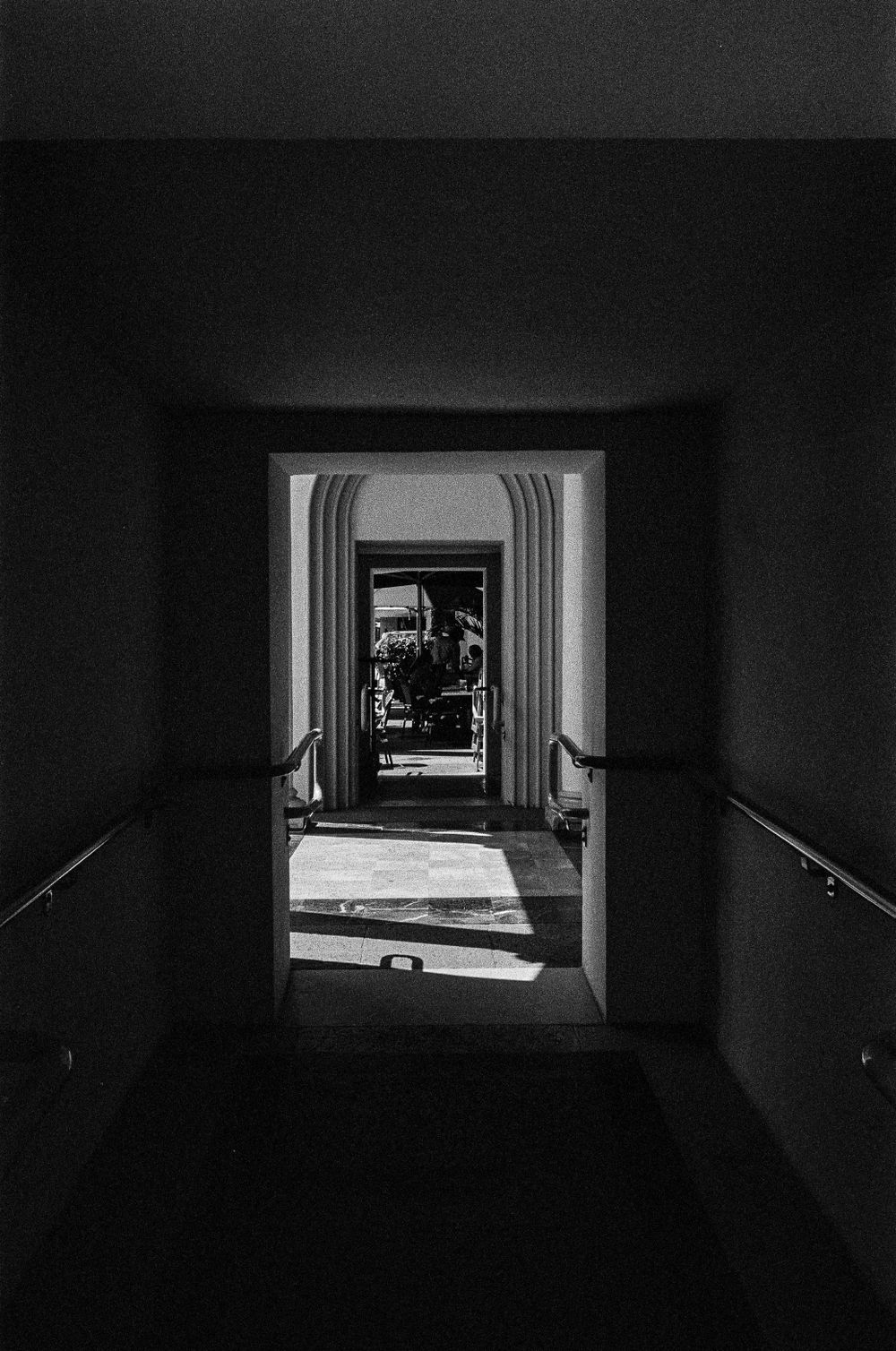
Once I crossed Miracle Mile and then crossed Ponce I finally found some compositions I knew would work. There was a woman resting against the very edge of the Colonnade Hotel eating a bag of potato chips. All that could be made out was her hands and the chips. I composed more carefully than usual because no one was aware of the dude with the camera. It felt almost intimate in a way. I enjoyed taking that sort of time to make this photograph. Even after the mirror slapped up into the prism I don't think she noticed. I walked around and the columns were casting these shadows creating beautiful contrast in this walkway. Now we were cooking! I metered for highlights, which I don't usually do, to create as much contrast as possible and released the shutter. I was beginning to really feel like this test roll might end up being something I could use.
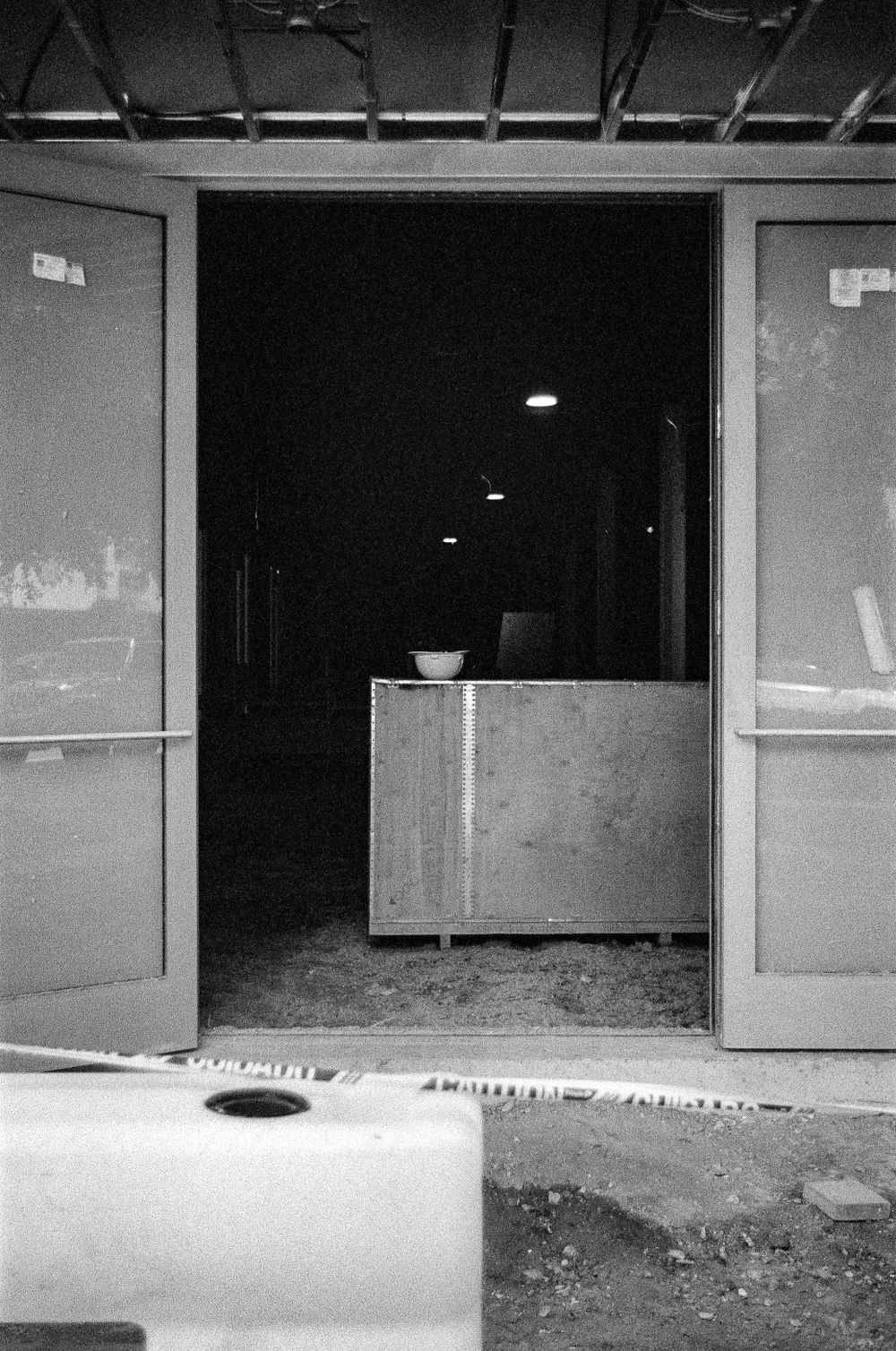
I kept walking for a few more blocks, making a few photographs as I did. What I gathered was that I was really enjoying shooting with the Leicaflex SL and I was really hoping that this Tri-X woudln't be half bad. Because I had decided to take a light reading only upon making my first exposure, I metered by eye and found that this allowed me to worry about one less variable. I kind of just went with my intuition and worried only about composition. Wow was this freeing! But this is what all those Leica M fanboys talk about. Just zone focus and meter by eye! Maybe its time to consider an M? I don't know. I'm enjoying the SL too much to think about that right now.
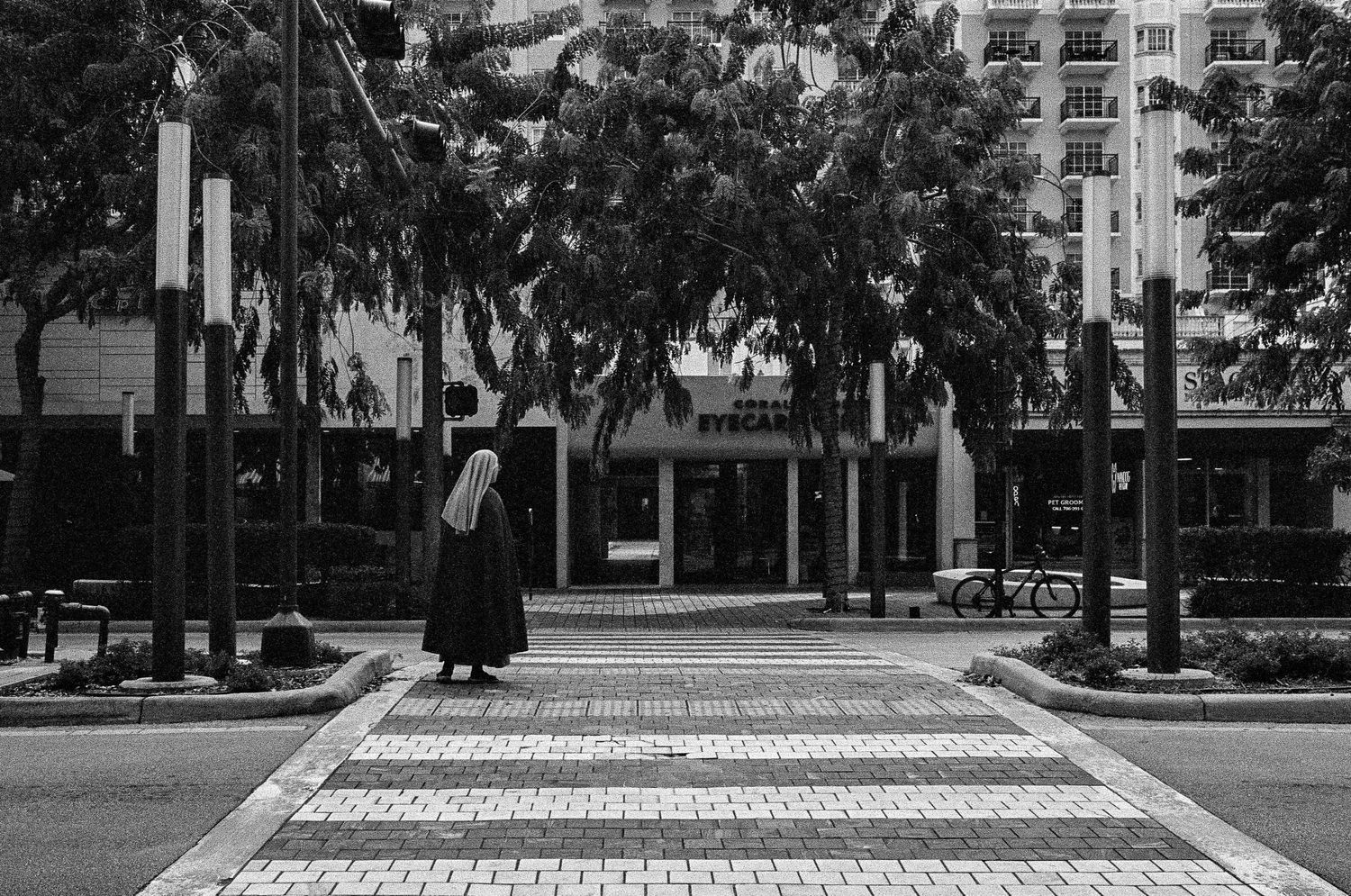
The last shot from this test roll is also one that I really like. This nun crossing the street cut an imposing figure in the the middle of the intersection. It felt very much like she was on a mission, burdened with great purpose.
Final Focus
Once all exposures had been fired off, I rewound the roll, got in my car, and drove to Palm Film Lab just a few minutes away. I anxiously awaited the scans as I fiddled with the SL some more at home. I cannot say that it is as comfortable to shoot as the R4s. Something about the R4s just feels right in my hands. That said, I cannot imagine ever choosing the R4s over the SL if I were taking only one camera with me. The SL is so solid. It really does feel like the most perfectly engineered SLR I've ever used. And while it is larger and heavier than the R4s, it isn't obscenely large or heavy. Maybe I'm just used to having my digital SL Typ 601 slung around my neck for hours at a time - now that thing is a boat! - and so my sense of "large" and "heavy" is skewed. I'm not sure. What I am sure of is that I can't wait to put another roll through this thing. I already shot a roll of Kodak Ultra Max 400 and will hopefully get those scans back soon. I'll leave for New York City in a week and I am planning on taking both R mount cameras to shoot two different films at once, as was my intention with buying this. If I could describe my feeling now in just one word it would be this: excited.
More Kodak Tri-X 400 and Leicaflex SL
All images © 2020-2024 David Ulloa Studio. All rights reserved.