You asked the question...
or have been asked the question, "why shoot film when digital cameras exist?" My answer is simple: don't shoot film!
Let's break it down. The best deal I can find where I live is FujiColor 200. It happens to have a color palette that I find extremely pleasing and is of a speed that I can use pretty much every day here in sunny Miami, but that's not the point. The point is that I can usually get a pack of three 36 exposure rolls of FujiColor 200 for $22. At roughly $7 per roll upon purchase, and another $7 for development and a further $7 for scanning, I'm over 50-cents in per exposure. It may not be as expensive as instant film photography, where one is likely in for over a whole dollar per exposure, but that can start to add up really quickly. So, if you ask the question, "why shoot film when digital cameras exist?" then the answer is simple...don't.
Because film photography, in the post digicam revolution, is not about what makes logical sense. It's about what brings satisfaction. But if I'm being honest, it's really about magic. The same can be said of just about anything. I am also a musician - primarily a guitarist, but I have been known to play a synthesizer or two - and can equate this also to guitar amplifiers. The transistor made amplifiers infinitely more reliable and affordable. So why do guitarist gladly hand over so much more of their hard earned cash for ancient tech, vacuum tube powered amplifiers? Why do audiophiles prefer vinyl to streaming? The answer is always simple and it has to do with how the medium makes a person feel. These things are irrational, illogical, and even nonsensical. These things are magical, but they are a truth that cannot be denied by the feeler.
It's a feel
Considering feel in its most literal sense, of course, isn't a bad place to start. Do film camera's feel differently in the hand than do digital cameras? Well, yes. Not drastically so as they are comprised of mostly the same parts. But there are differences to these. Particularly with contemporary digital cameras. Pentax is just about the only camera maker still championing the DSLR, just as Leica is just about the only camera maker still championing the digital rangefinder. But the rest of the camera world has moved on to mirrorless digital cameras. The technology is astounding and the benefits are numerous. This is how I prefer to make digital photographs as I am afforded the use of virtually any vintage and manual focus lens ever made thanks to the lack of a mirror, but the shooting experience is drastically different. So, particularly for SLR shooters, the experience is markedly different.
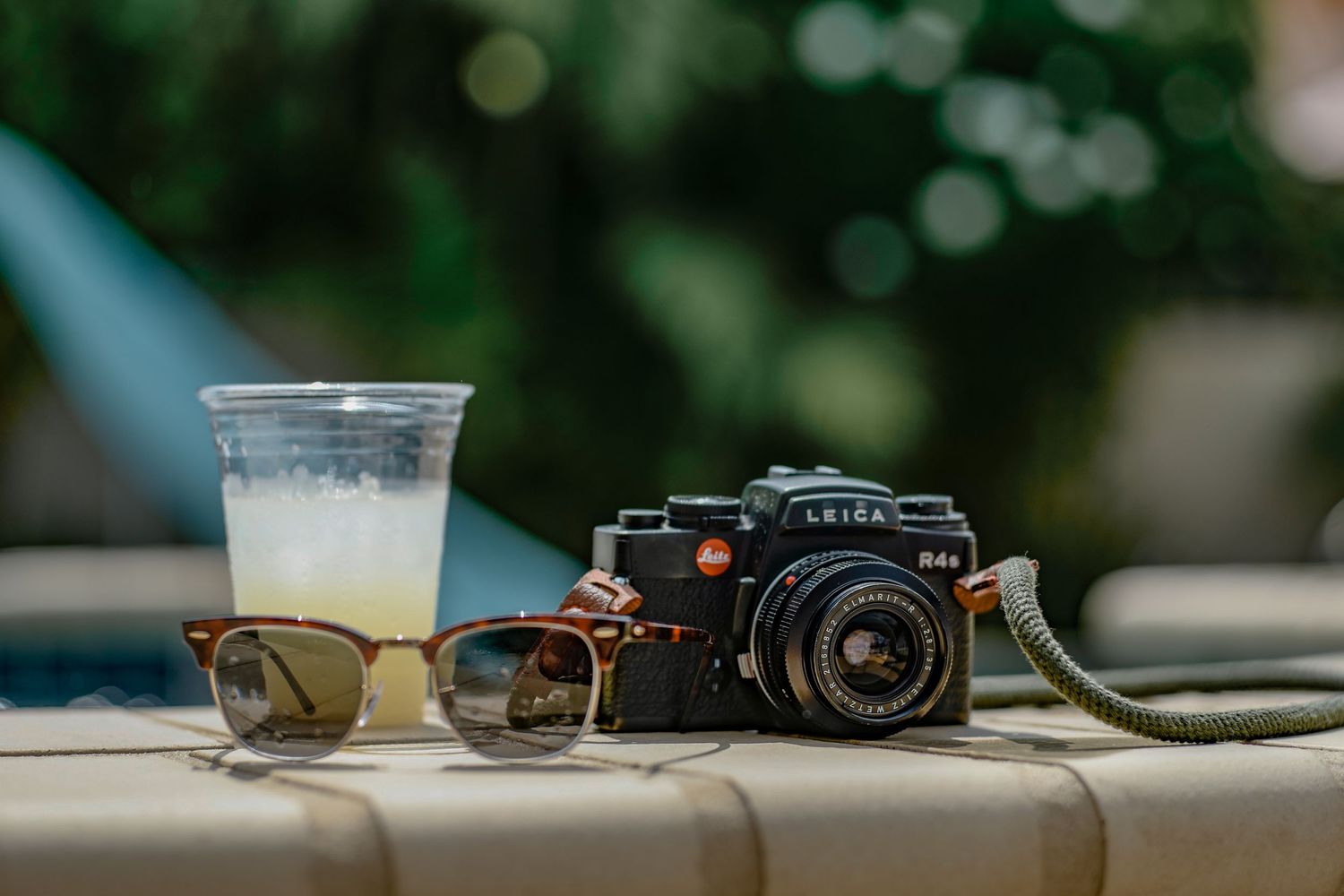
Then there is the loading, winding, and advancing related to film. I liken this to hand-wind watches. How easy it is to place an Apple Watch on a charger every night, remove it in the morning, and go about our day able to tell time accurate to within a millisecond thanks to GPS technology or whatever. But the act of winding the crown and setting the time daily brings an intimacy to the whole affair that makes your role in the timekeeping not just relevant, but central to the accurate measurement of time. My Casio may be more reliable, but this is why I keep my old 60's era Omega.
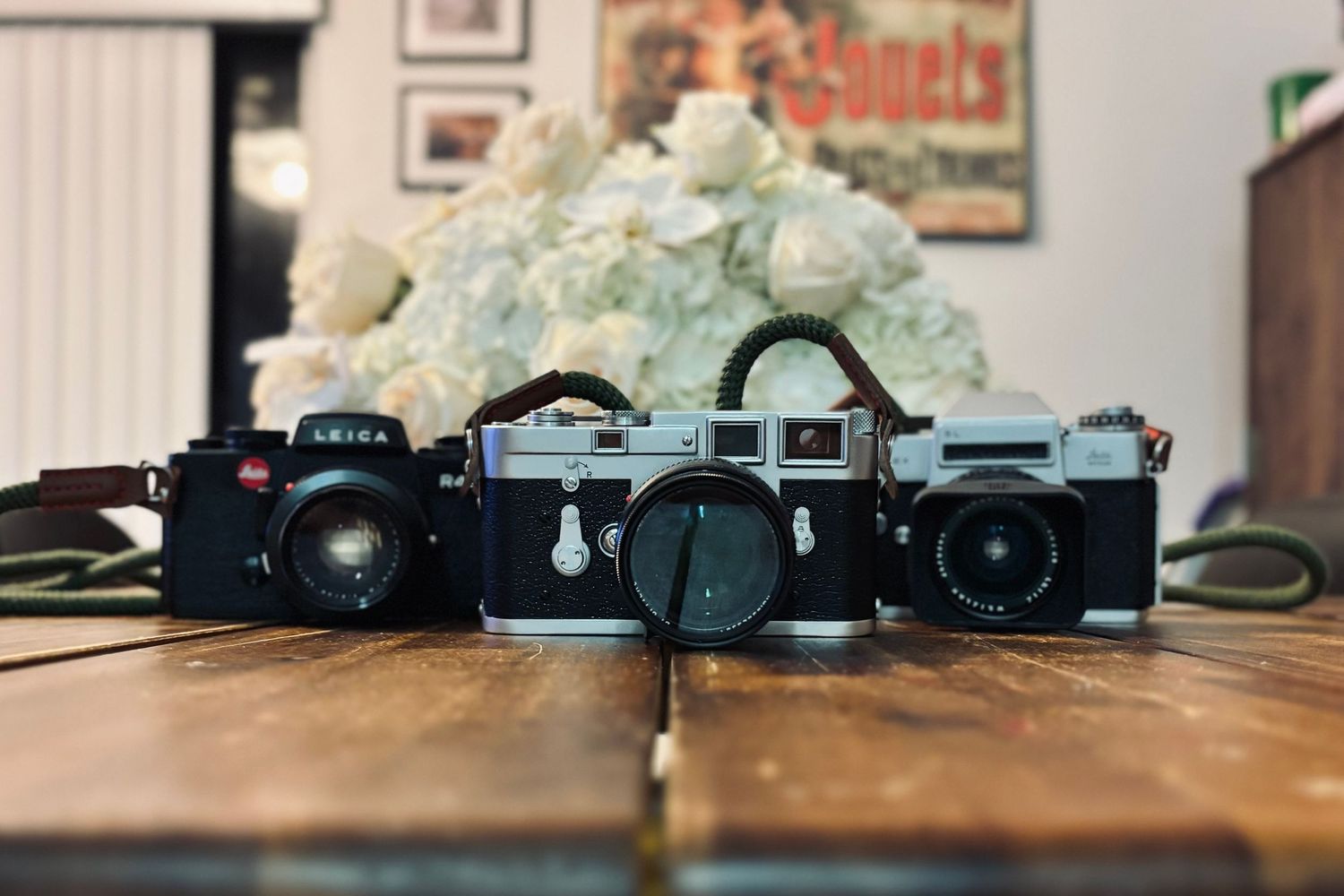
With cameras it is no different. My SLRs will not function if I do not load a roll of film and advance it after each exposure. The audible SCHAWP of the mirror, KA-CHUNK of the shutter, and KRKRKRKR of the film advance lever creates an intimacy with the documentation of the moment that was just captured on celluloid.
Now, if none of this makes sense to you, then heed the advice in my introductory paragraph: DO NOT SHOOT FILM! But if any of this makes even a modicum of sense to you, the reader, then know you are not alone.
You can see it
I know what you're thinking: I could make the same photograph on a smartphone camera for free, so why spend the time, money, and effort on film? Well, I'm of the belief that you really can see the difference...in theory. Now, I'm not trying to fool anyone into thinking that you shoot a roll of film and out comes magic. I edit my film photographs too. But the amount of editing that would have to go into a digital photo to make it look like a film photo, well that's an amount of time I'm not willing to spend in editing. Colors, highlights, shadows, contrast, it all looks different on film. It looks...beautiful.
Beautiful is a subjective term, I know. I'm trying to argue subjectivity here. I must be out of my mind. But it seems to me that there are certain subjective points in life that really aren't as subjective as they might initially seem. Water tastes better on a hot day. Your kids are cuter than other people's kids. And film renders photographs more beautifully than do digital sensors. And I can prove it!
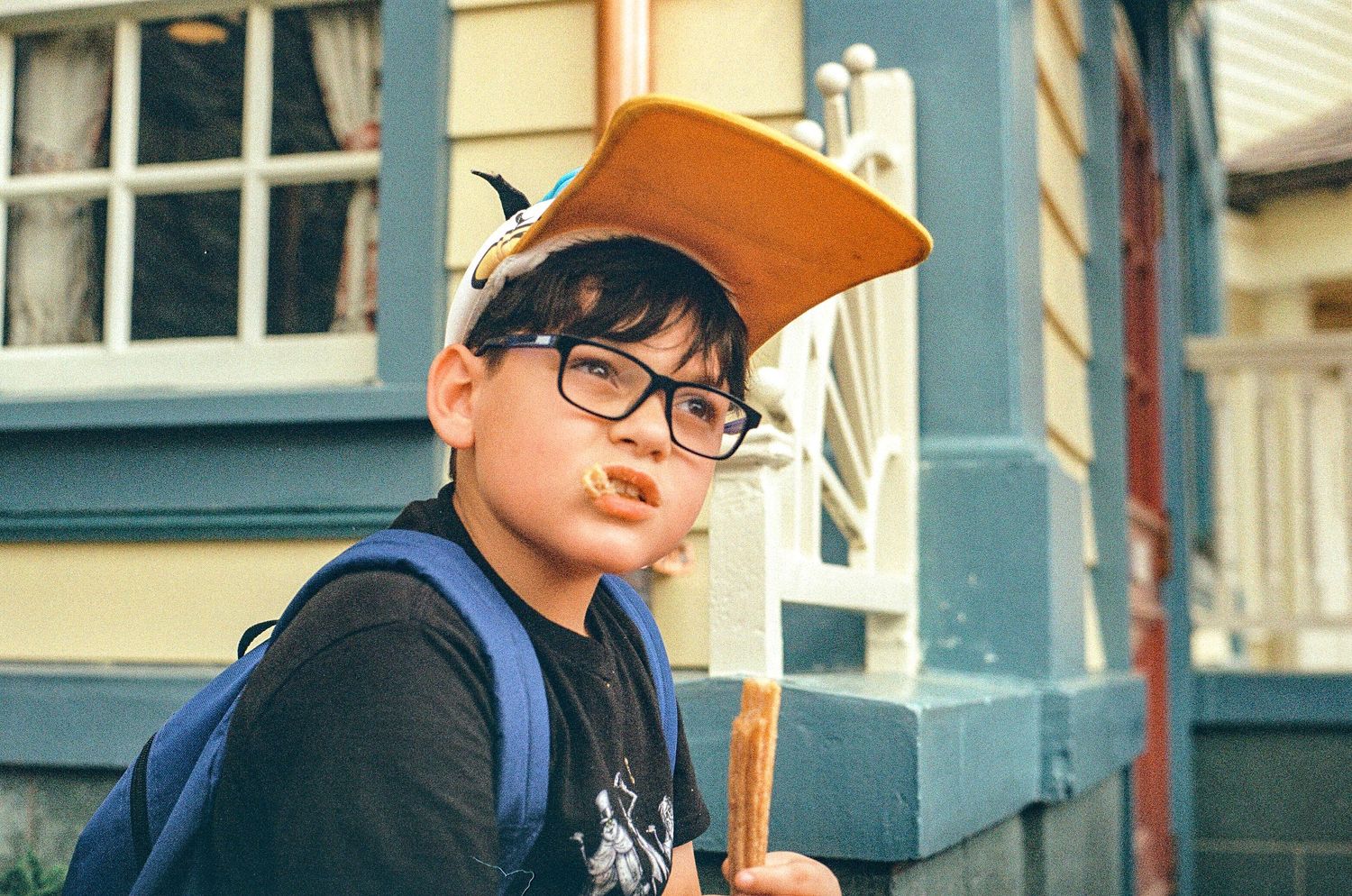

These two photographs were taken moments apart. If you're familiar with the geography of Magic Kingdom, you'll recognize that the first and second photos are separated by roughly 200 yards. In fact, you can see that Link is eating the same churro in both photos. Now, these photos aren't exactly identical - the film photograph was made with a Leica Summicron 50mm lens while the digital one was made with a Leica Elmarit 35mm lens - but because the 35 was on a Fujifilm with a crop sensor, its effective field of view was that of a 50mm lens. The colors in the film photo, however, are just...better?
There is nothing wrong with the digital photo. In fact, I think it has the better composition and gives much more context of where we are. But the colors, highlights, and shadows in that film photo are just stunning. Both are sharp, as Leica glass is famous for, but there is a flattering sharpness to the film photo that is lost in the digital one. Now, the Elmarit 35mm is a lens that occasionally can be too sharp. It does not share an optical formula with the Summicron 50mm, and is often sharper. but I have gotten similar sharpness from my all my Leica R lenses when used with a digital camera. My conclusion is that film renders sharpness differently, more pleasingly.
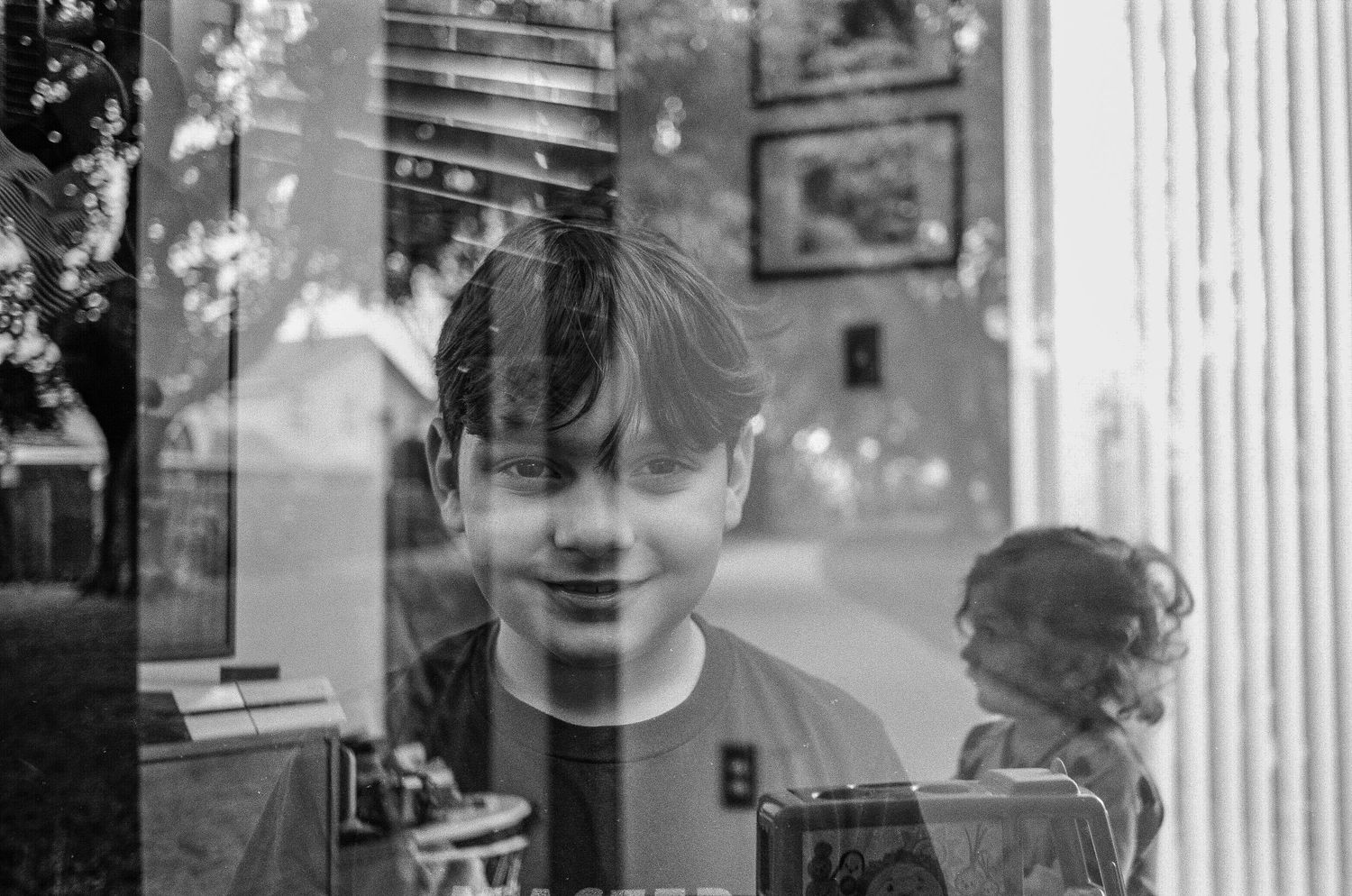
Here are two more examples from a different trip.
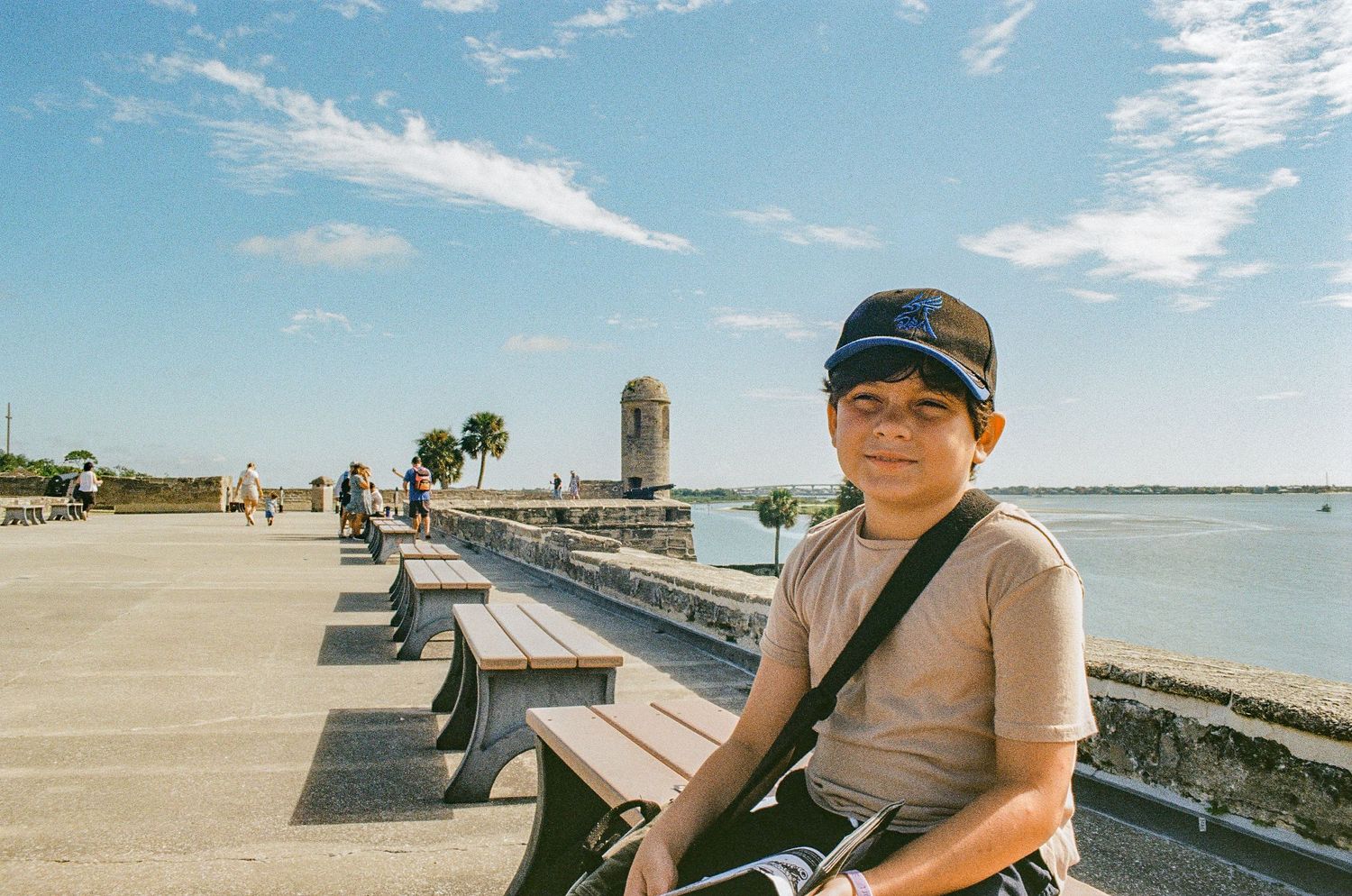
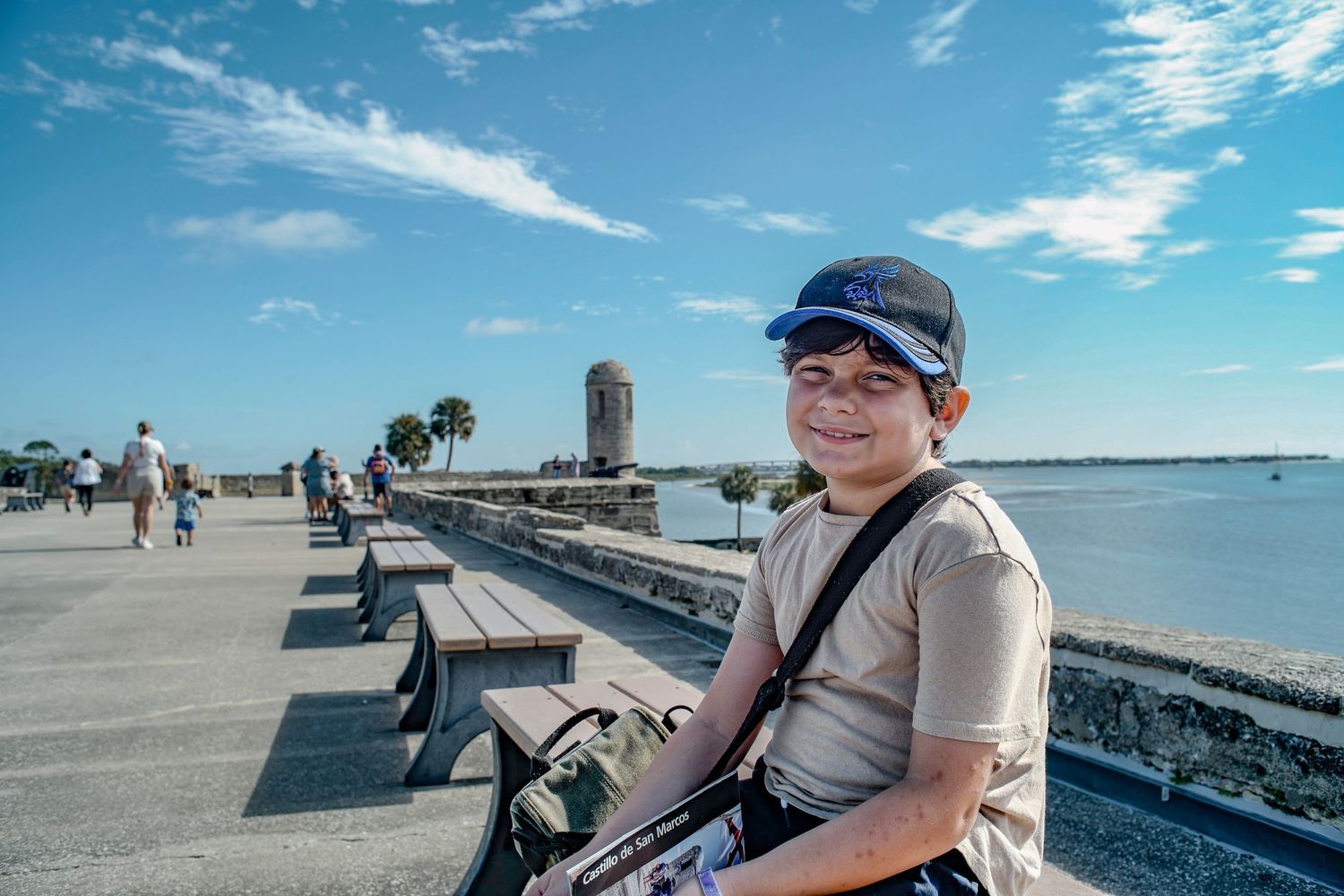
These were taken one right after the other, with less than 30 seconds between exposures. While the digital file is similar in color tone - I usually prefer a cooler color palette for my digital photography - there are a few reasons I prefer the film photo despite the fact that Link is looking into the camera and smiling in the digital photo.
For starters, again the sharpness is more pleasing. The digital photograph was made with the Leica Elmarit 28mm, possibly my favorite lens and one of the greatest for street photography and street portraits; the film photograph was made with the Leica Vario Elmar 28-70mm, a lens I always travel with as it allows me to use primes on one camera and a zoom on the other. The Vario Elmar 28-70mm is a very sharp lens with beautiful color rendition and contrast, but the Elmarit 28mm is a superior wide angle lens. But we can see here that the scars on Link's arms don't render as heavily on film. Not all film is made equally, but good film will be much better for rendering skin tone and textures.
Film will also have a greater exposure latitude and allow for better exposure, with control of highlights and shadows that leaves everything in the composition properly exposed. In the digital photograph, Link's face and chest are slightly underexposed. With digital cameras, I always expose for highlights. Once that highlight is blown, there is no recovering it. However, with film, if I meter for shadows I can always recover highlights no matter how blown out they might seem. Here's a great example.


This photograph was made with CineStill 50D, which has become my favorite daytime film emulsion. It was made on an incredibly sunny day. Steph was mostly backlit by the sun, so I metered for shadows and purposely composed with a bit of sky in the upper right corner so I could test CineStill 50D's exposure latitude. When I got the film scans back from my favorite lab, I was shocked at how well the shadowed parts of Steph's face, neck, and shoulders had retained information because in the moment she looked like Lana Turner in some classic film noir: high contrast between light and shadow. But I had a hunch that within the blown highlights, or what I thought might be blown highlights, was all the information in the sky that would complete the photograph. I dumped the scan into Lightroom and pulled back highlights and BAM! there they were. The clouds, the sky, all there hiding in the highlights. It is magic. Plain and simple.
It moves you
I have made many photographs I am happy about. From work I have done for clients, to documentation of my beloved city of Miami, to hangouts with friends, and time well spent with family, I have loved many of the photographs I've made over the years. I don't think that is vanity. People rarely continue to do things that they feel they are bad at. But beyond the end result of the photographs I make, the process of making the photographs is something I love deeply. It allows me to get to know my subjects and their settings. But no digital photograph I have made myself has moved me quite like its analog counterpart.
Stated another way, film photography is emotional. Maybe it didn't used to be. I remember the days when the only option I had was film and I did not have the emotional attachment to the photographs that I have today...but there was a connection.
Somehow capturing an image on celluloid created a connection for me with that person and place. Maybe it is the stage in life that I currently sit at, but now it is much more than just a connection with subject and background. Now there is a decidedly emotional aspect to film photography. I am always left with a feeling like the moment exists perpetually on that 24x36mm strip of film. And how? Well, I go back to what I've been saying all along: magic.
Because no one cares how you make a photograph. A cellphone camera, high-end digital mirrorless, old and clunky DSLR, 90's point and shoot, or 60's rangefinder, it doesn't matter. It is ultimately about the final product for the viewer. No one cares what your workflow is like, if you used Lightroom or Capture One, if you developed yourself or at a lab, it simply doesn't matter.
But for the photographer, the person making the photograph, I can tell you that it does.
Because how you feel at the moment of making the photograph influences how you meter for light, how you compose, how you direct your subject, every critically important aspect of photography. So if this means nothing to you - I cannot say this loud enough - do not shoot film. But if any of this has made any sense, then, I would advise, attempt film photography. Because harnessing magic isn't something that we can try to make sense of, but we can recognize it and let it exist in our lives.
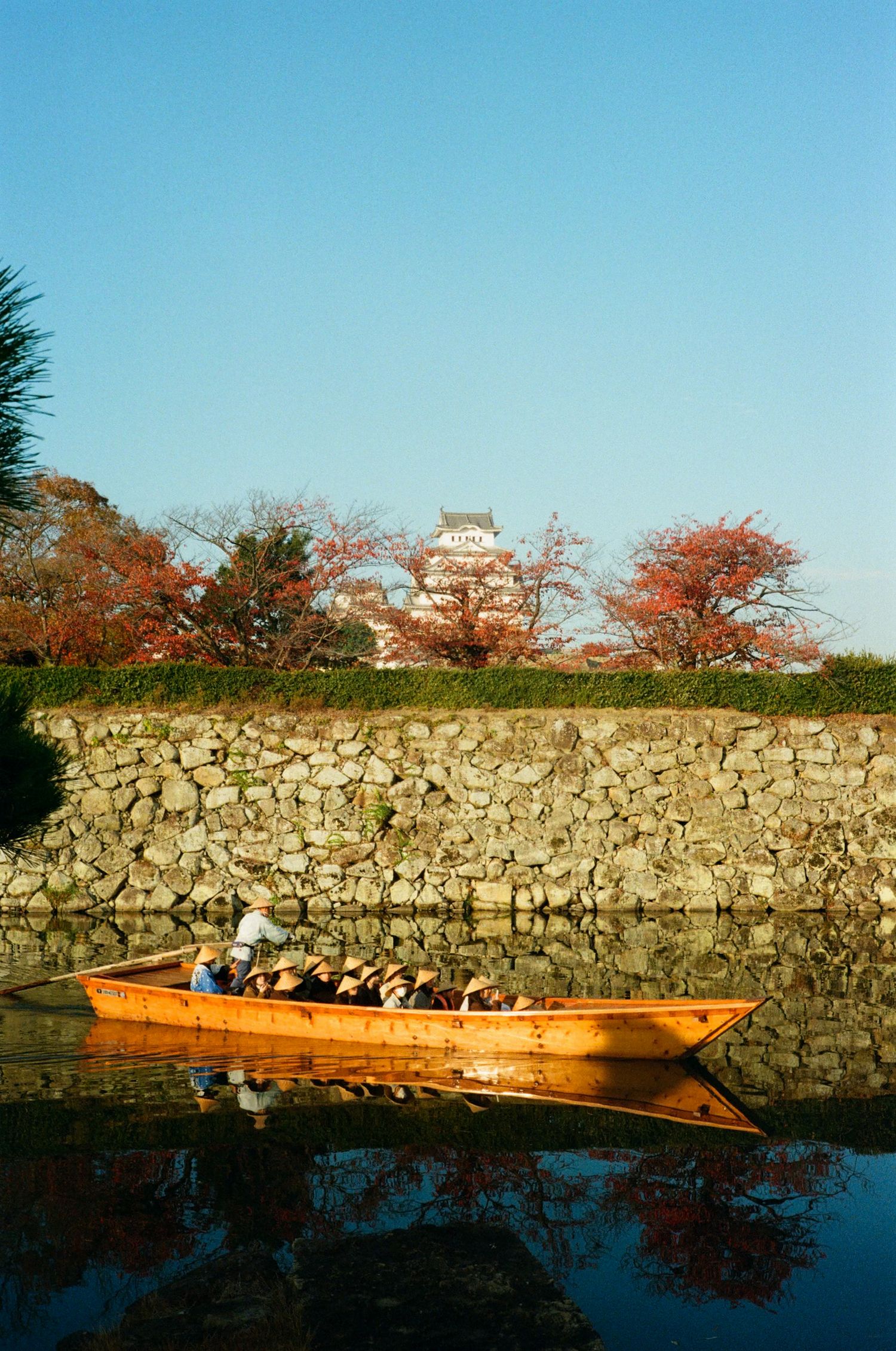
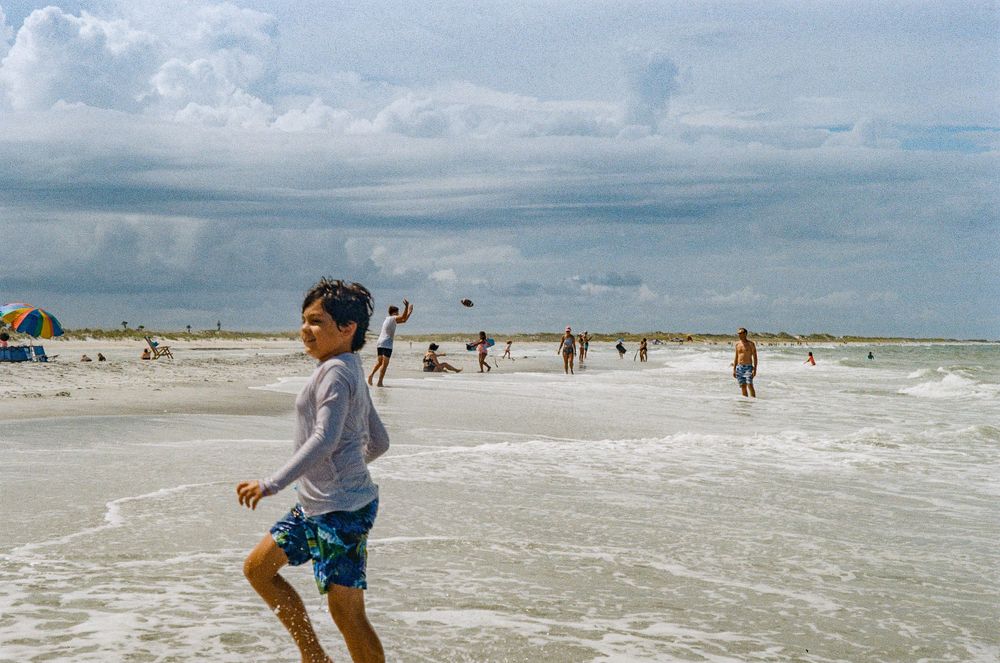
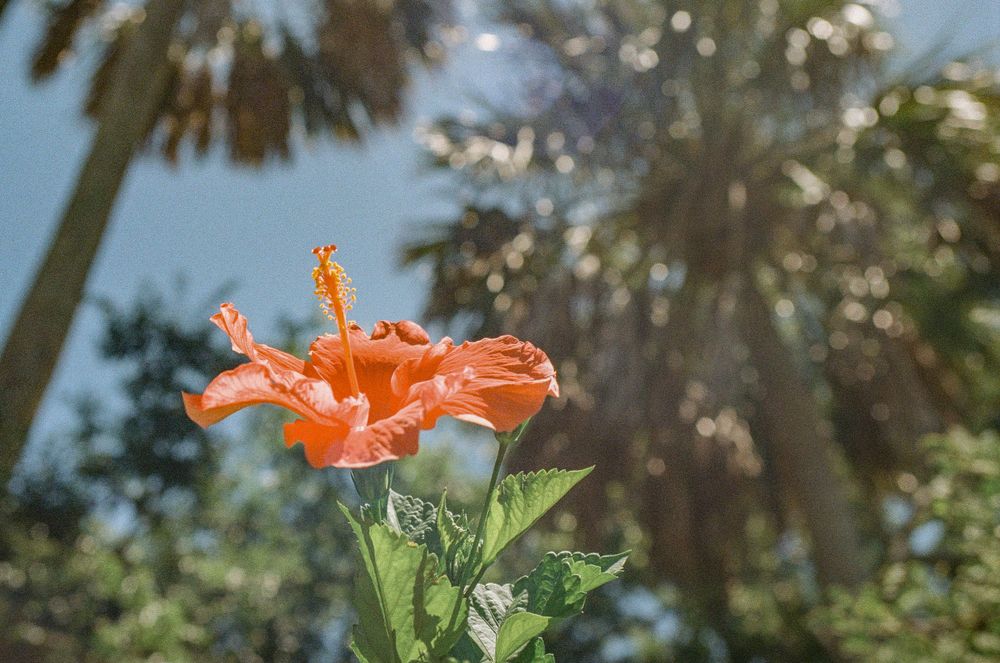
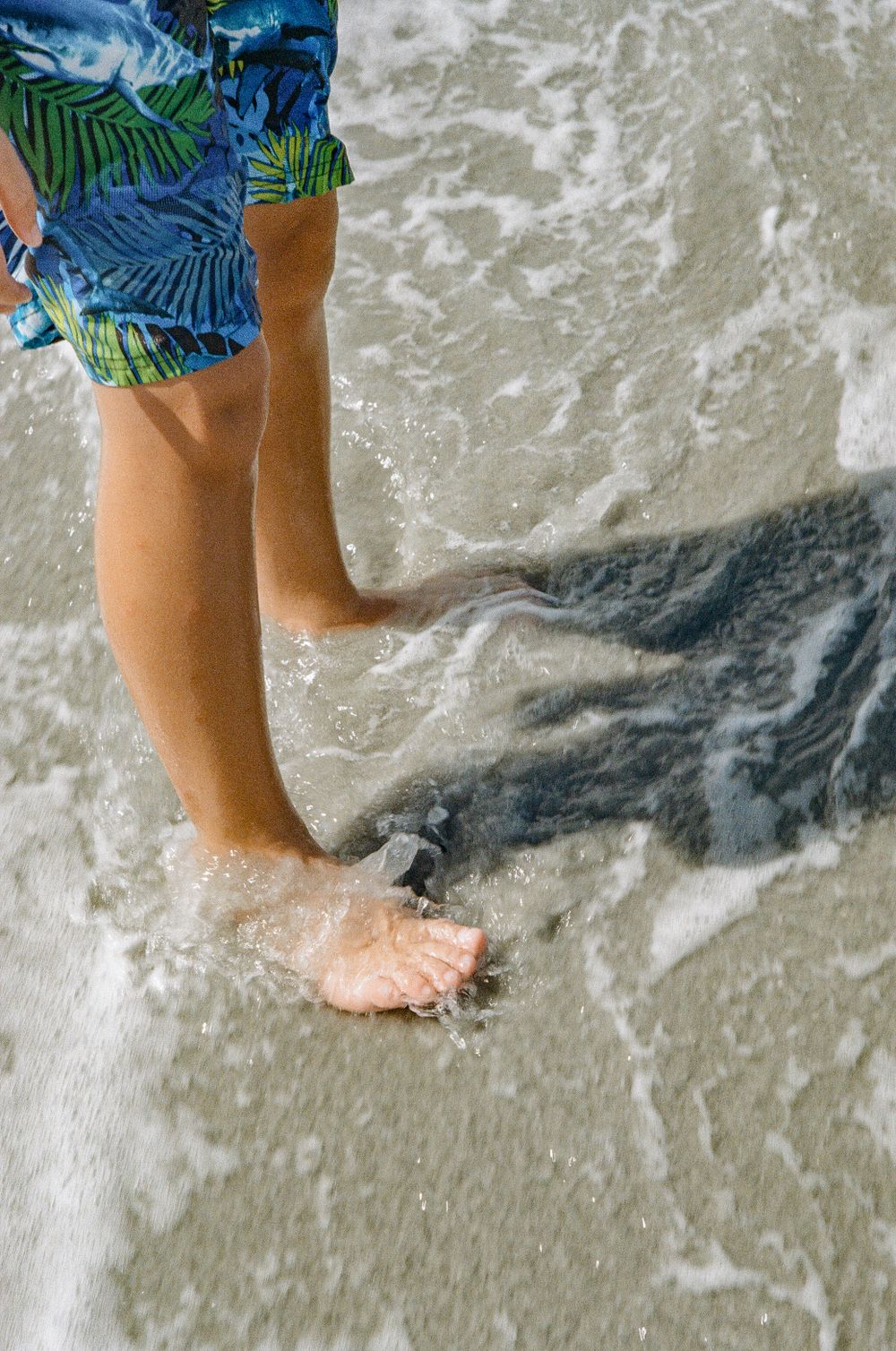
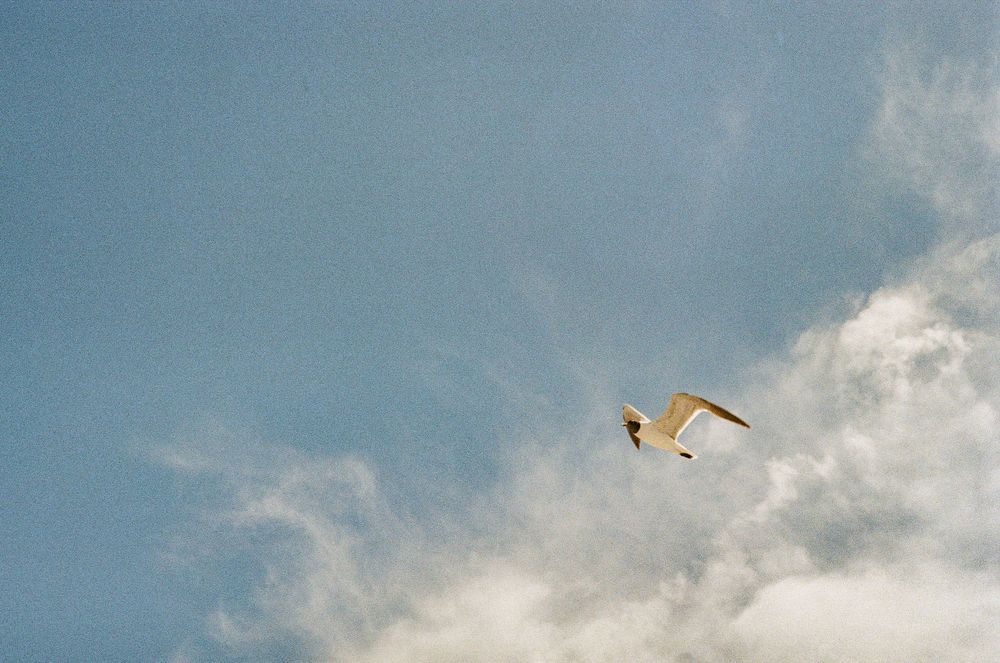
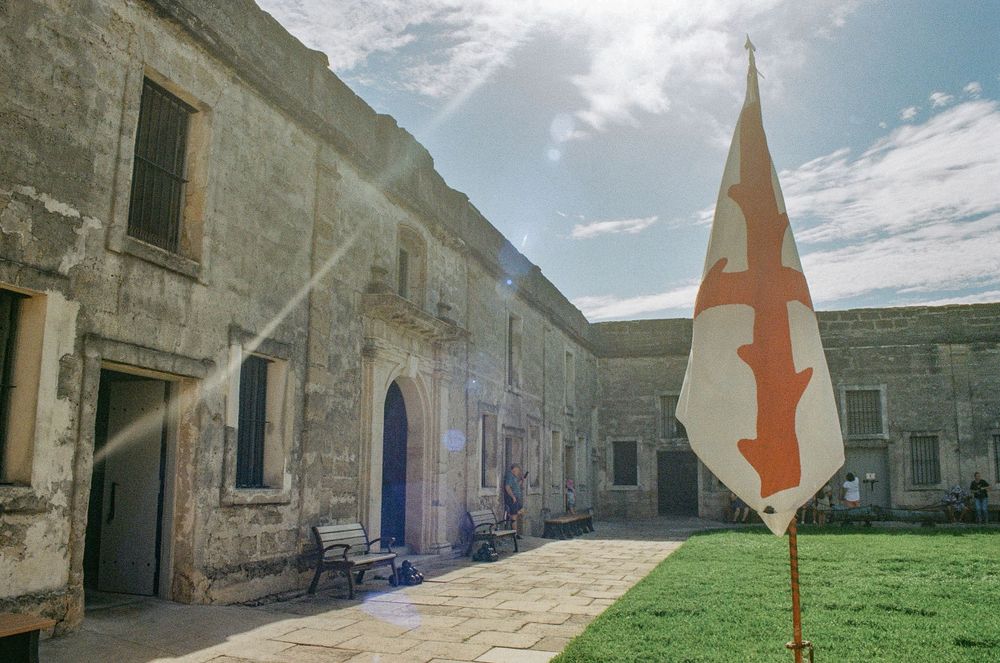
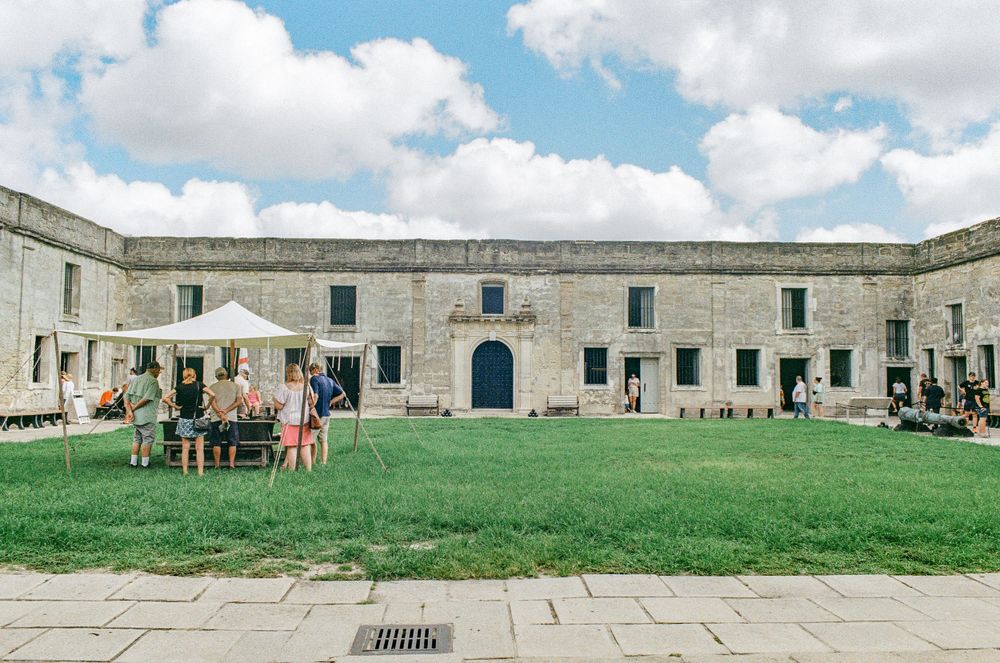
Some more magic on film









All images © 2020-2024 David Ulloa Studio. All rights reserved.